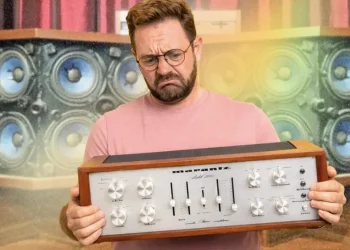
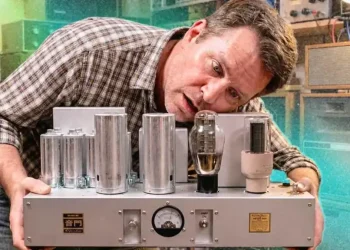
Hi-Fi streamers play a critical role in modern audio systems, shaping how digital music is delivered long before it reaches speakers or headphones. Drawing on survey responses from thousands of audiophiles worldwide, this ranking highlights the 25 streamers most trusted for stable operation, clean signal delivery, and consistent performance in real-world systems.
Why Hi-Fi Streamers Still Matter
As lossless and high-resolution streaming becomes standard across platforms such as Tidal, Qobuz, Apple Music, and Amazon Music, attention has shifted from access to execution. Audiophiles increasingly focus on how streamers manage clocking, power regulation, software stability, and digital noise.
Even when paired with high-end DACs and amplifiers, poor digital handling can degrade timing, dynamics, and spatial detail. That reality explains why both affordable network players and five-figure reference units appear side by side in this ranking.
The 25 Most-Trusted Hi-Fi Streamers (Survey Results)
1. Eversolo DMP-A6 — 11.26%
The most-voted streamer in the survey, the DMP-A6 integrates dual ESS ES9038Q2M SABRE DACs, each operating in a fully balanced configuration. The ES9038Q2M is part of ESS Technology’s reference-grade SABRE family, known for extremely low distortion, high dynamic range, and strong jitter suppression.
In the DMP-A6, each channel benefits from independent DAC processing, with a measured signal-to-noise ratio exceeding 120 dB and THD+N figures well below audibility in typical listening conditions. The unit supports PCM up to 32-bit/768 kHz, native DSD512, and full MQA decoding.
Audiophiles also cite its dual low-phase-noise clocks, rigid linear power design, and the proprietary EOS bit-perfect engine, which bypasses Android resampling. The result is stable playback and precise timing, whether used as a DAC/preamp or as a digital transport.
2. WiiM Ultra — 9.21%
The WiiM Ultra earns strong support for versatility and reliability. It uses an ESS SABRE DAC capable of high-resolution PCM playback and allows users to bypass the internal DAC entirely when feeding external converters. Stable firmware, wide platform compatibility, and consistent bitstream delivery are frequently cited strengths.
3. Bluesound Node — 9.08%
Powered by the BluOS ecosystem, the Node remains one of the most widely deployed Hi-Fi streamers globally. Its ESS ES9039Q2M DAC supports PCM up to 24-bit/192 kHz and MQA decoding. Users value its stability, multi-room support, and optional Dirac Live room correction.
4. HiFi Rose RS130 — 8.06%
A digital-only transport built to minimise noise. The RS130 omits an internal DAC, instead focusing on OCXO clocking, fibre-optic Ethernet, SSD caching, and a linear power supply. It is commonly paired with flagship external DACs.
5. Linn Klimax DSM — 7.81%
Linn’s reference streamer incorporates the company’s Organik DAC architecture, built in-house rather than sourced from third-party chipsets. Owners note exceptional micro-detail, low noise, and seamless system integration, particularly within Linn’s Exakt ecosystem.
6. dCS Bartók Apex — 5.12%
The Bartók Apex uses dCS’s proprietary Ring DAC™ Apex architecture rather than off-the-shelf DAC chips. The Apex revision improves current delivery and linearity, enhancing resolution and instrument separation with complex recordings.
7. Cambridge Audio Evo One — 4.73%
An all-in-one streamer and amplifier with an integrated high-resolution DAC. Its Class-D amplification platform and room correction features appeal to users seeking minimal systems without sacrificing clarity.
8. Lumin U2 Mini — 4.22%
A transport-focused streamer designed around ultra-low jitter clocking. Without an onboard DAC, the U2 Mini prioritises clean digital output via USB, AES/EBU, and SPDIF for use with external converters.
9. Naim Uniti Nova — 3.84%
Combining streamer, DAC, and amplification, the Uniti Nova delivers PCM up to 32-bit/384 kHz. Its DAC stage is tuned for rhythmic drive and coherence, traits often associated with Naim’s house sound.
10. Innuos Pulse — 3.20%
Designed to outperform computer-based streaming, the Pulse uses dedicated audio hardware and the Sense OS. It acts as a transport, delivering low-noise USB and SPDIF output to external DACs.
11. Aurender N200 — 2.69%
Aurender’s N200 uses dual-isolated Ethernet ports and NVMe SSD caching. Without an internal DAC, it focuses on stable, interference-free digital delivery to external converters.
12. Linn Klimax Hub — 2.56%
Built for Linn’s active speaker systems, the Hub manages digital crossover, timing, and distribution. Its DAC architecture aligns closely with the Klimax DSM.
13. Marantz M-CR612 — 1.92%
A compact streamer with a proprietary Marantz DAC and HEOS support. Its sound is often described as detailed yet slightly warm, appealing to listeners prioritising musicality.
14. WiiM Mini — 1.79%
An entry-level streamer using a basic integrated DAC. Its popularity stems from stable software, low noise output, and strong performance when paired with external DACs.
15. Roon Nucleus One — 1.66%
A silent Roon server rather than a DAC. It handles library processing separately, ensuring bit-perfect streams to connected endpoints.
16. Auralic Altair G2.2 — 1.47%
Features femto-grade clocking and memory caching. Its internal DAC supports PCM up to 384 kHz and DSD512, delivering precise imaging and wide soundstage.
17. dCS Bartók (Original) — 1.41%
The original Ring DAC implementation remains popular for its timing accuracy and natural tonal balance, despite newer Apex revisions.
18. NAD C 658 — 1.15%
A BluOS-based streamer with an integrated DAC and Dirac Live room correction. Modular upgrades enhance long-term flexibility.
19. Simaudio Moon MiND 2 — 0.96%
A digital-output streamer designed to work with external DACs. Its low-noise clocks and simple signal path are widely praised.
20. Yamaha MusicCast Streamers — 0.90%
Using ESS SABRE DACs, Yamaha’s MusicCast models focus on reliability, consistent volume control, and seamless integration with legacy components.
21. HiFi Rose RS150 — 0.81%
Available with ESS ES9038PRO or AKM4499EQ DACs depending on version. SSD caching and precision clocking support clean, stable playback.
22. Raspberry Pi Audio Builds — 0.77%
Software-dependent streamers paired with DAC HATs or USB DACs. Popular for cost efficiency and customisation when properly optimised.
23. Cambridge Audio CXN v2 — 0.68%
Uses dual Wolfson WM8740 DACs with proprietary upsampling. Known for a smooth, engaging sound and flexible connectivity.
24. WiiM Pro Plus — 0.64%
An upgrade over the Mini, featuring the AKM4493SEQ DAC with improved analog output stages and lower noise.
25. Auralic Aries G1 — 0.51%
A transport-only streamer designed for bit-perfect delivery. Vibration control and clock precision help preserve spatial accuracy.
What the Results Show
The rankings highlight a clear trend: software stability, clock accuracy, and DAC implementation matter as much as price. Affordable streamers now coexist with reference-grade components, reflecting how far digital playback has matured.
For many audiophiles, the best streamer is not the most expensive — but the one that stays invisible, consistent, and faithful to the source.
This article was rewritten by JournosNews.com based on verified reporting from trusted sources. The content has been independently reviewed, fact-checked, and edited for accuracy, neutrality, tone, and global readability in accordance with Google News and AdSense standards.
All opinions, quotes, or statements from contributors, experts, or sourced organizations do not necessarily reflect the views of JournosNews.com. JournosNews.com maintains full editorial independence from any external funders, sponsors, or organizations.
Stay informed with JournosNews.com — your trusted source for verified global reporting and in-depth analysis. Follow us on Google News, BlueSky, and X for real-time updates.