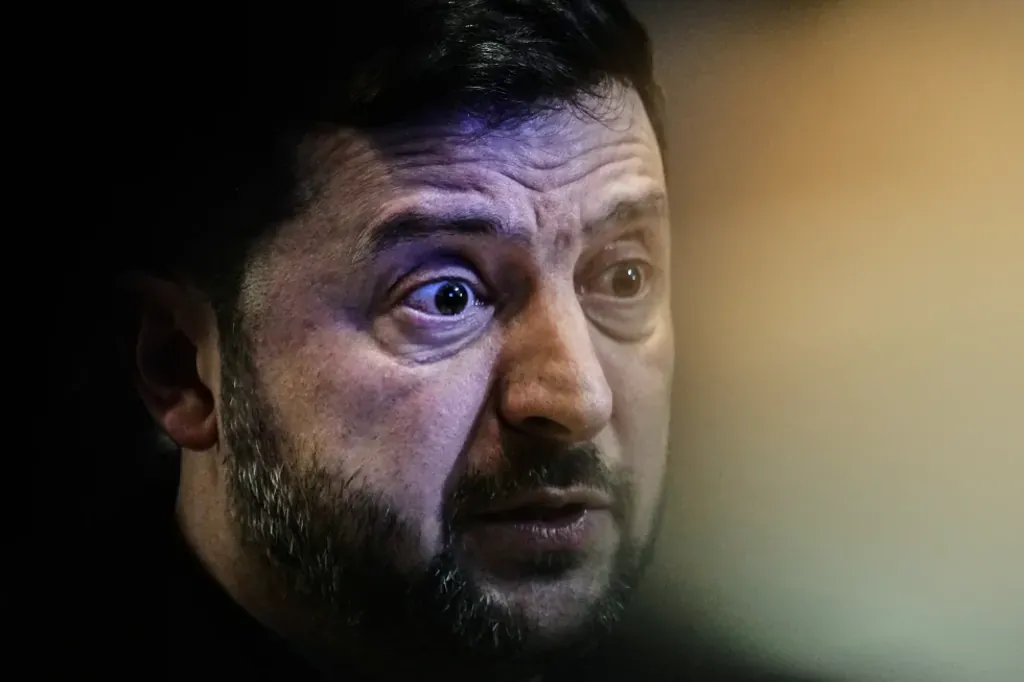
DAVOS, Switzerland (JN) – Ukrainian President Volodymyr Zelenskyy used the World Economic Forum in Davos to deliver a pointed message to Europe, warning that repeated calls for stronger collective defense and faster decision-making have gone largely unanswered as Russia’s war grinds on.
Speaking Thursday to political and business leaders, Zelenskyy said his annual appeals now feel cyclical, likening them to the film Groundhog Day, in which events endlessly repeat. Nearly four years after Russia’s full-scale invasion and a decade after the conflict began, he argued that Europe still has not fully adjusted to the scale of the threat on its eastern flank.
The remarks came at a moment of renewed diplomatic activity, with the United States pressing for a negotiated settlement and holding parallel discussions with Kyiv and Moscow. Zelenskyy’s speech reflected both urgency and frustration, as Ukraine continues to rely heavily on Western financial and military backing while fighting a larger, better-resourced adversary.
A warning delivered again in Davos
Addressing the annual gathering in the Swiss Alps, Zelenskyy said Europe remains hesitant and fragmented in responding to Russia’s continued aggression, despite clear signals that Ukraine’s fate is closely tied to Europe’s own security.
“Europe looks lost,” he said, urging the continent to act as a unified political force rather than a collection of national responses. He contrasted Europe’s internal debates with what he described as Washington’s readiness to take decisive action on global security issues.
Recalling his address in Davos a year earlier, Zelenskyy said his central message had not changed. He noted that he had ended that speech by warning that Europe needed to know how to defend itself — a year later, he said, the same warning still applied.
For Ukrainians, he added, the sense of repetition is not rhetorical but lived reality. The war has stretched across seasons and years, with frontline fighting, missile attacks and energy disruptions forming a persistent backdrop to daily life.
European Union countries have provided billions of euros in financial, military and humanitarian aid to Ukraine since Russia’s full-scale invasion in 2022. But support has not been uniform across the 27-member bloc, and internal disagreements have at times slowed decisions on weapons deliveries, sanctions enforcement and long-term security planning.
Frustration over defense spending and sanctions
Zelenskyy criticized Europe for what he described as delayed action on several key fronts, including defense spending, enforcement of sanctions and the use of Russian assets frozen in European jurisdictions.
He pointed in particular to Russia’s so-called “shadow fleet” of oil tankers, which Kyiv and its allies say helps Moscow bypass international sanctions. Zelenskyy argued that European governments have been too slow to curb those operations and to convert frozen Russian assets into financial support for Ukraine’s war effort.
In one of his sharpest remarks, he said Europe often feels more like a shared history and geography than a true geopolitical power. Some European countries, he acknowledged, have taken strong positions, but others, he said, appear reluctant to commit beyond short political cycles.
The criticism reflected long-standing tensions between Kyiv and parts of Europe over burden-sharing and strategic urgency, even as European leaders increasingly frame the war as central to the continent’s future security.
Meeting with Trump amid peace push
Zelenskyy’s Davos appearance followed a closed-door meeting with U.S. President Donald Trump, who is pushing for a negotiated end to the conflict. Both leaders described the talks as constructive, though Trump struck a cautious note about prospects for a deal.
Speaking to reporters aboard Air Force One after leaving Switzerland, Trump said Zelenskyy had expressed a desire to end the war. He added that while both Zelenskyy and Russian President Vladimir Putin want an agreement, similar discussions in recent months have failed to produce results.
According to Trump, territorial boundaries remain a central sticking point, as they have throughout negotiations over the past year. He also said the talks touched on the humanitarian toll of the war, including how Ukrainians are coping with winter conditions amid repeated Russian strikes on energy infrastructure.
Trump described the resilience of Ukrainian civilians as remarkable, while calling the living conditions caused by power outages and heating shortages untenable.
Battlefield pressures and domestic strain
Russia currently occupies roughly 20% of Ukrainian territory, including areas seized after 2014 and expanded during the 2022 invasion. While Russian forces have made incremental gains along parts of the roughly 1,000-kilometer front line, those advances have come at significant military and economic cost, compounded by international sanctions.
Ukraine, for its part, faces growing strain. Despite expanding domestic arms production, Kyiv remains dependent on Western weapons and funding. Manpower shortages have also become more acute, with Ukrainian officials acknowledging widespread draft evasion and desertions as the war drags on.
Zelenskyy has repeatedly warned that waning international attention could weaken Ukraine’s position, particularly as other global crises compete for diplomatic focus.
Talks with Moscow and unresolved questions
As diplomatic efforts accelerate, U.S. officials have also engaged directly with Moscow. Trump’s special envoy Steve Witkoff, accompanied by Jared Kushner, held hours-long talks with Putin in the Russian capital, according to the Kremlin.
Witkoff said one major issue remains unresolved in the negotiations, without providing details. Zelenskyy has indicated that the future status of Russian-occupied territory in eastern Ukraine is among the most difficult questions still on the table, even as broader peace proposals near completion.
He said postwar security guarantees have been discussed between Washington and Kyiv but would require formal approval by both governments. Zelenskyy also confirmed plans for trilateral talks involving the United States, Ukraine and Russia, scheduled to begin in the United Arab Emirates.
Any settlement, he stressed, would require compromises from all sides. “Not only Ukraine,” he said, signaling Kyiv’s expectation that Moscow must also make concessions.
Air defenses and allied support
Despite tensions in the U.S.-Ukraine relationship in recent years, Zelenskyy said he thanked Trump for previously supplied Patriot air defense systems, which have played a critical role in intercepting Russian missiles targeting Ukraine’s power grid.
He said he had asked for additional systems, as Russia continues to strike civilian infrastructure. After U.S. support was reduced, other NATO countries stepped in by purchasing American weapons and transferring them to Ukraine under special financing arrangements.
As Zelenskyy left Davos, his message to Europe remained consistent: the war has exposed structural weaknesses in collective security, and delay carries its own risks. Whether his latest warning prompts faster, more unified action remains an open question.
This article was rewritten by JournosNews.com based on verified reporting from trusted sources. The content has been independently reviewed, fact-checked, and edited for accuracy, neutrality, tone, and global readability in accordance with Google News and AdSense standards.
All opinions, quotes, or statements from contributors, experts, or sourced organizations do not necessarily reflect the views of JournosNews.com. JournosNews.com maintains full editorial independence from any external funders, sponsors, or organizations.
Stay informed with JournosNews.com — your trusted source for verified global reporting and in-depth analysis. Follow us on Google News, BlueSky, and X for real-time updates.