Western intelligence agencies are examining indications that Russia may be developing a new anti-satellite weapon aimed at disrupting SpaceX’s Starlink network, according to intelligence findings reviewed by The Associated Press. The suspected system, which remains unverified, could attempt to disable multiple satellites at once by dispersing clouds of small debris in low-Earth orbit.
Officials and analysts caution that such a weapon, if ever deployed, would pose serious risks beyond its intended target. Any large-scale release of orbital debris could threaten satellites operated by many countries, including Russia itself, and increase long-term instability in space.
Intelligence findings and early assessments
The intelligence findings, shared with AP by officials from two NATO-member countries, describe what analysts refer to as a “zone-effect” weapon. The concept would rely on releasing hundreds of thousands of dense pellets into orbital paths used by Starlink satellites.
Each pellet would measure only a few millimetres across. At orbital speeds, even objects of that size could damage or disable satellites on impact. Unlike a direct missile strike, the system would aim to affect many satellites at once.
AP could not independently verify the findings. The intelligence services involved declined to be identified, and the documents did not indicate whether Russia has tested the concept or moved beyond early research.
Several space security experts questioned whether such a weapon would make strategic sense. They warned that debris released at scale could remain in orbit for years, endangering civilian and military systems worldwide.
Expert scepticism over feasibility
Victoria Samson, a space security specialist at the Secure World Foundation, said the concept raised serious doubts. Her organisation tracks anti-satellite developments across major space powers.
“I don’t buy it,” Samson said. “I would be very surprised if Russia chose to do something like this, given the consequences.”
She noted that uncontrolled debris clouds would not distinguish between adversary satellites and neutral or allied systems. Once released, the pellets could not be recalled or steered with precision.
Such an outcome, she said, would undermine Russia’s own reliance on space-based communications, navigation, and surveillance.
Military officials urge caution, not dismissal
Despite scepticism from some analysts, senior military officials said the possibility could not be ruled out entirely.
Brigadier General Christopher Horner, commander of Canada’s military Space Division, said earlier allegations about Russian interest in space-based nuclear systems made other unconventional approaches conceivable.
“I haven’t been briefed on a system like this,” Horner told AP. “But it’s not implausible.”
He added that if Russia has shown willingness to explore highly destabilising space weapons, then research into a system just below that threshold would not be surprising.
The Kremlin did not respond to AP’s requests for comment. Russian officials have previously called for international efforts to prevent weapons from being deployed in orbit. President Vladimir Putin has also said Moscow has no plans to place nuclear weapons in space.
Why Starlink matters in the conflict
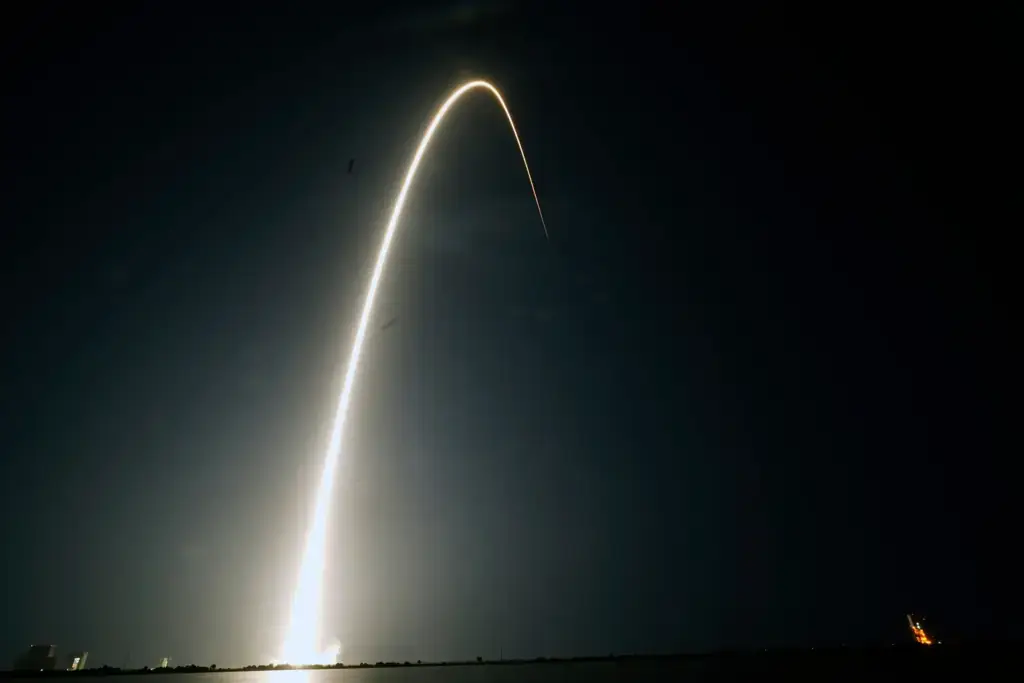
The intelligence findings point to Starlink as a specific concern for Moscow. The satellite network has played a central role in Ukraine’s communications since Russia launched its full-scale invasion more than three years ago.
Ukrainian forces rely on Starlink for battlefield communications, navigation, and coordination. Civilians and government agencies also use the system in areas where Russian strikes have damaged ground-based infrastructure.
Russian officials have repeatedly warned that commercial satellites supporting Ukraine’s military could be considered legitimate targets. Those warnings have increased as private space systems take on more visible roles in modern warfare.
Earlier this year, Russia announced the deployment of its S-500 missile defence system. Moscow claims the system can engage targets in low-Earth orbit, though independent verification remains limited.
A system designed to hit many satellites at once
Unlike the direct-ascent missile Russia tested in 2021, which destroyed a defunct Soviet-era satellite, the suspected new concept would not rely on a single strike.
The intelligence findings suggest Russia could release pellets from clusters of small satellites that have yet to be launched. Once dispersed, the pellets would travel at extreme speeds along shared orbital paths.
Horner said such debris would prove almost impossible to control. “You’re not just hitting Starlink,” he said. “You’re affecting everything in that orbital regime.”
That includes satellites operated by the United States, China, Europe, and commercial providers. Any collision could also create additional debris, worsening the problem.
Research stage or strategic signalling
The intelligence documents reviewed by AP do not say when Russia might be capable of deploying such a system. They also do not confirm whether testing has occurred.
An official familiar with the findings said the work appears to remain in development. The official declined to discuss timelines, citing the sensitivity of the information.
Samson said the research could remain theoretical. She noted that scientists often explore concepts that never reach deployment.
She also warned that threat perceptions can sometimes influence defence spending and policy debates. “That doesn’t mean this is happening here,” she said. “But it has happened before.”
Detection and attribution challenges
The findings also raise concerns about detection. Pellets of this size could evade many existing tracking systems, which focus on larger debris.
Clayton Swope, a space security analyst at the Center for Strategic and International Studies in Washington, said attribution would still be possible over time.
“If satellites start failing in similar ways,” he said, “people will figure it out.”
Small debris can still cause serious harm. In November, a Chinese spacecraft suffered damage from a suspected debris impact, underscoring the vulnerability of satellites in crowded orbits.
Solar panels face particular risk, Swope said. Damage there can shut down a satellite even if the rest of the system remains intact.
Broader risks to space infrastructure
Analysts warn that debris-based weapons could trigger cascading effects. As fragments collide with other objects, they can generate even more debris.
Starlink satellites operate at roughly 550 kilometres above Earth. China’s Tiangong space station and the International Space Station orbit lower, which places them at potential risk if debris migrates downward.
Swope described the concept as a possible deterrent rather than a practical weapon. “It feels like a weapon of fear,” he said.
Samson said the risks may outweigh any perceived advantage. “Russia has invested heavily in space,” she said. “Using something like this would shut space down for them too.”
This article was rewritten by JournosNews.com based on verified reporting from trusted sources. The content has been independently reviewed, fact-checked, and edited for accuracy, neutrality, tone, and global readability in accordance with Google News and AdSense standards.
All opinions, quotes, or statements from contributors, experts, or sourced organizations do not necessarily reflect the views of JournosNews.com. JournosNews.com maintains full editorial independence from any external funders, sponsors, or organizations.
Stay informed with JournosNews.com — your trusted source for verified global reporting and in-depth analysis. Follow us on Google News, BlueSky, and X for real-time updates.