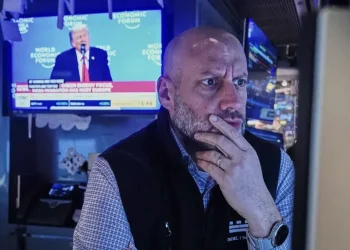
NEW YORK (JN) – Global financial markets turned volatile on Friday as investors reacted to President Donald Trump’s nomination of former Federal Reserve governor Kevin Warsh to lead the U.S. central bank, weighing what the move could mean for interest rates, inflation control, and the Fed’s long-standing independence.
U.S. equities declined, the dollar swung before strengthening, and precious metals prices plunged sharply after months of extraordinary gains. The shifts reflected uncertainty over future monetary policy at a time when inflation pressures remain uneven and asset valuations are under close scrutiny worldwide.
The nomination, which requires Senate confirmation, comes amid heightened sensitivity to any perceived political influence over the Federal Reserve, an institution that plays a central role in guiding borrowing costs, financial conditions, and global capital flows.
Markets react to Fed leadership uncertainty
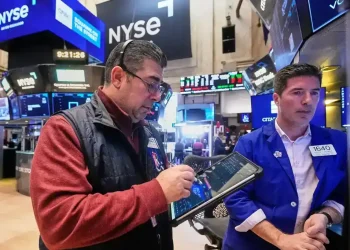
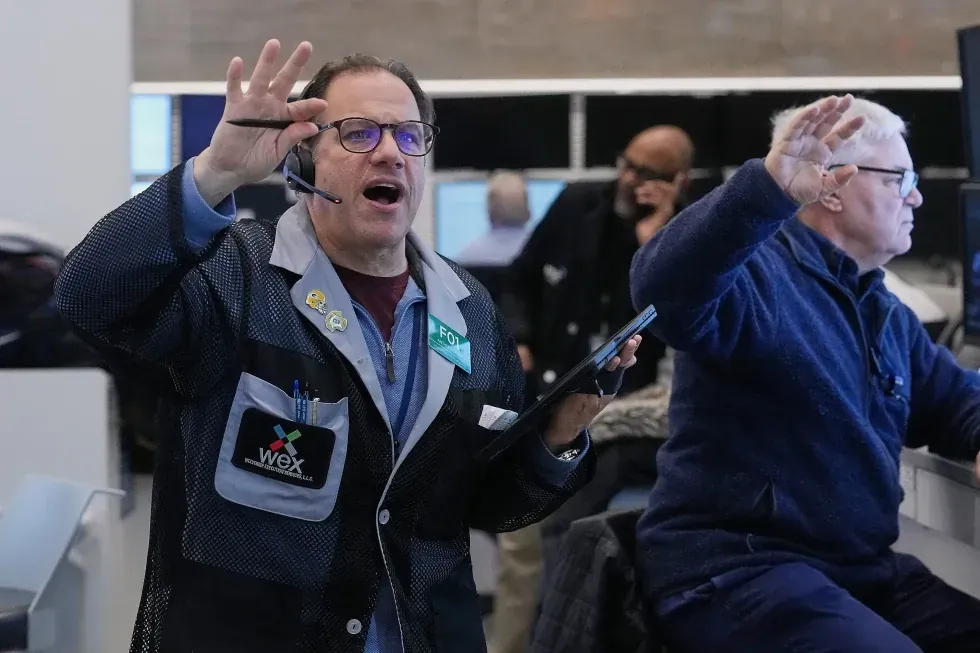
U.S. stocks finished lower after a choppy session. The S&P 500 closed down 0.4%, recovering from steeper losses earlier in the day. The Dow Jones Industrial Average fell 179 points, or 0.4%, while the Nasdaq composite dropped 0.9%, weighed down by technology shares.
The U.S. dollar strengthened overall, though it moved erratically as traders digested the implications of Warsh’s nomination. Currency markets have been particularly sensitive to signals that could alter the Fed’s policy direction or credibility.
Bond yields edged higher, with the benchmark 10-year U.S. Treasury yield rising to 4.25% from 4.24% late Thursday. Yields had climbed as high as 4.28% overnight before easing, reflecting ongoing tension between inflation data and expectations for future rate cuts.
Why the Fed matters to global markets
The Federal Reserve exerts outsized influence on financial markets by setting short-term interest rates and guiding expectations for economic growth and inflation. Higher rates tend to cool inflation but can weigh on stock prices and borrowing, while lower rates typically support growth but risk stoking price pressures.
President Trump has repeatedly called for lower interest rates, arguing they would bolster economic activity. Investors, however, have expressed concern that political pressure could weaken the Fed’s ability to make unpopular but necessary decisions to maintain price stability.
Those fears have helped drive demand for perceived safe-haven assets over the past year, including gold, while also contributing to weakness in the U.S. dollar during periods of heightened uncertainty.
What Kevin Warsh’s nomination signals
Warsh previously served as a governor on the Federal Reserve’s board, making him a familiar figure to investors. During his tenure, he was known for criticizing the central bank’s aggressive bond-buying programs aimed at keeping interest rates low following the global financial crisis.
Some market participants interpreted his nomination as a signal that the Fed could retain its institutional independence and remain willing to keep rates higher if inflation persists. Higher rates, while supportive of price stability, can pressure equity valuations.
At the same time, Warsh has publicly criticized current Fed Chair Jerome Powell in recent years and has expressed support for lower interest rates under certain conditions, adding complexity to investor expectations.
“Indeed, Warsh is not the Fed’s guy, he is Trump’s guy, and has shadowed Trump on monetary policy almost every step of the way since 2009,” said Thierry Wizman, a strategist at Macquarie Group. While that does not guarantee imminent rate cuts, he said, it could suggest a greater willingness to move more quickly when conditions allow.
Gold and silver suffer dramatic reversals
The sharpest market reaction came in precious metals, where gold prices plunged 11.4% to settle at $4,745.10 an ounce, marking a sudden reversal after a historic rally. Gold had roughly doubled over the past 12 months, briefly surpassing $5,000 earlier in the week and touching even higher levels on Thursday.
Silver prices fell even more steeply, tumbling 31.4% in a single session after posting similarly outsized gains during its recent surge.
Precious metals had been buoyed by a combination of factors, including concerns about Fed independence, elevated U.S. stock market valuations, geopolitical risks, the threat of new tariffs, and rising government debt levels across major economies.
The abrupt pullback highlighted how quickly sentiment can shift after rapid price increases. Market analysts noted that such corrections are common after extended rallies, particularly when positioning becomes crowded.
Mining stocks slide as metal prices fall
The collapse in metals prices weighed heavily on mining shares. Newmont, one of the world’s largest gold producers, fell 11.5%, while Freeport-McMoRan dropped 7.5%.
The declines reflected both the immediate impact of lower commodity prices and broader uncertainty about the sustainability of recent gains across the sector.
Tech earnings offer partial support
Some large technology stocks helped limit broader market losses. Tesla shares rose 3.3%, rebounding after a decline the previous day despite reporting quarterly profits that exceeded analyst expectations.
Apple shares added 0.5% after the company posted stronger-than-expected results, providing a measure of reassurance amid broader market volatility.
Inflation data keeps rate outlook uncertain
Adding to market tension, data released Friday showed U.S. wholesale inflation running hotter than economists had forecast. The report reinforced expectations that the Federal Reserve may keep interest rates steady for longer rather than resume cuts introduced late last year.
Persistent inflation pressures complicate the policy outlook, particularly as the Fed balances the risk of slowing economic growth against the need to keep price increases under control.
Global markets mixed
Outside the United States, stock markets posted mixed results. European indexes rose broadly, while Asian markets showed more varied performance.
In Indonesia, stocks climbed 1.2% after the resignation of the chief executive of the country’s stock exchange. The market had been under pressure earlier in the week after MSCI, a major index provider, warned about risks including transparency concerns.
This article was rewritten by JournosNews.com based on verified reporting from trusted sources. The content has been independently reviewed, fact-checked, and edited for accuracy, neutrality, tone, and global readability in accordance with Google News and AdSense standards.
All opinions, quotes, or statements from contributors, experts, or sourced organizations do not necessarily reflect the views of JournosNews.com. JournosNews.com maintains full editorial independence from any external funders, sponsors, or organizations.
Stay informed with JournosNews.com — your trusted source for verified global reporting and in-depth analysis. Follow us on Google News, BlueSky, and X for real-time updates.