A rare round of direct talks between senior U.S. and Iranian officials is set to begin in Oman, as both sides confront escalating military pressure and a deepening diplomatic crisis. The meeting comes at a moment when rhetoric from Washington and Tehran has hardened, troop movements have increased across the region, and regional mediators are working urgently to prevent a wider conflict.
The discussions represent the first formal engagement between the two governments since last year’s brief but intense Israel–Iran war, during which U.S. forces struck key Iranian nuclear facilities. Against this backdrop, Oman has re-emerged as a discreet venue for dialogue, reflecting its longstanding role as a trusted intermediary between adversaries in the Gulf.
While expectations remain modest, the talks are viewed by diplomats as a critical test of whether dialogue can still function as a stabilising tool at a time when military posturing threatens to dominate the agenda.
Diplomatic effort under military shadow
The meeting follows weeks of heightened tension after President Donald Trump warned that the United States could strike Iran if no agreement is reached. Washington has deployed additional military assets to the Middle East, including an aircraft carrier group, warships and fighter aircraft, moves described by U.S. officials as deterrence rather than preparation for imminent action.
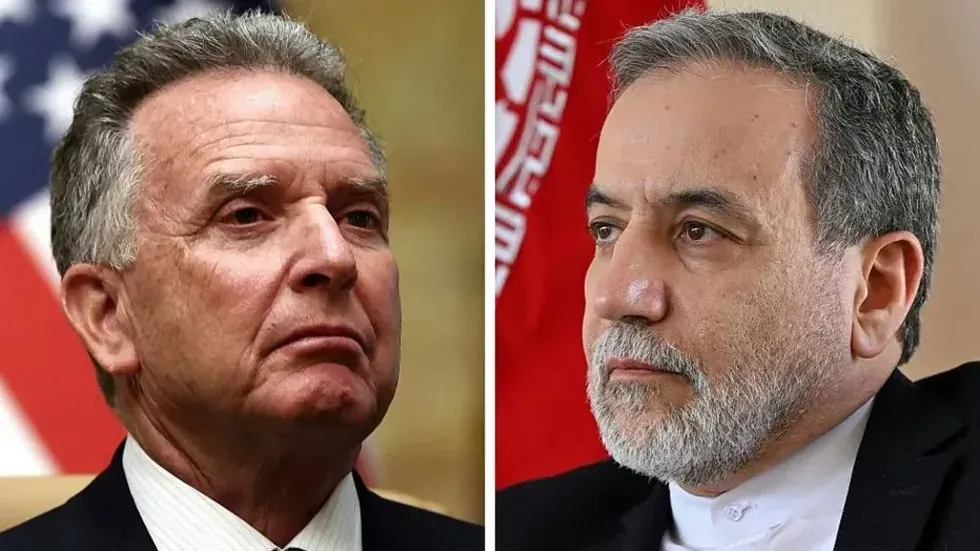
Iran, for its part, has vowed to retaliate against any attack, warning that U.S. military bases and Israeli targets in the region could be struck in response. Iranian Foreign Minister Abbas Araghchi, who is leading Tehran’s delegation, said recently that Iran’s armed forces were “with their fingers on the trigger.”
Representing the United States are special envoy Steve Witkoff and Jared Kushner, a senior adviser to the president.
The talks were initially expected to take place in Istanbul but were shifted to Oman at Iran’s request, with Tehran also insisting the discussions be limited to U.S. and Iranian officials only. Egypt, Turkey and Qatar have played key roles in facilitating the diplomatic channel.
Nuclear programme at the centre — but not the only issue
At the heart of the discussions is Iran’s nuclear programme, which has long been a source of dispute between Tehran and Western governments. Iran maintains that its uranium enrichment activities are for civilian and peaceful purposes. The United States and Israel have repeatedly accused Iran of seeking the capability to develop a nuclear weapon.
Washington is pressing for Iran to freeze its nuclear activities and relinquish its stockpile of highly enriched uranium. U.S. officials have also indicated that Iran’s ballistic missile programme, its regional alliances with armed groups, and its domestic human rights record should form part of any broader agreement.
Tehran, however, has said the talks will be confined strictly to the nuclear file and has rejected suggestions that its missile capabilities or regional policies are negotiable, describing such demands as infringements on its sovereignty.
Iran has also rejected proposals to transfer its stockpile of enriched uranium to a third country, though officials have previously signalled openness to alternative arrangements, including the possibility of a regional enrichment consortium — an idea raised in earlier negotiations that stalled last year.
Aftermath of war and internal unrest
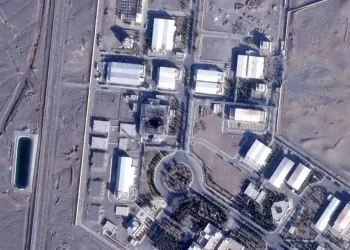
The diplomatic push comes in the wake of last year’s Israel–Iran war, during which U.S. forces bombed three major Iranian nuclear sites. Iranian officials say uranium enrichment activities were halted after those strikes.
At the same time, Iran has faced widespread domestic unrest. Nationwide protests, triggered by economic hardship and calls for political change, were met with a forceful response by security forces. The Human Rights Activists News Agency, a U.S.-based monitoring group, has reported thousands of deaths and tens of thousands of arrests, though these figures are difficult to independently verify.
For Iran’s leadership, analysts say, the talks may represent an opportunity to reduce external pressure at a time when internal stability has been tested. President Masoud Pezeshkian has instructed his foreign minister to pursue what he described as “fair and equitable negotiations,” provided conditions are appropriate.
Sanctions relief is expected to be a central Iranian demand. Years of economic restrictions have severely constrained the country’s economy, and any easing could have significant domestic implications.
U.S. calculations and regional concerns
For Washington, the meeting offers a potential diplomatic off-ramp from escalating threats. President Trump has publicly warned that Iran’s Supreme Leader Ayatollah Ali Khamenei “should be very worried,” underscoring the severity of the moment.
Secretary of State Marco Rubio has said that any meaningful agreement would need to go beyond nuclear issues, but acknowledged uncertainty about whether a deal is achievable.
Regional governments, particularly in the Gulf, have expressed concern that a U.S. military strike on Iran could ignite a wider conflict or create prolonged instability. Officials in the region have cautioned that air strikes alone would be unlikely to bring about political change in Tehran and could instead trigger unpredictable consequences.
Narrow expectations, high stakes
Despite the long list of disputes, diplomats involved in the mediation effort suggest that even a limited understanding on nuclear transparency or de-escalation measures could help reduce immediate risks.
Both sides enter the talks with sharply different priorities and deep mistrust. Yet the decision to meet face-to-face signals recognition in both capitals that dialogue, however constrained, remains preferable to unchecked escalation.
Whether the Oman meeting produces a framework for further negotiations or simply prevents further deterioration may become clear only in the coming days.
This article was rewritten by JournosNews.com based on verified reporting from trusted sources. The content has been independently reviewed, fact-checked, and edited for accuracy, neutrality, tone, and global readability in accordance with Google News and AdSense standards.
All opinions, quotes, or statements from contributors, experts, or sourced organizations do not necessarily reflect the views of JournosNews.com. JournosNews.com maintains full editorial independence from any external funders, sponsors, or organizations.
Stay informed with JournosNews.com — your trusted source for verified global reporting and in-depth analysis. Follow us on Google News, BlueSky, and X for real-time updates.