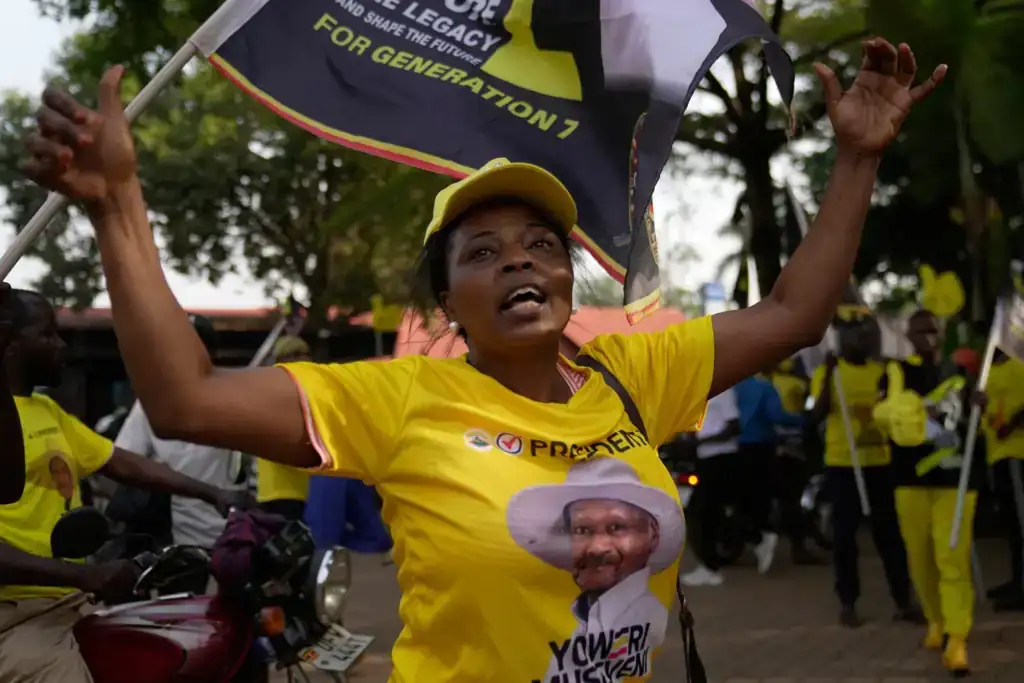
KAMPALA, Uganda (Journos News) – Ugandan President Yoweri Museveni has framed his latest election victory as a demonstration of the enduring strength of his long-ruling party, after being declared the winner of a vote rejected by his main challenger.
The result, which extends Museveni’s time in office toward five decades, comes amid persistent opposition allegations of irregularities, heavy security deployment, and restrictions on campaigning and voting.
While authorities say the election reflected popular support for continuity, critics argue it underscored the uneven political landscape in a country that has never seen a peaceful transfer of presidential power since independence.
Speaking a day after electoral authorities announced the results, Museveni said his landslide victory offered “a good taste of the strength” of the National Resistance Movement (NRM), which has governed Uganda for nearly 40 years.
Official results showed Museveni, 81, winning more than 71.6% of the vote. His closest challenger, opposition leader Bobi Wine, received 24.7%, figures Wine has rejected as fraudulent.

Long rule reinforced by constitutional changes
Museveni, who first took power in 1986 after a guerrilla war, has remained in office through constitutional amendments that removed presidential term limits and age restrictions. Those changes cleared the way for him to run again and eliminated the final legal barriers to extended rule.
Over the years, several potential rivals have been imprisoned, sidelined, or weakened politically, reinforcing Museveni’s control over the state and the ruling party. He is now Africa’s third-longest serving president and is set to begin a seventh term.
Addressing supporters from his country home in western Uganda, Museveni suggested that low voter turnout did not reflect declining support for his party. He said many of those who did not cast ballots were likely NRM supporters.
“The opposition are lucky,” he said, referring to the election outcome. “They have not seen our full strength.”
Low turnout and opposition rejection
Voter turnout stood at 52%, the lowest since Uganda returned to multiparty politics in 2006. The election was held on Thursday amid tight security measures and logistical challenges.
Wine, a 43-year-old musician-turned-politician whose real name is Kyagulanyi Ssentamu, has accused authorities of widespread irregularities, including ballot stuffing and intimidation of his party’s polling agents. He has described the official tally as “fake.”
On Sunday, Wine posted video footage on the social media platform X that he said showed incidents of ballot manipulation and harassment of his representatives in the lead-up to voting. Ugandan authorities did not immediately respond to those specific claims.
Wine retains the option of challenging the result in court, though previous legal efforts by opposition candidates have failed to overturn Museveni’s victories. In past rulings, courts have acknowledged flaws in the electoral process while stopping short of annulling results.
Security concerns and violence allegations
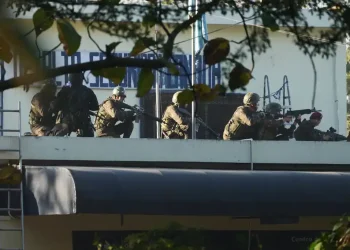
The election period was marked by a heavy presence of security forces, a longstanding feature of Ugandan campaigns. Wine has said police and military personnel followed him closely and used tear gas against his supporters at rallies.
Citing security fears, Wine campaigned wearing a flak jacket and helmet, images that became emblematic of the tense political environment. He has consistently denied government accusations that he seeks to incite unrest.
In his post-election address, Museveni accused sections of the opposition of attempting to foment violence during voting. He urged religious leaders to engage with young people, whom he said could be misled into disorder.
Museveni said at least seven opposition supporters of a parliamentary candidate aligned with Wine’s party were killed by police after attacking a polling station with machetes in the central district of Butambala. He described some opposition figures as “terrorists” and labeled Wine and others “traitors.”
Wine has previously rejected such accusations, saying they are intended to delegitimize political dissent. He has argued that his campaign reflects the aspirations of Uganda’s large youth population, many of whom have known no other president.
Voting disruptions and internet shutdown
Election day was also affected by technical and administrative problems. Authorities imposed a days-long internet shutdown, cutting access to social media and messaging platforms commonly used by opposition groups and civil society.
In several areas, including the capital Kampala, biometric voter identification machines failed, delaying the opening of polling stations. Opposition figures say those disruptions discouraged participation and may form part of any legal challenge to the results.
Wine has alleged that ballot box stuffing occurred in regions considered strongholds of the ruling party, a claim officials have denied. The government has said the biometric failures were isolated and did not alter the overall outcome.
Broader political landscape
Museveni’s supporters credit him with maintaining relative peace and stability in a region affected by conflict, noting that Uganda hosts hundreds of thousands of refugees fleeing violence in neighboring countries. The government frequently highlights infrastructure development and economic growth as achievements of his long tenure.
Critics, however, point to shrinking political space, restrictions on media and assembly, and the continued detention of opposition figures. Veteran opposition leader Kizza Besigye, a four-time presidential candidate, remains in prison on treason charges he says are politically motivated.
Museveni has not indicated when he might step aside, and no clear successor has emerged within the upper ranks of the NRM. As he prepares to extend his rule further, Uganda faces renewed debate over governance, generational change, and the future of its political system.
More than six decades after independence from Britain, Uganda has yet to experience a peaceful transfer of presidential power. The latest election has once again highlighted that unresolved legacy.
This article was rewritten by JournosNews.com based on verified reporting from trusted sources. The content has been independently reviewed, fact-checked, and edited for accuracy, neutrality, tone, and global readability in accordance with Google News and AdSense standards.
All opinions, quotes, or statements from contributors, experts, or sourced organizations do not necessarily reflect the views of JournosNews.com. JournosNews.com maintains full editorial independence from any external funders, sponsors, or organizations.
Stay informed with JournosNews.com — your trusted source for verified global reporting and in-depth analysis. Follow us on Google News, BlueSky, and X for real-time updates.