Journos News
Friday, January 9, 2026
  • Login
  • Home
  • Breaking News
  • World News
  • Politics
  • Business
  • Conflict and Crisis
  • Sports
  • Technology
  • Entertainment
  • Health
No Result
View All Result
  • Home
  • Breaking News
  • World News
  • Politics
  • Business
  • Conflict and Crisis
  • Sports
  • Technology
  • Entertainment
  • Health
No Result
View All Result
Journos News
No Result
View All Result
Home Lifestyle

South Korea Approves Legal Tattooing by Licensed Non-Medical Artists

New law ends three-decade restriction, giving tattoo artists legal recognition and safeguards

The Daily Desk by The Daily Desk
September 26, 2025
in Lifestyle, Society & Culture, Visual Arts
0
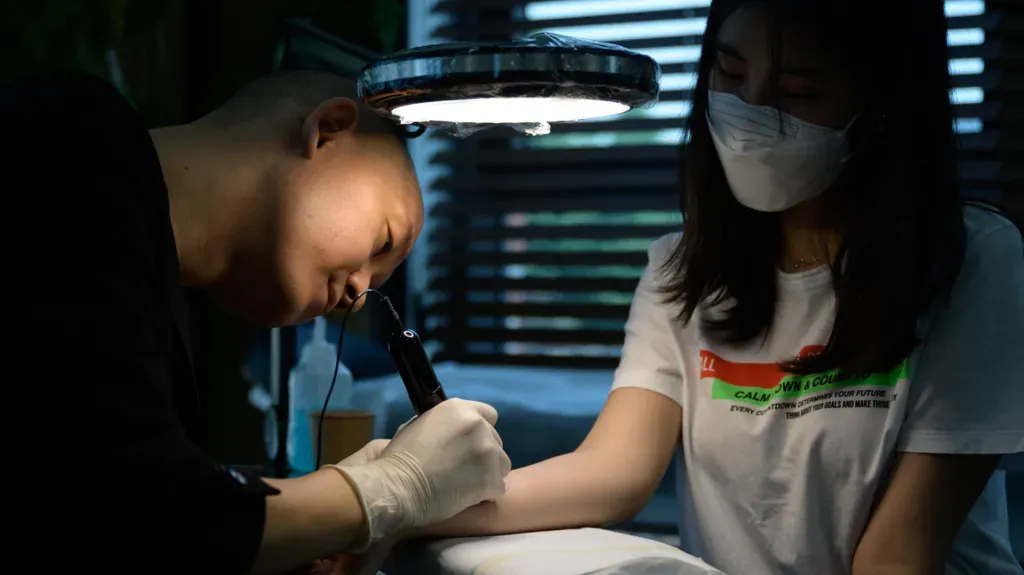
South Korea legalizes tattooing by non-medical professionals, ending 30-year ban with new licensing law for artists. - Getty Images

South Korea approves Tattooist Act, allowing non-medical professionals to practice legally under new regulations. - Getty Images

South Korea Legalizes Tattooing by Non-Medical Professionals After 30 Years

Published: September-26-2025, 14:30 EDT

South Korea has taken a landmark step by legalizing tattoo artistry by non-medical professionals, ending more than 30 years of restrictions. The move follows persistent campaigns by tattooists who sought the right to practice openly without the threat of prosecution.

With the passage of the Tattooist Act, the profession will now be regulated, requiring practitioners to obtain licenses and follow national safety standards.

A Shift From Decades of Restriction

For decades, tattooing in South Korea was technically limited to medical professionals. This stemmed from a 1992 Supreme Court ruling that classified tattooing as a medical act. Under that interpretation, artists without medical licenses faced severe penalties, including prison terms of up to five years or fines of as much as 50 million Korean won (about $35,000).

Despite these rules, tattooing thrived underground. Artists often worked discreetly, offering everything from traditional body art to semi-permanent makeup. However, they were vulnerable to legal risks, harassment, or even exploitation, as disgruntled clients could threaten to report them.

RELATED POSTS

From Red Donkeys to Vibrant Canvases: Fernando Dávila’s Life in Color

Miss Finland image triggers racism controversy, prompting government apologies across Asia

Inside a Turkish Bath: Ritual, Architecture, and a Tradition That Endures

The 20 Best Places to Travel in 2026

Why British Countryside Fashion Is Shaping Global Style in 2025

Pumpkin Pie Gets a Chicago Twist in Deep-Dish Reinvention

Voices From the Tattoo Community

Tattoo artists and industry advocates welcomed the legislative breakthrough. Lim Bo-ran, president of the Korea Tattoo Federation, became emotional during the announcement, saying: “I can’t speak because it feels like a dream. I am truly grateful.”

Cases shared by artists reveal the pressures they faced under the old law. A tattooist known as Narr previously told the BBC she endured harassment from a client but avoided reporting it to police out of fear of prosecution. Another artist, Banul, was reported to authorities by a dissatisfied client who demanded compensation.

According to South Korea’s Ministry of Health and Welfare, there were an estimated 350,000 tattoo artists as of 2021, with most specializing in cosmetic tattoos for eyebrows, lips, and hairlines. Few, however, had formal medical training, highlighting the gap between practice and legal recognition.

Growing Acceptance and Shifting Attitudes

Although tattoos remain controversial in South Korea, societal attitudes have been gradually evolving. In recent years, courts began acquitting some tattooists, signaling a softening stance toward the practice.

Park Ju-min, chairman of the National Assembly’s health and welfare committee and a chief sponsor of the Tattooist Act, emphasized that legalization is about safety as well as recognition. “Citizens will now be able to get tattoos safely, and those engaged in the tattoo industry will be recognized as legal professionals,” he said.

He also pointed out that even within the National Assembly, many lawmakers already had semi-permanent cosmetic tattoos such as lip or eyebrow procedures, underlining how widespread the practice has become.

Concerns From the Medical Community

Not all groups welcomed the change. The Korean Medical Association opposed the measure, insisting that tattooing should remain a medical procedure. In a statement, it warned that tattoos could damage skin, complicate cancer diagnosis, and carry health risks if not properly regulated.

The group argued that the rising popularity of tattoos does not diminish the medical concerns involved. Critics in the medical field remain skeptical about whether non-medical practitioners can guarantee safe and hygienic procedures.

Stigma and Cultural Resistance

Despite legalization, stigma toward tattoos persists in South Korean society. While popular among younger generations and prominent in online influencer culture, tattoos are still often associated with negative stereotypes, including links to gang activity in past decades.

Recent opinion polls indicate that a majority of South Koreans continue to view tattoos unfavorably, though younger respondents are more supportive. Experts believe it may take years for social attitudes to fully normalize the practice, even with the law in place.

Implementation and Licensing Requirements

The Tattooist Act will not take effect immediately. Implementation is scheduled for two years from now, allowing time to set up the licensing system.

Under the new framework, tattoo artists must:

  • Pass a national exam.

  • Complete safety and hygiene training.

  • Maintain detailed client and procedure records.

Laser tattoo removals, however, will remain restricted to licensed medical professionals.

This phased approach, lawmakers say, balances the interests of consumer safety with the recognition of a long-marginalized industry.

A Turning Point for an Emerging Industry

The legalization marks a pivotal moment for South Korea’s tattoo sector, which has operated in a legal gray zone for decades. For artists, it represents not just protection from prosecution, but also the ability to practice openly and build legitimate businesses.

While challenges remain—including cultural stigma and concerns over safety—the recognition of tattoo artistry as a licensed profession positions South Korea to align more closely with international standards where body art is widely accepted.

As the new law takes effect, both supporters and critics will be watching closely to see how regulation reshapes the industry and influences public perception.

Follow JournosNews.com for professionally verified reporting and expert analysis across world events, business, politics, technology, culture, and health — your reliable source for neutral, accurate journalism.
Source: – BBC – South Korea legalises tattooing by non-medical professionals

This article was rewritten by JournosNews.com based on verified reporting from trusted sources. The content has been independently reviewed, fact-checked, and edited for accuracy, neutrality, tone, and global readability in accordance with Google News and AdSense standards.

All opinions, quotes, or statements from contributors, experts, or sourced organizations do not necessarily reflect the views of JournosNews.com. JournosNews.com maintains full editorial independence from any external funders, sponsors, or organizations.

Stay informed with JournosNews.com — your trusted source for verified global reporting and in-depth analysis. Follow us on Google News, BlueSky, and X for real-time updates.
Tags: #AsiaNews#BodyArt#CosmeticTattoos#CulturalShift#GlobalTrends#HealthAndSafety#KoreanCulture#ProfessionalRecognition#SouthKorea#TattooIndustry#TattooistAct#TattooLegalization
ShareTweetSend
The Daily Desk

The Daily Desk

The Daily Desk – Contributor, JournosNews.com, The Daily Desk is a freelance editor and contributor at JournosNews.com, covering politics, media, and the evolving dynamics of public discourse. With over a decade of experience in digital journalism, Jordan brings clarity, accuracy, and insight to every story.

Related Posts

Colorblind painter Fernando Dávila working in his Miami studio - AP Photo/Cody Jackson
Arts & Culture

From Red Donkeys to Vibrant Canvases: Fernando Dávila’s Life in Color

December 27, 2025
Miss Finland controversy sparks backlash across Asia - Emmi Korhonen/Lehtikuva via AP, File
Lifestyle

Miss Finland image triggers racism controversy, prompting government apologies across Asia

December 19, 2025
Sunlight filtering through a domed ceiling inside a traditional Turkish bath- Yasin Akgul/AFP/Getty Images/CNN
Health & Wellness

Inside a Turkish Bath: Ritual, Architecture, and a Tradition That Endures

December 13, 2025
Global travel destinations for 2026 featuring nature, culture and heritage - Alamy/BBC
Lifestyle

The 20 Best Places to Travel in 2026

December 12, 2025
Models wearing British countryside fashion in 2025 style - Getty Images/ BBC
Fashion & Style

Why British Countryside Fashion Is Shaping Global Style in 2025

December 3, 2025
Tall deep-dish pumpkin pie sliced on table with skillet - Alanna Hale/Voracious via AP
Food & Drink

Pumpkin Pie Gets a Chicago Twist in Deep-Dish Reinvention

November 26, 2025
92-year-old artist Robert Rose painting in his Oxfordshire studio - Robert Rose/BBC
Human Interest Stories

92-Year-Old Great-Grandad Gains Global Attention With TikTok Art

November 23, 2025
Discover ‘We Mode’: How Group Movement and Cheer Create Shared Joy and Connection - AP Photo/Ethan Swope, File
Health & Wellness

How to Experience Collective Joy and ‘We Mode’ in Group Activities

November 23, 2025
Fátima Bosch of Mexico Wins Miss Universe 2025 After Facing Public Bullying Controversy in Bangkok - AP Photo/Sakchai Lalit
Breaking News

Mexican Contestant Triumphs at Miss Universe 2025 After Public Bullying Controversy

November 21, 2025
Load More
Next Post
Stray Kids downplay success despite record-breaking tours, chart dominance, and Marvel cameo in a year of nonstop creativity. - Getty Images

Stray Kids Balance Global Fame With Humility Amid Record-Breaking Year

Estimated cost of Central Sulawesi disaster reaches nearly $1B

At UN speech, Netanyahu rejects Palestinian statehood recognition, accuses critics of antisemitism, and pledges to defeat Hamas. - AP Photo/Stefan Jeremiah

Israel’s Netanyahu Defends Gaza Offensive at UN Amid Growing Global Pressure

JournosNews logo

Journos News delivers globally neutral, fact-based journalism that meets international media standards — clear, credible, and made for a connected world.

  • Categories
  • World News
  • Politics
  • Business & Economy
  • Conflict and Crisis
  • Sports
  • Technology
  • Entertainment
  • Science & Health
  • Lifestyle & Culture
  • Investigations & Watchdog
  • Resources
  • Submit a Story
  • Advertise with Us
  • Syndication & Partnerships
  • Site Map
  • Press & Media Kit
  • Editorial Team
  • Careers
  • AI Use Policy

Join thousands of readers receiving the latest updates, tips, and exclusive insights straight to their inbox. Never miss an important story again.

  • About Us
  • Accessibility Statement
  • Contact Us
  • Privacy Policy
  • Terms and Conditions

© JournosNews.com – Trusted source for breaking news, trending stories, and in-depth reports.
All rights reserved.

Welcome Back!

Login to your account below

Forgotten Password?

Retrieve your password

Please enter your username or email address to reset your password.

Log In
No Result
View All Result
  • Home
  • Breaking News
  • World News
  • Politics
  • Business
  • Conflict and Crisis
  • Sports
  • Technology
  • Entertainment
  • Health

© JournosNews.com – Trusted source for breaking news, trending stories, and in-depth reports.
All rights reserved.

This website uses cookies. By continuing to use this website you are giving consent to cookies being used. Visit our Privacy and Cookie Policy.