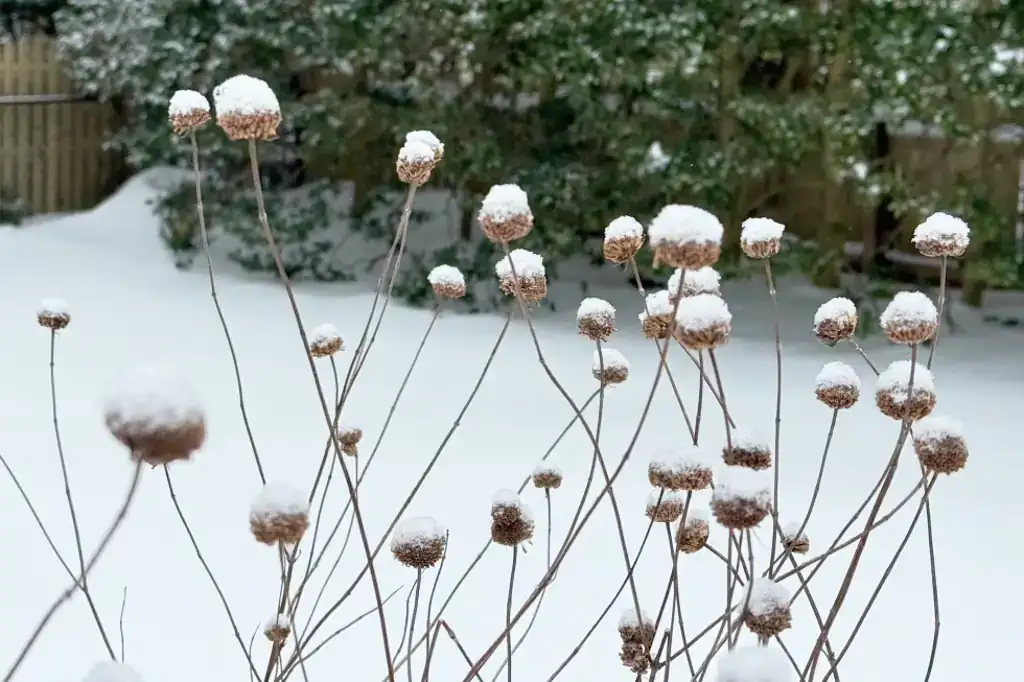
After a major winter storm, snow piled across lawns and garden beds may look disruptive, but for many plants it plays a crucial protective role. In cold climates, a consistent layer of snow can act as natural winter mulch, shielding roots and dormant plants from damaging temperature swings.
The benefits, however, are not universal. While soil and perennials often fare better under snow cover, trees and shrubs—particularly evergreens—can suffer structural damage from heavy, wet accumulation. Gardeners navigating winter storms face a balance between letting nature do its work and stepping in where risks are well established.
This combination of protection and hazard makes winter snow management an important, if often overlooked, part of year-round garden care.
Snow as natural insulation for garden beds
In regions where winter temperatures fluctuate above and below freezing, soil is prone to repeated freeze-thaw cycles. These shifts can gradually push roots, bulbs, tubers and rhizomes toward the surface, leaving them exposed to cold air and drying winds that can be fatal.
A stable layer of snow helps prevent this process. Acting as a dense insulating blanket, snow slows heat loss from the soil and keeps underground temperatures more consistent. This insulation reduces the mechanical stress on plant roots and helps dormant perennials survive through the coldest months.
As snow melts, it also delivers moisture evenly into the soil. In addition, snowfall contains small amounts of nitrogen absorbed from the atmosphere, providing a mild nutrient boost when spring growth begins. Together, these effects demonstrate how seasonal snow can support garden health without human intervention.
When snow becomes a threat to trees
The same qualities that benefit garden beds can create serious problems for trees and shrubs. Evergreen species such as arborvitae and Leyland cypress are especially vulnerable because their dense foliage traps wet, heavy snow.
As accumulation increases, the added weight can cause branches to bend, split or snap. In some cases, the damage can permanently alter a tree’s shape, reducing both its health and its visual appeal. Given the cost and time involved in replacing mature trees, preventative action is often worthwhile.
Gardeners can reduce the risk by gently removing snow from branches using a long-handled broom or similar tool. During prolonged or intense storms, clearing snow periodically—rather than waiting until snowfall ends—can limit the amount of weight branches must bear.
When not to intervene
Not all winter buildup should be removed. If snow or water freezes solid into ice, attempts to break it off can do more harm than good. Striking ice-covered branches may tear bark, damage buds or worsen existing cracks.
In these situations, experts generally advise patience. Allowing ice to melt naturally avoids additional stress to already fragile plant tissue. While this approach offers no guarantees, it minimizes the risk of accidental injury caused by forceful removal.
Choosing garden-safe ice melt products
Snow removal from walkways and driveways often requires deicing products to prevent slips and refreezing. The type of ice melt used can have significant consequences for nearby plants, pets and surrounding soil.
Magnesium chloride is widely regarded as one of the least harmful options. It dissolves quickly, works in very low temperatures, and is less likely to irritate pets’ paws. From a gardening perspective, it poses a lower risk to plants exposed through runoff, splashing slush or windblown residue.
The primary drawback is cost. Magnesium chloride is typically more expensive than other products, making it impractical for large areas. A common compromise is to use it near garden beds and high-pet-traffic zones, while reserving other materials for less sensitive areas.
Risks associated with common alternatives
Calcium chloride is often marketed as pet- and plant-safe, but it still carries risks. It can irritate skin and paws and may damage vegetation if overapplied. Gloves are recommended when handling it, and use near plants should be limited. Rinsing pets’ paws after exposure can also reduce irritation.
Potassium chloride, familiar to gardeners as a fertilizer component, is another option sometimes used for ice control. However, the concentrations required to melt ice are far higher than those used in fertilizers and can harm or kill plants, making it a poor choice near gardens.
Sodium chloride, or traditional rock salt, is the cheapest and most widely used deicer, but it is also the most damaging. It can poison plants and trees, contaminate soil, harm wildlife, corrode vehicles and contribute to cracking in concrete and masonry.
Minimizing long-term damage
Regardless of the product used, applying the smallest effective amount of ice melt helps limit environmental and structural damage. Overuse increases the likelihood of soil contamination and deterioration of paved surfaces.
Preventative measures can also help. Sealing driveways and walkways with a waterproofing product during warmer months reduces the risk of ice-related cracking and extends the life of masonry surfaces for several years.
Taken together, these practices allow gardeners to manage winter conditions responsibly—protecting plants, pets and infrastructure while letting snow perform its natural role where it does the most good.
This article was rewritten by JournosNews.com based on verified reporting from trusted sources. The content has been independently reviewed, fact-checked, and edited for accuracy, neutrality, tone, and global readability in accordance with Google News and AdSense standards.
All opinions, quotes, or statements from contributors, experts, or sourced organizations do not necessarily reflect the views of JournosNews.com. JournosNews.com maintains full editorial independence from any external funders, sponsors, or organizations.
Stay informed with JournosNews.com — your trusted source for verified global reporting and in-depth analysis. Follow us on Google News, BlueSky, and X for real-time updates.