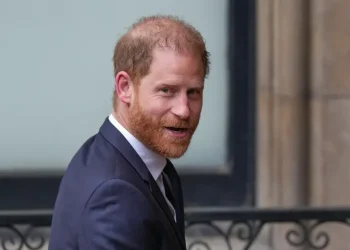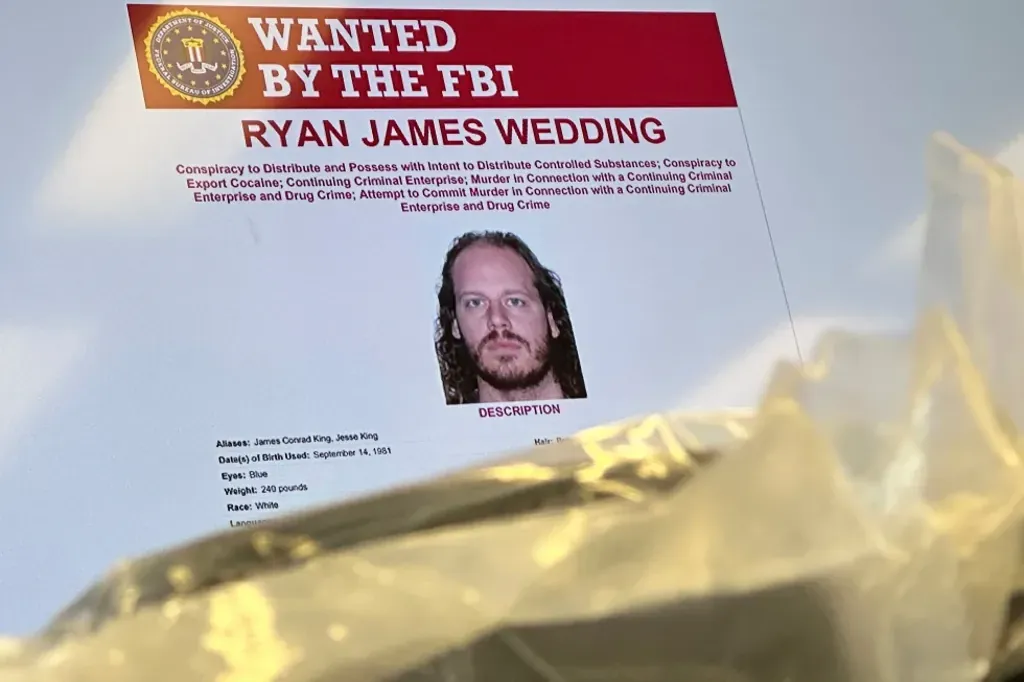
ONTARIO, California (JN) – Former Canadian Olympic snowboarder Ryan Wedding, a fugitive accused by U.S. authorities of leading a vast international cocaine trafficking network and ordering multiple killings, has been arrested in Mexico and transferred to the United States to face federal charges, officials said.
Wedding, 44, surrendered on Thursday at the U.S. Embassy in Mexico City and was subsequently flown to California. His arrest followed more than a year of coordination among law enforcement agencies in the United States, Mexico, Canada, Colombia and the Dominican Republic, according to U.S. officials.
The case marks the downfall of a former Olympian who, investigators allege, became a central figure in one of the largest cocaine supply operations linking Latin America, the United States and Canada. Wedding had been on the FBI’s Ten Most Wanted Fugitives list since March last year, with a reward of up to $15 million offered for information leading to his capture.
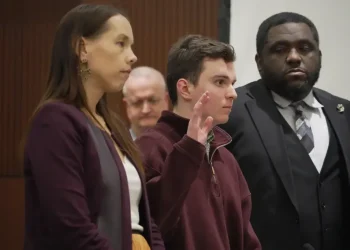
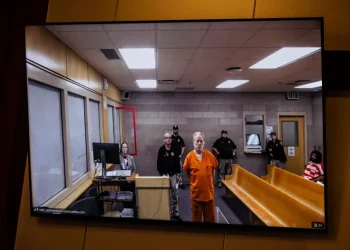
U.S. officials say Wedding is expected to make his initial appearance in federal court in California on Monday.
From Olympic athlete to international fugitive
Wedding competed for Canada in snowboarding at the 2002 Winter Olympics in Salt Lake City. Authorities now allege that, after his athletic career, he built a criminal enterprise responsible for moving tens of tons of cocaine each year from Colombia through Mexico and into the United States and Canada.
According to investigators, Wedding operated with the protection of Mexico’s Sinaloa Cartel, one of the country’s most powerful drug trafficking organizations. Officials said he used several aliases, including “El Jefe,” “Public Enemy,” and “James Conrad Kin.”
FBI Director Kash Patel said the arrest demonstrated the importance of international cooperation. “When you go after a guy like Ryan Wedding, it takes a united front,” Patel told a news conference in California, praising the role of Mexico and other partner nations in the investigation.
Patel compared Wedding’s alleged role in the drug trade to that of Joaquín “El Chapo” Guzmán, the former Sinaloa Cartel leader now serving a life sentence in the United States following his conviction on drug trafficking charges.
Prior conviction and new federal charges
Wedding’s criminal history in the United States dates back more than a decade. Federal court records show he was convicted in 2010 of conspiracy to distribute cocaine and served a prison sentence.
Prosecutors now accuse him of running a multinational drug trafficking organization and of directing several killings linked to the operation. A federal indictment returned in 2024 charges Wedding with operating a continuing criminal enterprise, conspiracy to distribute cocaine, murder, and other serious offenses.
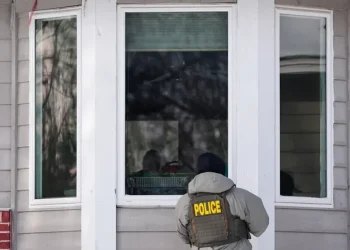
The indictment alleges that the organization obtained cocaine in Colombia, worked with Mexican cartels to transport the drugs by boat and aircraft to Mexico, and then moved them into the United States using commercial trucks. Authorities say the drugs were stored in Southern California before being shipped onward to Canada and other parts of the United States.
U.S. officials have described the group as the largest supplier of cocaine to Canada, generating billions of dollars in illicit revenue.
Allegations of ordered killings
In addition to drug trafficking charges, Wedding faces accusations that he ordered multiple killings to protect his operation.
Prosecutors allege he directed the 2023 killings of two members of a Canadian family in retaliation for the theft of a drug shipment. He is also accused of ordering another killing in 2024 related to an unpaid drug debt.
In November, U.S. authorities filed additional charges accusing Wedding of orchestrating the murder of a federal witness in Colombia to prevent extradition to the United States. According to investigators, Wedding and his associates used a Canadian-based website, “The Dirty News,” to post a photograph of the witness, allowing the victim to be identified and tracked.
Authorities say the witness was followed to a restaurant in Medellín in January and shot dead.
Scope of the investigation
Akil Davis, the assistant director in charge of the FBI’s Los Angeles field office, said 36 people have been arrested in connection with the alleged drug network.
Law enforcement agencies seized large quantities of narcotics, firearms and cash, along with luxury assets including automobiles, motorcycles, artwork and jewelry worth millions of dollars, Davis said.
Wedding had been living in Mexico for more than a decade before surrendering, according to U.S. authorities. It was not immediately clear whether he has retained legal counsel. No attorney was listed for him in U.S. federal court records, and officials said no representative was available to comment on his behalf.
Mexico’s Security Secretary, Omar García Harfuch, confirmed on social media that a Canadian citizen had turned himself in at the U.S. Embassy in Mexico City. A member of Mexico’s security cabinet later identified the individual as Wedding, speaking on condition of anonymity because they were not authorized to comment publicly.
International response and Canadian charges
Wedding’s arrest was welcomed by Canadian officials, where he faces separate drug trafficking charges dating back to 2015. Canada’s Minister of Public Safety, Gary Anandasangaree, described the arrest as “a significant step forward” in international efforts to combat drug trafficking.
The case underscores the increasingly cross-border nature of major narcotics investigations, with authorities relying on cooperation among multiple countries to track and apprehend high-profile suspects.
Second fugitive also detained
At the same news conference, Patel said a second FBI fugitive, Alejandro Rosales Castillo, was also recently arrested in Mexico. Castillo, a 27-year-old U.S. citizen, is charged with murder in the 2016 killing of a woman in North Carolina and faces an additional federal charge of unlawful flight to avoid prosecution.
According to the FBI, Castillo was arrested about a week earlier.
Mexico has stepped up the transfer of detained suspects to the United States amid heightened pressure from Washington to combat drug trafficking. U.S. President Donald Trump said last month that U.S. forces would begin targeting drug trafficking organizations south of the border, escalating tensions over security cooperation.
This article was rewritten by JournosNews.com based on verified reporting from trusted sources. The content has been independently reviewed, fact-checked, and edited for accuracy, neutrality, tone, and global readability in accordance with Google News and AdSense standards.
All opinions, quotes, or statements from contributors, experts, or sourced organizations do not necessarily reflect the views of JournosNews.com. JournosNews.com maintains full editorial independence from any external funders, sponsors, or organizations.
Stay informed with JournosNews.com — your trusted source for verified global reporting and in-depth analysis. Follow us on Google News, BlueSky, and X for real-time updates.