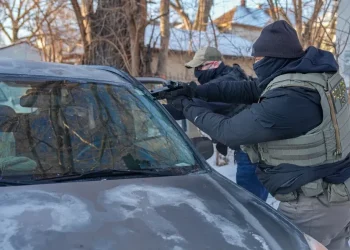
U.S. authorities are investigating whether a deadly shooting at Brown University in Rhode Island is connected to the killing of a Massachusetts Institute of Technology professor two days later near Boston, according to people familiar with the inquiry. The review comes as investigators continue to search for the suspect in the Brown attack, which left two students dead and several others wounded.
Officials have not publicly confirmed a link between the cases, and the investigation remains active.
Category: Crime and Justice | Subcategory: Violent Crime
Police and federal agents are examining potential connections between last weekend’s mass shooting at Brown University and the fatal shooting of an MIT professor in a Boston suburb, according to three people with knowledge of the investigation. The individuals spoke on condition of anonymity because they were not authorized to discuss an ongoing case.
Two of the sources said investigators have identified a person of interest and are actively searching for that individual. Law enforcement agencies involved have not released the person’s name or provided further details about the suspected link.
The attack at Brown occurred on Saturday inside a classroom in the university’s engineering building. Police said the gunman killed two students and wounded nine others before fleeing the scene. Authorities have not announced any arrests.
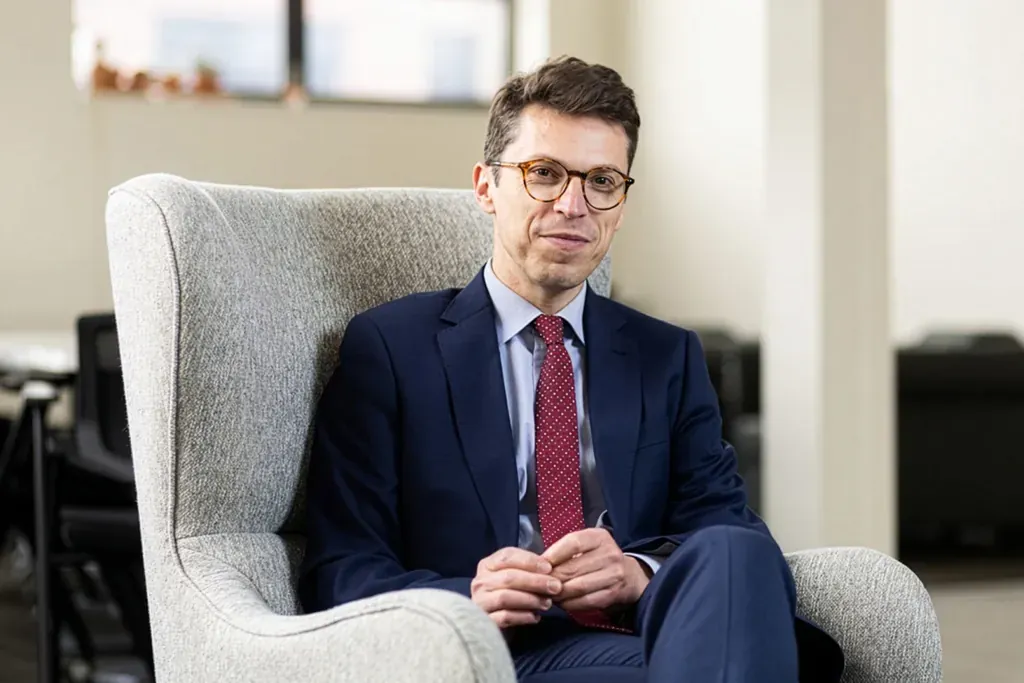
Roughly 50 miles north, MIT professor Nuno F.G. Loureiro was shot at his home in Brookline, Massachusetts, on Monday night. The 47-year-old physicist and fusion researcher was taken to hospital, where he died the following day.
The FBI said earlier in the week that it was not aware of any connection between the two incidents. It was not immediately clear whether that assessment has changed as the investigation has progressed.
Brown University investigation enters second week
Nearly a week after the Brown shooting, investigators continue to comb through evidence and seek public assistance, as frustration and anxiety grow in Providence. Authorities have acknowledged that the suspect’s ability to escape undetected has complicated the inquiry.
Rhode Island Attorney General Peter Neronha said at a news conference on Wednesday that delays in identifying a suspect, while unsettling, are not unusual in complex cases.
“There’s no discouragement among people who understand that not every case can be solved quickly,” Neronha said, emphasizing that investigators are still working through a large volume of information.
Police have urged residents and businesses to review phone videos, doorbell cameras, and security footage from the days leading up to the shooting. Investigators believe the attacker may have surveyed the area in advance.
Several video clips released by authorities show a person who police say matches witness descriptions of the shooter. The individual is seen walking, standing, and running along streets near campus shortly before and after the attack. In each clip, the person’s face is obscured, either by a mask or by turning away from the camera.
Brown officials say the university has about 1,200 cameras across campus. However, the shooting occurred in an older section of the engineering building with limited camera coverage. Investigators believe the suspect entered and exited through a door facing a residential street, potentially avoiding most campus surveillance.
Providence Mayor Brett Smiley said city officials are working to reassure residents as concerns linger.
“We are doing everything we can to reassure folks, to provide comfort,” Smiley said, acknowledging that families may be weighing difficult decisions about remaining in the city during the holiday period.
How long do such investigations take?
Experts note that while it is uncommon for suspects in high-profile mass shootings to evade capture, it does happen. Katherine Schweit, a retired FBI agent who has studied mass attacks, said cases in which shooters escape can take time to resolve.
“The best they can do is what they’re doing now, which is pressing together all of the facts they have as fast as they can,” Schweit said. “Often, the best hope for solutions comes from the public.”
Past cases illustrate the wide range of timelines. Investigators took four days to identify and track down the perpetrators of the 2013 Boston Marathon bombing. In a 2023 mass shooting in Lewiston, Maine, the suspect was found dead of an apparent suicide two days later.
In another high-profile case, the man accused of killing UnitedHealthcare chief executive Brian Thompson in Manhattan last year was arrested five days after the shooting, following a multi-state search.
Felipe Rodriguez, a retired New York Police Department detective sergeant and adjunct professor at John Jay College of Criminal Justice, said some attackers appear to be adapting their behavior based on previous investigations.
“Most of the time an active shooter is trying to cause maximum damage and expects not to get away,” Rodriguez said. “Now we’re seeing cases where suspects are attempting to evade police more deliberately.”
Authorities have described the Brown suspect as about 5 feet 8 inches tall with a stocky build. Investigators said on Wednesday that they have found no evidence suggesting the victims were targeted individually, and the motive remains unclear.
MIT community mourns loss of professor
MIT has been mourning the death of Loureiro, who joined the university in 2016 and was appointed last year to lead its Plasma Science and Fusion Center. The center is one of MIT’s largest research labs, with more than 250 staff and students working across multiple buildings.
Loureiro was a professor of physics and nuclear science and engineering, focusing on fusion energy and plasma physics. Colleagues described him as a respected researcher and mentor with a strong commitment to advancing clean energy science.
Born in Viseu, Portugal, Loureiro studied in Lisbon before earning his doctorate in London. He worked at a nuclear fusion research institute in Portugal before moving to the United States, according to MIT.
“He shone a bright light as a mentor, friend, teacher, colleague, and leader,” Dennis Whyte, a former head of the Plasma Science and Fusion Center, wrote in a campus publication.
When he was appointed to lead the center, Loureiro spoke about the broader purpose of his work, saying fusion energy had the potential to reshape humanity’s future.
As investigators continue to assess whether the two shootings are connected, law enforcement officials have cautioned that the inquiry remains fluid and that conclusions will depend on evidence still being gathered.
This article was rewritten by JournosNews.com based on verified reporting from trusted sources. The content has been independently reviewed, fact-checked, and edited for accuracy, neutrality, tone, and global readability in accordance with Google News and AdSense standards.
All opinions, quotes, or statements from contributors, experts, or sourced organizations do not necessarily reflect the views of JournosNews.com. JournosNews.com maintains full editorial independence from any external funders, sponsors, or organizations.
Stay informed with JournosNews.com — your trusted source for verified global reporting and in-depth analysis. Follow us on Google News, BlueSky, and X for real-time updates.