The expiry of the New START treaty removes the final formal limit on the world’s two largest nuclear arsenals. While the end of arms control raises global security concerns, it also exposes a deeper geopolitical reality: Russia’s reliance on nuclear parity as one of its last remaining claims to superpower status. Without this framework, the structural gap between Moscow and Washington becomes harder to mask.
Since the collapse of the Soviet Union in 1991, Russia has experienced a steady contraction in territory, economic capacity, and global influence. Yet one element of Soviet-era power endured: nuclear equivalence with the United States. That parity ensured Moscow remained central to global strategic diplomacy, even as other measures of power declined.
For more than three decades, nuclear arms treaties acted as a diplomatic stage where Russian leaders could engage Washington as equals. The New START treaty, signed in 2010, was the last of these frameworks. Its expiration marks not only the end of a legal constraint on nuclear arsenals, but also the end of a symbolic system that sustained Russia’s image as a co-equal superpower.
The New START treaty and what it limited
The New START treaty capped both countries at 1,550 deployed strategic nuclear warheads and limited delivery systems including intercontinental ballistic missiles, submarine-launched ballistic missiles, and heavy bombers. It also included verification measures, such as inspections and data exchanges, designed to maintain transparency and reduce the risk of miscalculation.
Unlike earlier Cold War agreements that focused on reducing massive stockpiles, New START functioned as a stabilizer. It acknowledged that neither side would disarm, but both would accept ceilings and mutual monitoring to prevent an uncontrolled buildup.
For a decade, the treaty provided predictability. Even amid rising tensions over Ukraine, cyber operations, and NATO expansion, nuclear limits remained formally intact. That continuity mattered because nuclear weapons sit at the top of the strategic hierarchy; their regulation helped prevent broader confrontations from escalating into existential risks.
Arms control as a symbol of superpower parity
For Moscow, nuclear negotiations were about more than warhead counts. They were about status.
Arms control summits placed Russian leaders in bilateral forums that implicitly recognized Russia as Washington’s only true peer in strategic matters. These meetings echoed Cold War diplomacy, reinforcing the narrative that Russia remained one of two indispensable powers managing global security.
This symbolic value grew as Russia’s relative economic and conventional military strength declined. Its GDP fell far below that of the United States and China. Its global alliances narrowed. But as long as nuclear treaties existed, Moscow could claim an equal seat at the strategic table.
The disappearance of that framework removes one of the last institutional reminders of that parity.
Verification disputes and the breakdown of trust
In recent years, disputes over inspections and compliance eroded the treaty’s functioning. The United States accused Russia of obstructing inspection regimes, while Moscow argued that Western sanctions and logistical barriers made compliance difficult.
These disagreements reflected a broader collapse in trust between the two governments. Arms control depends not only on legal language but also on political will and administrative cooperation. As relations deteriorated following Russia’s actions in Ukraine, even the mechanics of nuclear transparency became politically contentious.
Without inspections, the treaty’s value weakened. Without political trust, renewal became unlikely.
Why Moscow appeared more anxious about expiry
Public statements from Russian officials expressing concern over the treaty’s lapse contrasted with a more relaxed tone in Washington. This difference can be partly explained by the relative strategic positions of the two countries.
The United States maintains a far larger economy and defense budget, allowing it to modernize and expand capabilities more easily if unconstrained. Russia, by contrast, faces economic limits, sanctions pressure, and industrial constraints that make large-scale expansion of nuclear forces more burdensome.
In a world without formal limits, Washington has more room to maneuver. Moscow has more to lose.
From this perspective, Russia’s calls to preserve the treaty reflect not only concern about global stability but also an interest in maintaining a structure that caps U.S. advantages.
Nuclear parity versus overall power imbalance
Nuclear weapons create a unique form of equality. Even a weaker state can deter a stronger one if it can credibly threaten catastrophic retaliation. This logic allowed post-Soviet Russia to maintain strategic relevance despite economic decline.
However, outside the nuclear sphere, the gap widened. The United States invested heavily in advanced conventional weapons, missile defense, cyber capabilities, and space systems. China emerged as a third major power, reshaping global alignments.
Nuclear parity increasingly became a narrow island of equivalence in a broader ocean of imbalance. The end of New START exposes that contrast more clearly.
The broader erosion of the Cold War arms control architecture
New START was the last surviving pillar of a much larger system. Over the past two decades, other agreements have collapsed or been abandoned, including treaties governing intermediate-range missiles and anti-ballistic missile systems.
Each agreement once served to manage specific categories of risk. Their disappearance reflects a shift away from legally binding constraints toward strategic competition without formal guardrails.
This change is not solely the result of recent tensions. It reflects a broader evolution in global power dynamics, where multiple nuclear states, emerging technologies, and regional rivalries complicate bilateral frameworks designed for a two-superpower world.
The role of China and the limits of bilateral treaties
One reason cited in Washington for allowing traditional arms control models to lapse is the rise of China’s nuclear capabilities. Future agreements, U.S. officials argue, would need to include Beijing to be meaningful.
From Moscow’s perspective, this argument is problematic. Russia’s nuclear posture was historically calibrated to match the United States, not China. A trilateral framework could dilute Russia’s status as Washington’s primary strategic counterpart.
In this sense, the push to broaden arms control beyond bilateral formats further challenges Russia’s traditional role.
Strategic uncertainty without formal limits
Without New START, both countries are free to adjust their arsenals without legal constraint. While neither side is expected to engage in rapid, large-scale expansion immediately, the absence of ceilings creates uncertainty.
Uncertainty in nuclear strategy is destabilizing because it complicates planning and increases the risk of misinterpretation. Verification regimes, even when imperfect, provide shared data that reduce worst-case assumptions.
Their absence forces each side to rely more heavily on intelligence estimates and strategic guesswork.
Russia’s remaining leverage in nuclear diplomacy
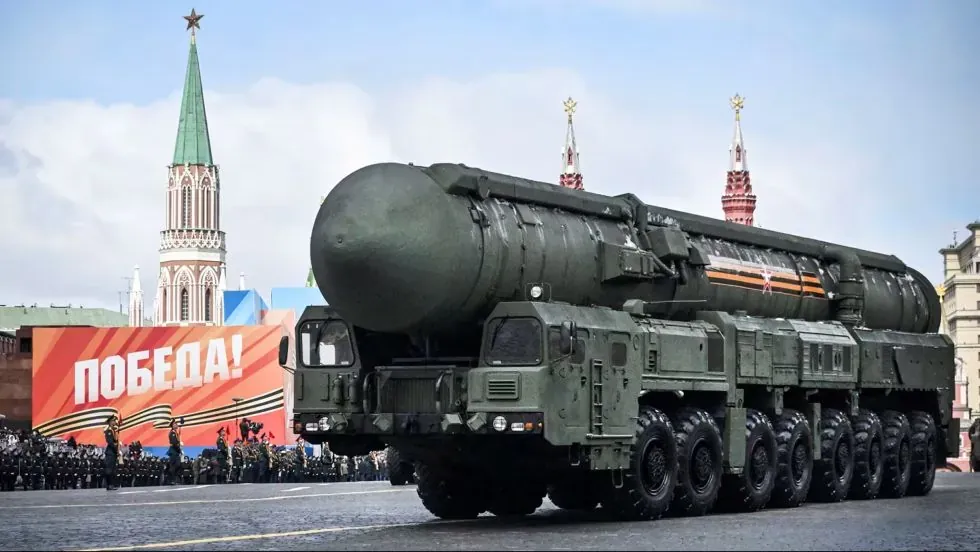
Despite these shifts, Russia remains a major nuclear power with sophisticated delivery systems and a significant arsenal. Its deterrent capacity ensures it cannot be ignored in global security calculations.
However, without formal treaties, that leverage becomes less institutionalized and more dependent on raw capability. Diplomacy becomes more ad hoc and less structured, reducing opportunities for Russia to exercise influence through formal negotiation channels.
The loss is not one of weapons, but of diplomatic architecture.
A changing definition of superpower status
During the Cold War, superpower status combined military reach, economic strength, ideological influence, and nuclear capability. Today, those components are more unevenly distributed.
The United States combines economic scale, alliance networks, and technological leadership with nuclear strength. China combines economic growth and regional influence with a growing arsenal. Russia’s claim rests most heavily on its nuclear forces.
As arms control fades, nuclear capability alone becomes a less effective marker of comprehensive superpower status.
What the end of New START means for global security
For the wider world, the treaty’s expiry removes a layer of predictability from the most dangerous aspect of international relations. Other nuclear states, including those in Europe and Asia, must now assess risk in a less transparent environment.
Allies of the United States may question how future nuclear policy evolves. Non-nuclear states observing the erosion of arms control may doubt the durability of the global non-proliferation regime.
The implications extend beyond Moscow and Washington.
Conclusion
The end of the New START treaty marks a significant moment in nuclear diplomacy, removing the final formal limit on U.S. and Russian strategic arsenals. While immediate expansion is unlikely, the disappearance of verification and ceilings increases uncertainty at the highest level of military risk. For Russia, the loss is particularly symbolic: arms control once served as a platform that reinforced its standing as Washington’s strategic equal. Without that structure, nuclear parity remains, but the diplomatic framework that showcased it has faded. What remains unresolved is whether a new model of arms control can emerge in a world no longer defined by two superpowers, and whether strategic stability can be preserved without the legal guardrails that shaped it for decades.
– JN –
This article was rewritten by JournosNews.com based on verified reporting from trusted sources. The content has been independently reviewed, fact-checked, and edited for accuracy, neutrality, tone, and global readability in accordance with Google News and AdSense standards.
All opinions, quotes, or statements from contributors, experts, or sourced organizations do not necessarily reflect the views of JournosNews.com. JournosNews.com maintains full editorial independence from any external funders, sponsors, or organizations.
Stay informed with JournosNews.com — your trusted source for verified global reporting and in-depth analysis. Follow us on Google News, BlueSky, and X for real-time updates.