Warner Bros. Discovery has become the center of a high-stakes contest between Netflix and Paramount, with competing bids that could redraw the global media landscape. While Warner’s board is backing Netflix’s proposed purchase of its studio and streaming assets, Paramount—now controlled by Skydance—has launched a higher, hostile offer for the entire company. Either outcome would face extensive regulatory review in the United States and abroad, with political factors adding further uncertainty.
A contest over a Hollywood cornerstone
Warner Bros. Discovery, one of Hollywood’s oldest studios, sits at the heart of the current consolidation push reshaping the media industry. The company traces its roots back more than a century and remains a cornerstone of U.S. film and television, with franchises such as Harry Potter, Superman, and DC Studios, alongside premium network HBO and streaming platform HBO Max. Its cable portfolio includes CNN and Discovery, giving it reach across news, entertainment, and unscripted programming.
On Wednesday, Warner’s board urged shareholders to support an agreement with Netflix valued at about $72 billion. The deal would see Netflix acquire Warner’s studio and streaming operations, folding them into the world’s largest subscription video service.
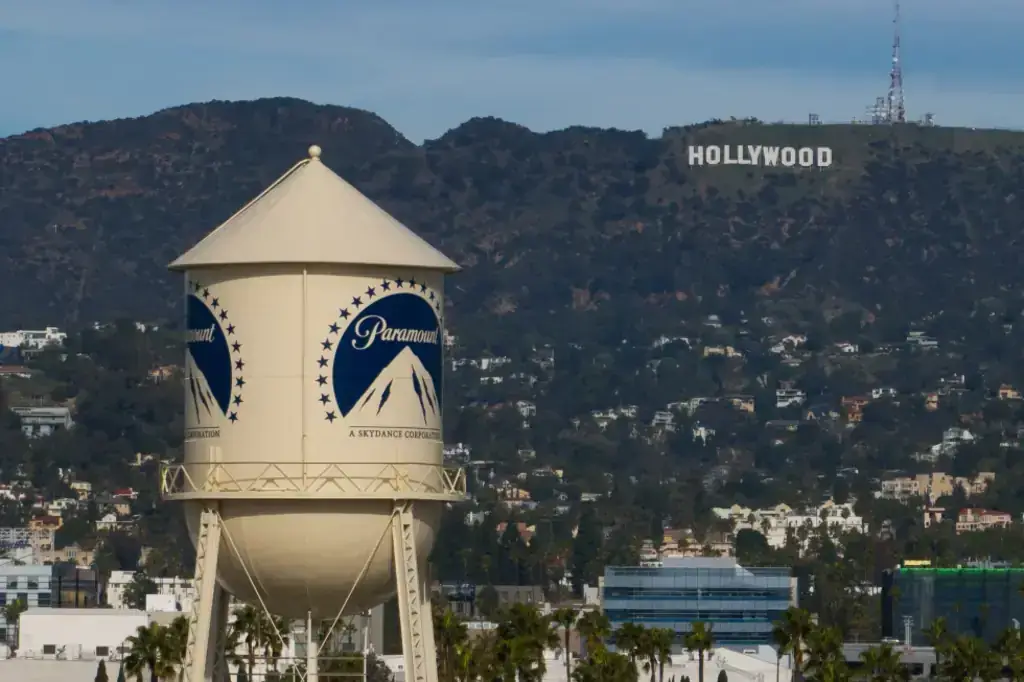
At the same time, Paramount—fresh from completing an $8 billion merger with Skydance—has pressed ahead with a $77.9 billion hostile bid for Warner in its entirety. That offer would combine two of Hollywood’s remaining “big five” studios and bring together major broadcast and cable brands, including CBS and CNN, under one corporate roof.
Regardless of which bid prevails, the path forward is unlikely to be quick. Antitrust reviews could stretch well beyond a year, with potential challenges from U.S. authorities and regulators in other markets where the companies operate.
The players and their scale
Netflix enters the contest as the industry’s dominant streaming force. It accounts for roughly one-fifth of the U.S. subscription video-on-demand market, according to data from streaming guide JustWatch, compared with about 13 percent for HBO Max and 7 percent for Paramount+. Over the past decade, Netflix has also built a sizable in-house production operation, delivering global hits such as Squid Game and Stranger Things.
The company’s financial scale sets it apart. As of mid-December, Netflix’s market capitalization stood near $430 billion, far exceeding Warner Bros. Discovery’s roughly $70 billion valuation and Paramount Skydance’s estimated $14 billion.
Paramount, despite its smaller size, controls an extensive catalog and distribution network. Alongside its film studio—home to franchises including Top Gun and The Godfather—it owns CBS, MTV, Nickelodeon, and the Paramount+ streaming service. The Skydance merger has reshaped its ownership structure and sharpened its appetite for expansion.
Antitrust questions and market definition
Both bids would almost certainly trigger a detailed review by the U.S. Justice Department, which could seek remedies or attempt to block a transaction outright. Regulators would focus on whether either deal substantially reduces competition, raises prices, or limits consumer choice.
Paramount has already argued that Netflix’s acquisition of Warner’s studio and streaming assets would concentrate too much power in a single company. Combining Netflix with HBO Max, it says, risks overwhelming rivals and squeezing competition in subscription streaming.
Netflix counters that its proposal would expand consumer choice by bringing more titles and pricing options to market. Antitrust specialists expect both suitors to frame the competitive landscape broadly, emphasizing that streaming services compete not only with one another but with a wide array of online video platforms.
YouTube is central to that argument. According to Nielsen, the Google-owned platform accounted for nearly 13 percent of total U.S. television viewership this fall, compared with about 8 percent for Netflix. By highlighting YouTube’s scale, merging parties aim to show that even a combined Netflix–Warner entity would face formidable competition.
Jim Speta, a law professor at Northwestern University’s Pritzker School of Law, says such framing is a common tactic. “The broader you make the market that we’re thinking about, the less the merger looks anti-competitive,” he noted.
Consumer impact and content concerns
Opponents of either deal are likely to focus on potential downsides for viewers. While a combined company might offer a deeper catalog, critics warn that consolidation can also lead to higher prices or more fragmented access to content.
Scott Wagner, who leads the antitrust practice at law firm Bilzin Sumberg, said regulators may examine whether a merged platform could narrow the range of available titles over time. Older films and niche programming, he suggested, could face shorter streaming windows or disappear from competing services altogether.
Such concerns are not limited to pricing and libraries. Large mergers often bring restructuring, and while job losses typically fall outside antitrust enforcement, regulators can still examine whether a company’s size gives it undue power over labor markets.
Studio production and the news business
Paramount’s proposal raises distinct issues by combining two major film studios. Industry groups have questioned whether fewer independent studios could mean less diversity in theatrical releases, even though Netflix has pledged to honor Warner’s existing theatrical commitments if its deal proceeds.
The news business adds another layer of complexity. A Paramount–Warner combination would place CBS News and CNN under common ownership. While some legal experts doubt that news consolidation alone would block a deal, it is expected to feature in regulatory discussions.
Supporters of the Paramount bid are likely to argue that television news now competes with a vast ecosystem of digital and social media platforms, reducing concerns about traditional broadcast concentration.
Politics and presidential influence
Political considerations may further complicate the process. U.S. President Donald Trump has publicly commented on the proposed transactions, at times suggesting personal involvement in whether a deal should proceed.
Such statements are unusual. While antitrust enforcement priorities often shift between administrations, legal scholars say direct presidential intervention in individual merger decisions would be unprecedented.
Trump has raised concerns about the size of a combined Netflix–Warner entity, while also maintaining personal ties to figures connected to Paramount. Oracle founder Larry Ellison, whose family trust is backing Paramount’s bid, has a long-standing relationship with the president. An investment firm run by Trump’s son-in-law, Jared Kushner, was initially linked to Paramount’s offer before later withdrawing.
Netflix, too, has cultivated political connections. Trump has publicly praised Netflix co-chief executive Ted Sarandos and acknowledged meeting him at the White House before the Warner proposal became public. At the same time, the president has repeatedly criticized Paramount-owned CBS over editorial decisions at 60 Minutes.
A long road ahead
Even without political intervention, the drawn-out contest carries risks. Paul Nary, an assistant professor of management at the University of Pennsylvania’s Wharton School, noted that Warner Bros. Discovery has struggled to deliver strong shareholder returns since its formation three years ago.
A prolonged bidding war and regulatory limbo, he said, could further distract management and weaken the company’s position. “There’s a potential for the winner’s curse here,” Nary warned, pointing to the history of ambitious media mergers that promised transformation but delivered disappointing results.
For now, Warner’s future remains uncertain. Whether it ends up under Netflix, Paramount, or remains independent after a bruising process, the outcome is likely to shape how films are made, how news is delivered, and how audiences around the world consume entertainment.
This article was rewritten by JournosNews.com based on verified reporting from trusted sources. The content has been independently reviewed, fact-checked, and edited for accuracy, neutrality, tone, and global readability in accordance with Google News and AdSense standards.
All opinions, quotes, or statements from contributors, experts, or sourced organizations do not necessarily reflect the views of JournosNews.com. JournosNews.com maintains full editorial independence from any external funders, sponsors, or organizations.
Stay informed with JournosNews.com — your trusted source for verified global reporting and in-depth analysis. Follow us on Google News, BlueSky, and X for real-time updates.