
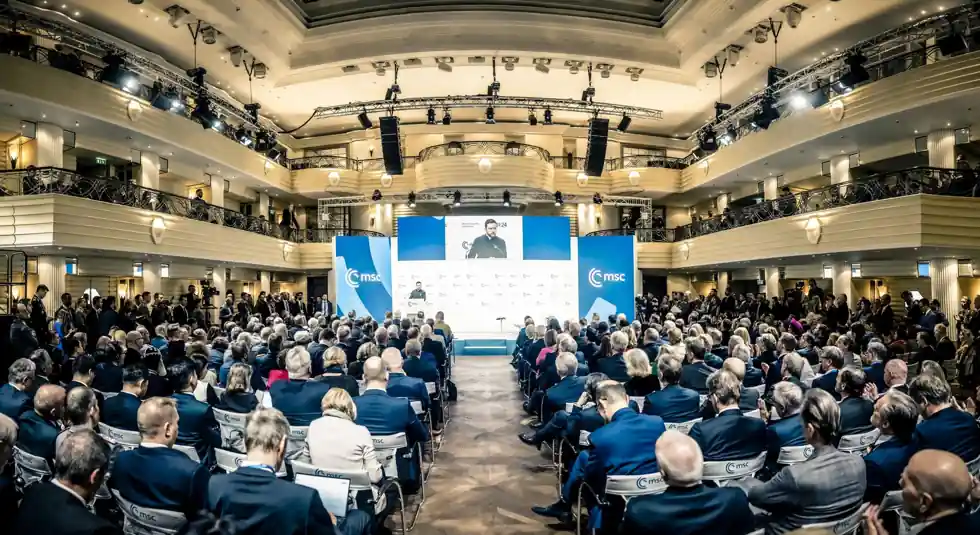
The Munich Security Conference 2026 convenes world leaders at a time of mounting geopolitical pressure. Ongoing wars, strained alliances, and new forms of risk dominate the agenda. The conference matters because it frames how governments define security priorities and coordinate responses across the year.
For more than sixty years, the Munich Security Conference (MSC) has reflected the condition of the international system. Founded in 1963 as a transatlantic defence meeting, it has grown into a global forum where leaders from multiple regions examine shared security challenges. The event now draws heads of state, ministers, military officials, experts, and civil society groups into one concentrated setting.
The 2026 conference takes place as the post-Cold War security framework shows clear strain. The war in Ukraine shapes European planning. Instability in the Middle East, tensions in Asia, cyber threats, and energy concerns add further pressure. In this setting, the MSC does not make policy. Instead, it clarifies priorities, tests ideas, and signals diplomatic intent.

Unlike NATO or United Nations summits, the Munich Security Conference operates without formal authority. Its influence comes from its informal structure. Leaders use the venue to test positions, share concerns, and meet counterparts outside rigid negotiation formats. Over time, this pattern has made Munich a place where the tone of global security debates often takes shape before formal decisions follow.
Origins and Evolution of the Conference
The MSC began as the “International Defence Conference,” focused on coordination among Western allies during the Cold War. It offered a discreet space for strategy discussions in response to the Soviet Union. After 1991, its scope expanded as new risks emerged, including terrorism, regional wars, nuclear proliferation, and later cyber and climate threats.
RELATED POSTS
This shift reflected a broader change in how governments define security. Military threats remained central, but energy supply, economic resilience, technology dependence, and disinformation entered the conversation. The MSC responded by inviting a wider range of participants, including foreign ministers, technology experts, and representatives from international organizations.
By 2026, the conference stands as one of the most recognized annual gatherings on global security. Its agenda mirrors the complexity of modern risks and the need for coordination across sectors.
Why the 2026 Conference Draws Particular Attention
Early 2026 presents no single dominant threat. Instead, several crises unfold at the same time. The war in Ukraine continues to affect European defence plans. Middle East tensions remain unresolved. Concerns about great-power competition in Asia persist. Economic pressure from energy and supply chains complicates policy choices.
These overlapping pressures raise doubts about whether existing alliances and institutions can respond effectively. The MSC offers a venue where leaders voice these concerns publicly and explore them privately in direct conversation.
The presence of senior officials from the United States, Europe, and Asia also places focus on transatlantic relations and wider partnerships. Statements delivered in Munich often signal policy directions that appear later in NATO meetings, EU summits, and bilateral talks.
Ukraine and the Reframing of European Security
Since 2022, Ukraine has remained central to discussions in Munich. The conflict forced European governments to reassess defence budgets, readiness levels, and long-term strategy. By 2026, debates focus on sustaining support, strengthening deterrence, and managing economic limits.
For Ukraine, the conference offers access to dozens of leaders in a single setting. For European states, it allows coordination and message discipline. Discussions move beyond battlefield updates to defence production, sanctions impact, and reconstruction planning.
Transatlantic Relations Under Scrutiny
Recent MSC meetings have highlighted questions about the future of the transatlantic partnership. European governments still rely on NATO and U.S. guarantees. At the same time, they debate how much responsibility Europe must assume for its own defence.
In Munich, leaders address these questions through speeches and closed meetings. European officials stress strategic autonomy and higher defence investment. U.S. representatives restate commitments to collective security. These exchanges shape expectations on both sides for the year ahead.
Expanding Notions of Security
The MSC agenda now extends well beyond traditional military topics. Sessions examine cybersecurity, artificial intelligence, climate risks, migration pressures, and energy transitions. These discussions show how economic, technological, and environmental factors affect stability.
The conference highlights the need for coordination across ministries and sectors. Security policy now involves regulators, energy planners, and technology officials as much as defence ministries.
The Role of Informal Diplomacy
A defining feature of the MSC is the concentration of bilateral and small-group meetings around the formal program. Leaders use this time to hold discussions that might otherwise require separate visits.
These private exchanges often reduce tension, clarify positions, and prepare future negotiations. While they rarely appear in official summaries, they reinforce Munich’s role as a practical diplomatic space.
Civil Society and International Norms
The MSC also includes voices from research institutions, international organizations, and human rights groups. Their participation ensures that debates address international law, governance standards, and humanitarian principles alongside military issues.
This mix reflects a view that security depends on legitimacy and rule-based systems. Conversations about accountability and norms often run parallel to strategic discussions.
Media Attention and Global Messaging
The concentration of high-level participants attracts extensive media coverage. Speeches in Munich receive global attention. Governments use this visibility to communicate policy positions to international audiences.
This exposure amplifies the conference’s influence. Even without formal agreements, the MSC shapes how security priorities are understood worldwide.
Limitations of the Conference
Despite its status, the MSC holds no decision-making power. It cannot enforce outcomes or compel cooperation. Its influence depends on how participants carry discussions into formal institutions and national policy.
Observers also note that attendance largely reflects established powers and policy elites. Even so, the conference remains a consistent reference point in global security dialogue.
Conclusion
The Munich Security Conference 2026 reflects a world facing several security pressures at once, with no immediate resolution in sight. It brings leaders together to reassess alliances, address ongoing conflicts, and redefine security in a broader sense. Although it produces no binding decisions, it shapes how governments frame priorities and engage with partners after the meeting ends. Its relevance lies in its ability to gather competing perspectives in one place and influence the direction of global security debates long after participants leave Munich.
– Journos News – The Daily Desk – JN –
This article was rewritten by JournosNews.com based on verified reporting from trusted sources. The content has been independently reviewed, fact-checked, and edited for accuracy, neutrality, tone, and global readability in accordance with Google News and AdSense standards.
All opinions, quotes, or statements from contributors, experts, or sourced organizations do not necessarily reflect the views of JournosNews.com. JournosNews.com maintains full editorial independence from any external funders, sponsors, or organizations.
Stay informed with JournosNews.com — your trusted source for verified global reporting and in-depth analysis. Follow us on Google News, BlueSky, and X for real-time updates.
