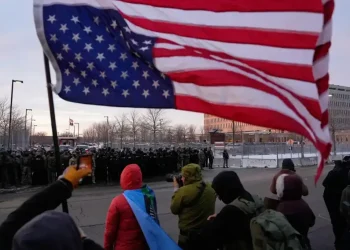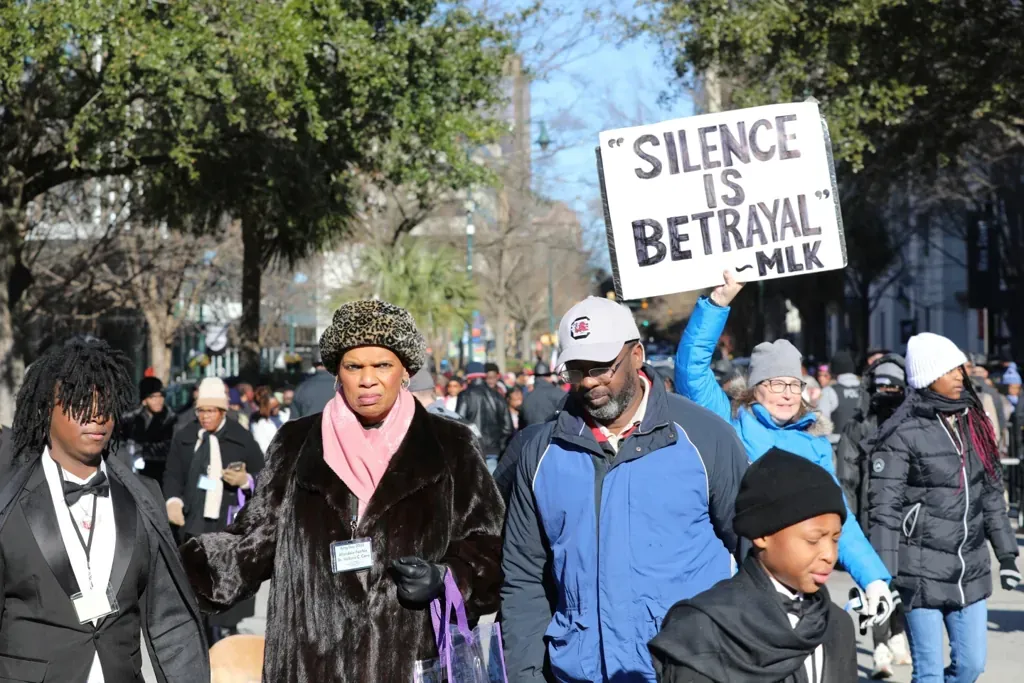
Across the United States, communities marked the 40th federal observance of Martin Luther King Jr. Day on Monday. Parades, panels, worship services, and volunteer projects took place nationwide. Yet this year, the holiday unfolded in a tense political climate. Debates over civil rights, race, and federal policies shaped the tone of many events.
The anniversary follows President Donald Trump’s second inauguration, which coincided with King Day last year. Activists say the timing highlighted deep divisions over King’s legacy and its relevance today. While many traditional tributes continued, some organizations used the day to reclaim King’s message and protest policies they believe threaten civil rights.
Supporters of this approach say King Day now serves two purposes: to honor history and to respond to present-day concerns among Black Americans, immigrants, and other marginalized groups. In contrast, conservative organizations called for a narrow focus on King’s life and words, warning against politicizing the holiday.

Federal Policies Shape the Context
Much of the tension stems from executive actions under the Trump administration. Shortly after taking office, Trump signed orders titled “Ending Illegal Discrimination And Restoring Merit-Based Opportunity” and “Ending Radical And Wasteful Government DEI Programs and Preferencing.” These measures rolled back diversity, equity, and inclusion programs across federal agencies. Corporations and universities followed suit.
The administration also conducted federal law enforcement operations in several cities with large Black or immigrant populations. Critics say these actions, combined with rhetoric questioning civil rights protections, created fear and uncertainty. Advocates argue this environment contrasts sharply with the values King championed.
Last month, the National Park Service announced it would no longer offer free admission on Martin Luther King Jr. Day or Juneteenth. Instead, free entry will be available on Flag Day and the president’s birthday. Civil rights advocates criticized the move, calling it a symbolic downgrade of holidays tied to Black history.
Tensions rose further after the fatal shooting of an unarmed woman in Minneapolis by Immigration and Customs Enforcement agents. The operation targeted the city’s Somali immigrant community. Combined with Trump’s remarks that civil rights protections harm white Americans, the incident fueled fears of a retreat from equality and justice.
Differing Views on King’s Legacy
Despite concerns, King Day events continued in most cities. Interpretations of his legacy varied widely. Some conservatives emphasize King’s call for a society where character outweighs skin color. They argue modern anti-racism efforts distort his message.
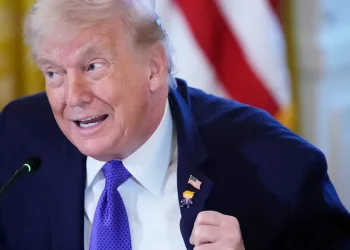
Trump told The New York Times that the Civil Rights Movement harmed white Americans, remarks that drew condemnation from civil rights leaders and Democratic officials. Maryland Governor Wes Moore, the state’s first Black governor, said such statements misrepresent the movement’s goals.
“I think the Civil Rights Movement was one of the things that made our country so unique,” Moore told The Associated Press. “We haven’t always been perfect, but we’ve always strived to be a more perfect union, and that’s what the Civil Rights Movement represents.”
Civil rights organizations say King’s work helped not only Black Americans but also women, LGBTQ+ communities, and other marginalized groups. Maya Wiley, president of the Leadership Conference on Civil and Human Rights, said current policies threaten King’s achievements.
“From health care access and affordable housing to good-paying jobs and union representation, the goals Dr. King championed remain at risk,” Wiley said. The White House did not respond to a request for comment.
The Heritage Foundation urged Americans to focus on King himself rather than current political debates. Brenda Hafera, a research fellow, encouraged visits to the Martin Luther King Jr. National Historical Park in Atlanta or rereading his “I Have a Dream” speech. She said using the holiday to promote concepts like critical race theory contradicts King’s vision of a colorblind society. “His vision was a society where people are judged by the content of their character, not the color of their skin,” she said.
Calls for Action and Reclamation
Many Black advocacy groups rejected that view. They argued King’s legacy cannot be separated from political and economic struggles. The NAACP organized events nationwide, emphasizing the need for vigilance in communities facing heightened risks.
“As people use their constitutional rights to protest, they are confronted with violence,” said Wisdom Cole, senior national director of advocacy at the NAACP. He highlighted increased police and state interventions and stressed that safety must come first.
The Movement for Black Lives, linked to Black Lives Matter, called its events the “Reclaim MLK Day of Action.” Demonstrations took place in Atlanta, Chicago, Oakland, and other cities. National organizing director Devonte Jackson said reclaiming King’s “radical legacy” is essential to confront what he described as authoritarian tendencies today.
Local Cancellations and Ongoing Traditions
While most events went ahead, a few cancellations drew attention. Indiana University in Indianapolis canceled its annual Martin Luther King dinner for the first time in 60 years, citing budget constraints. The Black Student Union suggested political pressures may have played a role, prompting students to host smaller community gatherings.
In Westbrook, Maine, St. Anthony of Padua Catholic Church canceled its King Day service, citing unforeseen circumstances. A parish committee member said the pastor was concerned about safety amid rumored immigration enforcement activity.
Elsewhere, observances continued as usual. In Memphis, Tennessee, the National Civil Rights Museum—located at the former Lorraine Motel where King was assassinated—held its annual celebration and offered free admission.
“This milestone year is not only about looking back at what Dr. King stood for,” museum president Russell Wigginton said, “but also recognizing the people who continue to make his ideals real today.”
This article was rewritten by JournosNews.com based on verified reporting from trusted sources. The content has been independently reviewed, fact-checked, and edited for accuracy, neutrality, tone, and global readability in accordance with Google News and AdSense standards.
All opinions, quotes, or statements from contributors, experts, or sourced organizations do not necessarily reflect the views of JournosNews.com. JournosNews.com maintains full editorial independence from any external funders, sponsors, or organizations.
Stay informed with JournosNews.com — your trusted source for verified global reporting and in-depth analysis. Follow us on Google News, BlueSky, and X for real-time updates.