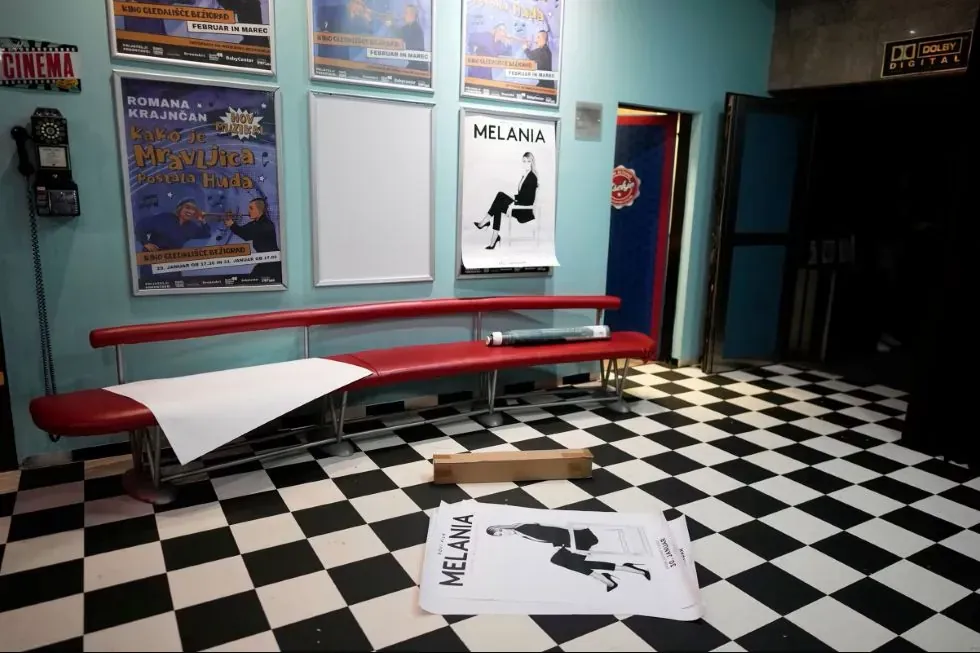
The release of Melania, documenting a 20-day period leading up to Donald Trump’s return to the White House, has prompted a mix of curiosity, critique, and partisan engagement. Across multiple U.S. cities, attendance ranged from sparsely populated theaters, where journalists comprised the majority of viewers, to packed screenings dominated by older, often female Trump supporters.
Critics have questioned both the documentary’s intentions and its financing. Amazon MGM Studios reportedly paid $40 million for the rights, leading some observers to speculate about political or commercial motives. President Trump, however, dismissed these concerns as unfounded, emphasizing the film’s portrayal of White House life.
While the documentary centers on Melania Trump, audience responses indicate that much of the comedic or human-interest value is drawn from Donald Trump’s onscreen presence. Scenes such as his interaction with Melania during election night and his tongue-in-cheek reaction to riding with outgoing President Joe Biden elicited laughter in certain screenings, while other viewers criticized the film as “tone-deaf” or superficial.
Divergent Audience Experiences
In Indianapolis, the film attracted around 100 viewers, mostly older women, who filled nearly all seats at a Regal theater. Marla Ailor, an elected official attending with her family, described the documentary as a revealing glimpse into the physical and logistical demands of life as the first lady, highlighting Melania Trump’s endurance during events that extend into the early hours.
By contrast, Washington, D.C., witnessed a notably subdued opening. The first showing at Regal Gallery Place included mostly journalists from outlets such as NPR, The New York Times, and The Atlantic, with limited civilian presence. Observers noted a striking absence of the general public, raising questions about the film’s appeal outside partisan or media circles.
London screenings also drew criticism, with some viewers likening the portrayal to a celebrity-focused narrative rather than a substantive political documentary. Siblings Daniel and Elise Fairweather described the film as “tone-deaf,” noting that while Melania Trump herself remained appealing, her environment appeared heavily curated by supportive aides.
Partisan Motivations and Supporter Engagement
Across the United States, however, strong support from Trump’s base was evident. In Los Angeles, Mary Eike, a 74-year-old retired accountant, described her attendance as a demonstration of support, emphasizing admiration for Melania Trump’s appearance, poise, and perceived strength. Many attendees echoed the focus on her endurance, notably enduring long hours in high heels while maintaining composure.
Other viewers highlighted the documentary’s exploration of the first lady’s influence behind the scenes. Kenny Cormack of Meridian, Idaho, observed her input on White House decorations as an indication of substantive involvement, while Eva Hackett in Los Angeles noted the patience, intelligence, and effort required to fulfill the role.
Moments portraying Melania Trump’s active contributions, such as suggesting the word “unifier” for Donald Trump’s inaugural address, were cited as emotionally resonant highlights. For some, these glimpses provided a new perspective on the first lady’s behind-the-scenes role, even for those already supportive of her.
Cultural Resonance and Generational Patterns
Audience demographics suggest generational clustering in the film’s reception. Older viewers, particularly women in their 50s to 70s, accounted for a significant portion of ticket sales, often framing attendance as both a political statement and a cultural experience. Younger audiences appeared less represented, consistent with broader trends of polarized media consumption among age cohorts.
Reactions also reflected varying expectations of political documentaries. Supporters emphasized admiration and insight into personal resilience, while critics focused on the film’s narrative framing, perceived superficiality, and alignment with partisan perspectives. This divergence underscores how media centered on political figures can simultaneously serve as partisan affirmation and cultural spectacle.
Implications for Political Media and Documentary Filmmaking
The reception of Melania illustrates a broader trend in U.S. political media: the intersection of celebrity culture, political allegiance, and narrative framing. Documentaries that center on political figures may struggle to achieve neutral appeal, particularly when audiences perceive implicit partisanship or commercial motives.
The polarized responses also reflect the challenges facing media platforms like Amazon MGM Studios in producing content that reaches beyond existing support bases. Even with significant production budgets, the documentary’s reception indicates that audience engagement may remain contingent on political alignment, demographic factors, and preconceived attitudes toward its subjects.
Furthermore, the focus on everyday endurance, personal aesthetics, and behind-the-scenes influence raises questions about what aspects of public figures resonate with audiences. The documentary’s emphasis on Melania Trump’s stamina and decision-making highlights the ways in which first ladies are framed within political narratives, often as both symbolic and active participants in governance and public life.
Conclusion
The mixed reception of Melania underscores the deeply polarized cultural and political landscape in the United States. Audience reactions vary not only by geography and demographics but also by prior political orientation and expectations of documentary filmmaking. The film highlights how political documentaries can function simultaneously as partisan affirmation, cultural spectacle, and biographical exploration. While supporters laud its insights into Melania Trump’s endurance and behind-the-scenes role, critics question its narrative framing, raising broader questions about objectivity, media influence, and the intersection of politics and celebrity in contemporary America.
This article was rewritten by JournosNews.com based on verified reporting from trusted sources. The content has been independently reviewed, fact-checked, and edited for accuracy, neutrality, tone, and global readability in accordance with Google News and AdSense standards.
All opinions, quotes, or statements from contributors, experts, or sourced organizations do not necessarily reflect the views of JournosNews.com. JournosNews.com maintains full editorial independence from any external funders, sponsors, or organizations.
Stay informed with JournosNews.com — your trusted source for verified global reporting and in-depth analysis. Follow us on Google News, BlueSky, and X for real-time updates.