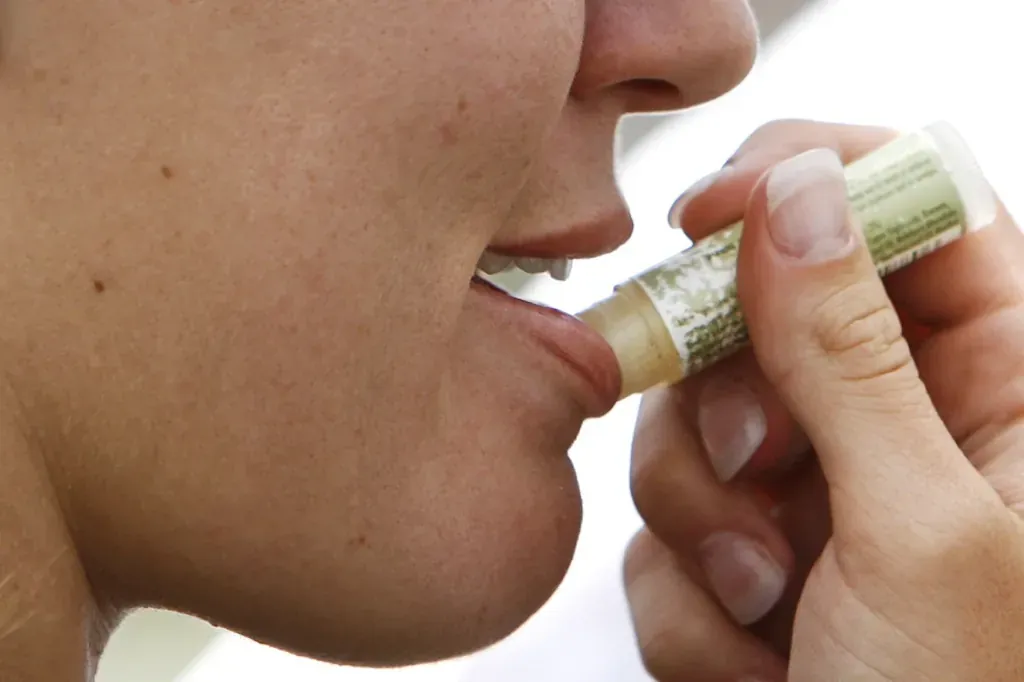
A small tube of lip balm is often the first thing people reach for when their lips turn dry, cracked, or flaky. Especially in colder months, the combination of cold outdoor air and dry indoor heating can quickly strip moisture from the delicate skin on the lips.
Dermatologists say lip balm can be effective — but not for everyone, and not all formulas are equal. While many products help seal in moisture and protect against environmental exposure, certain ingredients can irritate sensitive lips and make symptoms worse rather than better.
Understanding how lip balm works, and which formulations are safest, can help prevent ongoing discomfort during the winter and beyond.

Why lips dry out so easily
Unlike other parts of the skin, lips lack oil glands, making them especially vulnerable to moisture loss. Wind, cold temperatures, and low humidity accelerate that process, leaving lips prone to cracking and inflammation.
Dr. Jenna Lester, a dermatologist at UCSF Health, says lip balm works primarily as a protective barrier.
“That is a good barrier for the external forces,” she said, noting that balms can shield lips from cold air and wind while helping retain existing moisture.
For many people, that barrier is enough to restore comfort and prevent further damage.
When lip balm can make things worse
While most users benefit from lip balm, dermatologists warn that some products contain ingredients that can trigger irritation or allergic reactions.
Dr. Caroline Mann, a dermatologist at Washington University School of Medicine in St. Louis, said patients with sensitive skin often report worsening symptoms after repeated use of certain balms.
“Those are the people who will say, ‘I tried these things. I thought my lips would get better, but they just keep getting worse and worse,’” Mann said.
Common irritants include added fragrances, flavorings, and preservatives. Ingredients such as lanolin — a waxy substance derived from sheep’s wool — can cause reactions in some people, despite being widely used in moisturizers.
Other potential triggers include formaldehyde-based preservatives and oxybenzone, an ingredient found in some chemical sunscreens.
These reactions are immune-driven, meaning they can occur even after long-term use without prior issues. According to Mann, symptoms can persist for weeks or months after exposure if the offending product is not identified and avoided.
The safest option for sensitive lips
For people prone to irritation, dermatologists generally recommend fragrance-free, petroleum-based products. On ingredient labels, petroleum jelly is often listed as petrolatum.
Petrolatum-based balms act as occlusives, meaning they seal in moisture without introducing common allergens. While they may feel heavier than flavored or glossy alternatives, experts say they are among the least likely to cause adverse reactions.
Using a simple formula consistently, rather than rotating multiple products, can also reduce the risk of irritation.
Other ways to soothe chapped lips
Lip balm is not the only way to manage dry lips, and dermatologists emphasize several supportive measures that can make a difference.
Covering the mouth with a scarf when outdoors can protect lips from cold wind. Indoors, using a humidifier can counteract dry air caused by heating systems.
Staying hydrated is also important. Dehydration can contribute to dry lips, so drinking enough water throughout the day supports overall skin health.
One habit experts strongly advise against is lip licking. While it may provide brief relief, saliva evaporates quickly and draws moisture away from the lips, often making dryness worse.
If symptoms persist despite avoiding irritants and using gentle care, dermatologists recommend seeking medical advice. Ongoing stinging, cracking, or inflammation may signal an allergic reaction or underlying skin condition that requires targeted treatment.
“If you do these things,” Mann said, “you’ll get through the winter with soft, supple lips.”
This article was rewritten by JournosNews.com based on verified reporting from trusted sources. The content has been independently reviewed, fact-checked, and edited for accuracy, neutrality, tone, and global readability in accordance with Google News and AdSense standards.
All opinions, quotes, or statements from contributors, experts, or sourced organizations do not necessarily reflect the views of JournosNews.com. JournosNews.com maintains full editorial independence from any external funders, sponsors, or organizations.
Stay informed with JournosNews.com — your trusted source for verified global reporting and in-depth analysis. Follow us on Google News, BlueSky, and X for real-time updates.