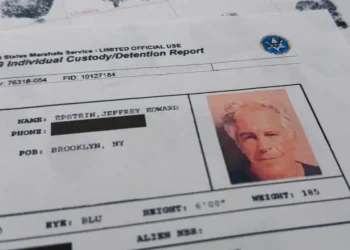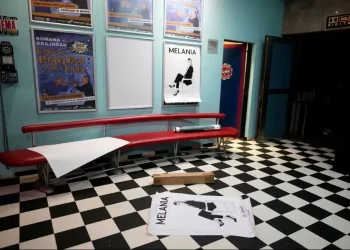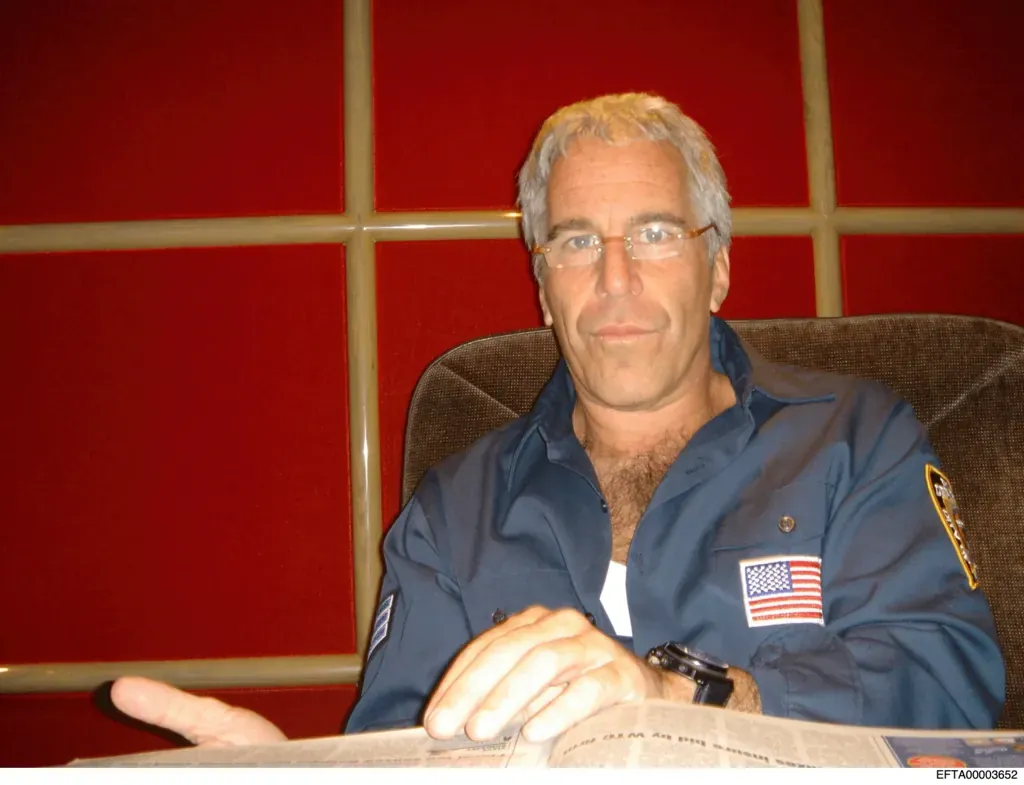
At least 16 files linked to the late financier Jeffrey Epstein were removed from a U.S. Justice Department public webpage within a day of being posted, without explanation or notice. The unexplained disappearance has intensified questions about the scope and transparency of a long-awaited document release mandated by Congress.
Documents removed shortly after posting
The missing files were visible on Friday and inaccessible by Saturday, according to a review of the Justice Department’s online records. Among them were images of artwork depicting nude women and a photograph showing pictures laid out along a credenza and inside drawers at one of Epstein’s properties.
One image included a photograph of President Donald Trump alongside Epstein, Melania Trump, and Epstein’s longtime associate Ghislaine Maxwell. The Justice Department has not said why the files were taken down or whether the removal was intentional. A department spokesperson did not immediately respond to requests for comment.
The absence of any public notice about the removal quickly drew attention online. The episode added to the enduring scrutiny surrounding Epstein, whose wealth and social ties connected him to prominent figures across politics, business, and entertainment.
Political reaction and calls for transparency
Democrats on the House Oversight Committee highlighted the missing files in a post on X, pointing specifically to the image that included a photograph of Trump. “What else is being covered up? We need transparency for the American public,” the committee wrote.
The reaction reflected broader frustration on Capitol Hill following the Justice Department’s initial release of tens of thousands of pages related to Epstein. Lawmakers had pressed for the disclosures under a recently enacted law intended to expand public access to records in cases involving sexual abuse and trafficking.
Limited new insight in initial disclosures
Despite the volume of material made public, the documents released so far have provided little new understanding of Epstein’s crimes or the prosecutorial decisions that allowed him to avoid serious federal charges for years.
Notably absent were FBI interviews with survivors and internal Justice Department memoranda examining charging decisions—records that could have shed light on how investigators assessed the case and why Epstein, in 2008, was allowed to plead guilty to a relatively minor state-level prostitution offense in Florida.
The records also scarcely mention several high-profile figures long associated with Epstein, including Britain’s former Prince Andrew. The omissions have renewed questions about the scope of past investigations and the extent to which influential individuals were scrutinized.
Epstein documents removal and gaps in disclosure
The Justice Department said it plans to release records on a rolling basis, despite a congressional deadline requiring public disclosure. Officials cited the time-consuming process of redacting survivors’ names and other identifying information as a reason for the staggered approach. No timeline has been provided for when additional records might be posted.
That explanation has done little to quell anger among some survivors and lawmakers who spent years pushing for the legislation. For them, Friday’s release marked not an end to a long transparency battle but the beginning of an open-ended wait.
“I feel like again the DOJ, the justice system is failing us,” said Marina Lacerda, who alleges Epstein began sexually abusing her when she was 14 at his New York City mansion.
Redactions and lack of context
Federal prosecutors in New York charged Epstein with sex trafficking in 2019, but he died by suicide in jail while awaiting trial. The records released so far represent only a fraction of the material in the government’s possession.
Deputy Attorney General Todd Blanche has said Manhattan federal prosecutors accumulated more than 3.6 million records from investigations into Epstein and Maxwell, though many were duplicative of FBI files. Much of what has been released had previously surfaced through court filings, congressional disclosures, or public-records requests, but not in a single, searchable collection.
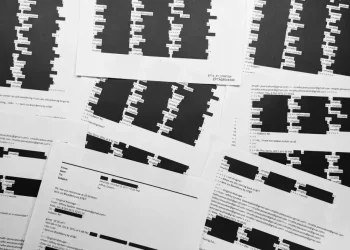
Newly released materials were often heavily redacted or stripped of context. A 119-page document labeled “Grand Jury-NY,” likely tied to federal sex trafficking investigations that led to Epstein’s 2019 charges or Maxwell’s 2021 conviction, was entirely blacked out.
Photos, associations, and unanswered questions
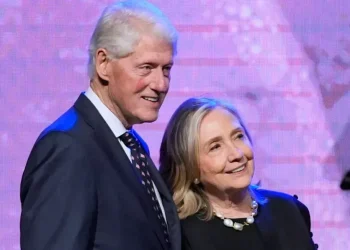
Among the images made public were previously unseen photographs of former President Bill Clinton, alongside celebrities such as Michael Jackson and Diana Ross. There were also pictures of Epstein with actor Chris Tucker, actor Kevin Spacey, and broadcaster Walter Cronkite.
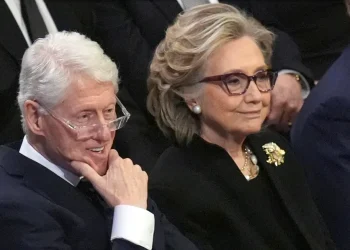
There were comparatively few images of Trump. Both Trump and Clinton have acknowledged past associations with Epstein but have since distanced themselves from him. Neither has been accused of wrongdoing in connection with Epstein, and there has been no indication that any of the photographs played a role in criminal cases.
The absence of captions or explanations for why individuals appeared together in the images left their significance unclear, a point critics say underscores the need for contextual information alongside document dumps.
Evidence of missed prosecutorial opportunities
Some of the most substantive material released to date suggests federal prosecutors had a potentially strong case against Epstein as early as 2007 but declined to pursue charges.
Grand jury transcripts, made public for the first time, include testimony from FBI agents describing interviews with girls and young women who said they were paid to perform sex acts for Epstein. One witness said she was 14 and in ninth grade at the time. Another testified that Epstein hired her at 16 and later paid her to recruit other girls.
“For every girl that I brought to the table he would give me $200,” the witness said, according to the transcript, adding that she told underage girls to lie about their age.
The documents also include a later interview with Alexander Acosta, the U.S. attorney who oversaw the case and later served as labor secretary during Trump’s first term. Acosta cited concerns about jury perceptions of the accusers and the legal complexities of cases that straddled sex trafficking and prostitution laws. He acknowledged that public attitudes toward victims have since changed.
“There’s been a lot of changes in victim shaming,” Acosta said.
Survivors’ reactions
For some accusers, the releases have been both validating and painful. Jennifer Freeman, an attorney representing Epstein accuser Maria Farmer, said the documents support her client’s longstanding claims that Epstein and Maxwell possessed images of child sexual abuse.
“It’s a triumph and a tragedy,” Freeman said. “It looks like the government did absolutely nothing. Horrible things have happened, and if they investigated in even the smallest way, they could have stopped him.”
This article was rewritten by JournosNews.com based on verified reporting from trusted sources. The content has been independently reviewed, fact-checked, and edited for accuracy, neutrality, tone, and global readability in accordance with Google News and AdSense standards.
All opinions, quotes, or statements from contributors, experts, or sourced organizations do not necessarily reflect the views of JournosNews.com. JournosNews.com maintains full editorial independence from any external funders, sponsors, or organizations.
Stay informed with JournosNews.com — your trusted source for verified global reporting and in-depth analysis. Follow us on Google News, BlueSky, and X for real-time updates.