The U.S. Department of Justice on Friday released a limited portion of records linked to its investigations into Jeffrey Epstein, the disgraced financier who died in federal custody in 2019 while awaiting trial on sex trafficking charges. The disclosure follows a congressional mandate requiring greater transparency but represents only a fraction of the material held by federal authorities.
Justice Department officials acknowledged that the release is incomplete. In a letter to Congress obtained by The Associated Press, the department said additional records are expected to be made public later this year after further review and redaction, citing legal and privacy constraints.
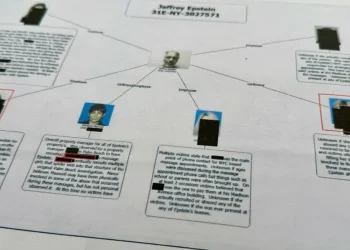
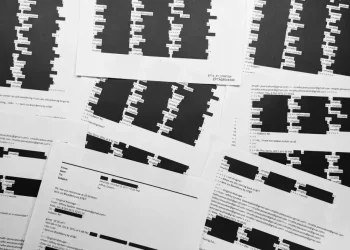
The documents published so far include photographs, call logs, interview transcripts and excerpts of grand jury material. Many pages are heavily redacted, and some information had already entered the public domain through prior court proceedings and media reporting.
The White House said the release demonstrates the administration’s commitment to transparency, noting that it was carried out under a law passed by Congress. Critics, however, argue that the limited scope of the disclosure falls short of public expectations given the scale and notoriety of the Epstein investigations.
A partial release under continued scrutiny
Lawmakers who have pressed for the files’ release reacted cautiously to the initial disclosure. Representatives Thomas Massie and Marjorie Taylor Greene, both Republicans who played prominent roles in advancing a discharge petition to force the release, said the effort would continue until all eligible records are made public.
Greene, who is retiring from Congress, said she refused to withdraw her support for the petition despite pressure from within her party. Senior Republican leadership, however, largely refrained from commenting publicly on Friday, in contrast to some Democrats who warned of potential legal consequences if the Justice Department does not fully comply with the law.
The Epstein Files Transparency Act requires federal agencies to disclose records related to the government’s handling of Epstein’s case, subject to protections for victims and ongoing legal obligations. The Justice Department has emphasized that those safeguards remain central to its review process.
New batch of images offers limited insight
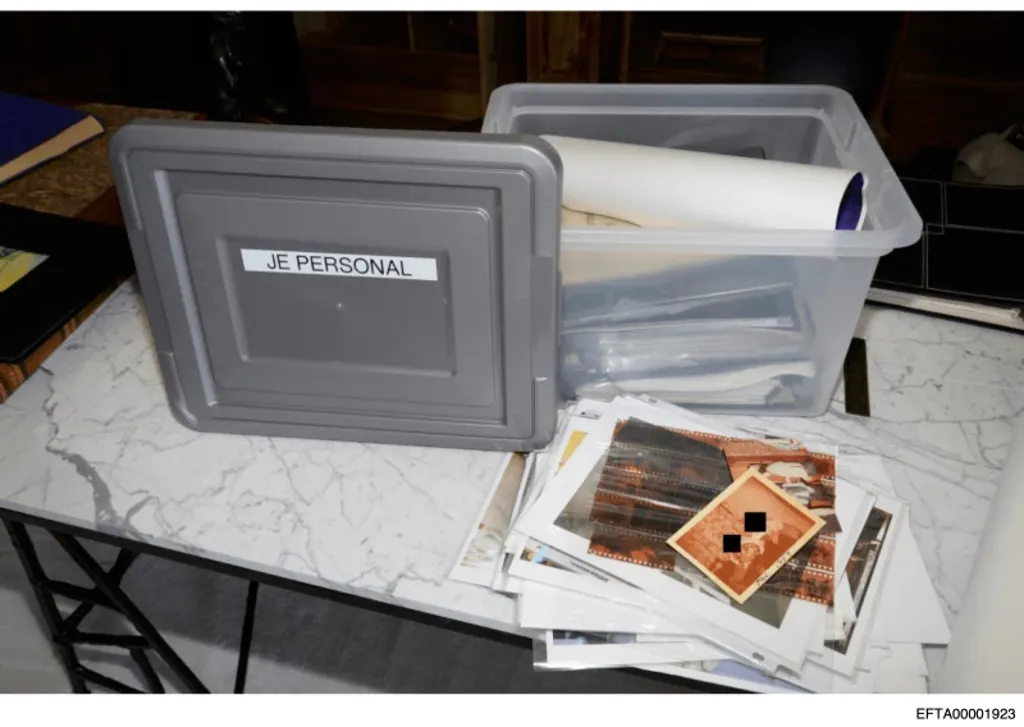
Several hours after the initial publication, the Justice Department posted an additional set of 120 photographs provided by the FBI. The images largely depict boxes, folders, envelopes and computer equipment collected during multiple investigations into Epstein and his longtime associate Ghislaine Maxwell, who was convicted in 2021 of helping recruit and traffic underage girls.
Most photographs do not show the contents of the evidence itself. Some relate to the federal inquiry into Epstein’s death at the Metropolitan Correctional Center in Manhattan, including an image of a hard drive labeled as containing security camera footage from housing and attorney visiting areas at the jail.
Other photos show records from a Palm Beach, Florida, police investigation conducted in the mid-2000s, as well as computer hardware seized from Epstein’s estate on Little St. James in the U.S. Virgin Islands. The Justice Department said the images reflect standard evidence documentation rather than substantive findings.
Oversight led by deputy attorney general
Deputy Attorney General Todd Blanche, who has overseen the file review, was traveling with President Donald Trump on Air Force One to a political rally in North Carolina on Friday. Blanche authored the letter to Congress outlining the department’s review and redaction procedures and appeared on television earlier in the day to preview the release.
Trump declined to answer questions about the Epstein files while departing the White House. The president has previously resisted broader disclosure, citing privacy concerns and the risk of misinformation.
High-profile images draw attention
Among the released materials are photographs showing Epstein alongside several well-known figures, including pop star Michael Jackson and former President Bill Clinton. One image shows Jackson standing next to Epstein; another includes Jackson, singer Diana Ross and Clinton, with Clinton’s hand resting on Jackson’s shoulder. A woman appearing in the photo has her face redacted.
The Justice Department provided no details about when or where the images were taken. Jackson was mentioned in deposition testimony unsealed in early 2024 during civil litigation connected to Maxwell but was not accused of wrongdoing. A spokesperson for Clinton said the investigation is not focused on the former president and reiterated that Clinton severed contact with Epstein before his crimes became widely known.
Protecting victims remains a priority, prosecutors say
Jay Clayton, the U.S. attorney for the Southern District of New York, said unreleased records are undergoing extensive review to prevent the disclosure of victim identities. In a letter to federal judges overseeing the unsealing process, Clayton said Justice Department lawyers have held more than 30 meetings with victims’ attorneys and, in some cases, victims themselves.
Clayton cited significant challenges in balancing transparency requirements with privacy protections, warning that even redacted information could be pieced together to identify victims. He said the department is proceeding cautiously to minimize that risk.
Early complaint predates formal investigations
One document released Friday details a 1996 complaint made to the FBI by a woman who said photographs she had taken of her underage sisters for an art project were stolen by Epstein. The report predates the first known police investigations into Epstein’s conduct by several years.
According to the handwritten account, the woman believed Epstein had sold the images and said he had previously asked her to photograph young girls at swimming pools. The report also alleges that Epstein threatened her to prevent her from speaking about the matter. An FBI spokesperson said the agency had no comment.
The complaint aligns with allegations later raised by members of the Farmer family, whose accusations helped bring Epstein under law enforcement scrutiny in the late 1990s.
Why the files can be difficult to interpret
Legal experts note that the released materials may appear confusing to the public because they consist of raw investigative records drawn from multiple probes spanning more than two decades. Such documents typically serve as building blocks for prosecutors and rarely become public in full.
The files combine evidence from early state investigations in Florida, federal inquiries launched years later, and separate cases involving Epstein and Maxwell in New York. Without narrative context, the records offer limited insight into prosecutorial decision-making or outcomes.
Justice Department officials have said additional disclosures are planned, but only after further review. For now, the partial release underscores the tension between public demands for transparency and the legal obligation to protect victims in one of the most closely scrutinized criminal cases in recent U.S. history.
This article was rewritten by JournosNews.com based on verified reporting from trusted sources. The content has been independently reviewed, fact-checked, and edited for accuracy, neutrality, tone, and global readability in accordance with Google News and AdSense standards.
All opinions, quotes, or statements from contributors, experts, or sourced organizations do not necessarily reflect the views of JournosNews.com. JournosNews.com maintains full editorial independence from any external funders, sponsors, or organizations.
Stay informed with JournosNews.com — your trusted source for verified global reporting and in-depth analysis. Follow us on Google News, BlueSky, and X for real-time updates.