TOKYO (JN) – Japan’s government warned residents in snowbound northern regions to watch for avalanches and falling snow on Wednesday after a sudden rise in temperatures increased the risk of heavy accumulations sliding from rooftops. The alert follows nearly two weeks of relentless snowfall that has left dozens dead, hundreds injured, and entire communities struggling to function.
Since late January, exceptional snowstorms have buried towns across northern Japan under drifts reaching around two metres in places, cutting off access, forcing school closures, and disrupting transport and daily life. Officials say the combination of deep snowpack and a brief thaw has created new hazards even as snowfall temporarily eased.
Authorities say 35 people have died and nearly 400 others have been injured nationwide since Jan 20, most in accidents linked to snow removal, roof collapses, or falling snow.
Avalanche warnings after temperature spike
Deputy Chief Cabinet Secretary Masanao Ozaki urged caution at a press briefing, warning residents to be alert to the danger posed by melting snow destabilising rooftops and slopes.
“We ask affected residents to be careful and stay mindful of falling snow and avalanches,” Ozaki said.
Temperatures in Aomori, one of the worst-affected prefectures, climbed to 8 degrees Celsius on Wednesday. While the rise brought a slight reduction in accumulated snow on the ground, officials cautioned that the heavier, wetter snow now clinging to buildings posed an increased risk of sudden collapse.
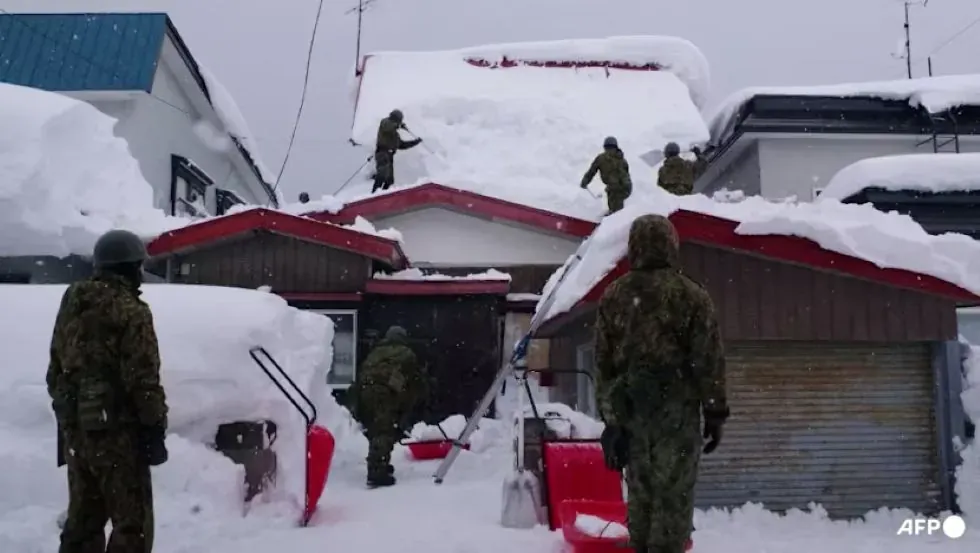
Emergency services say many injuries have occurred when residents attempted to clear roofs or when compacted snow slid down unexpectedly onto people below.
Communities buried under metres of snow
Television footage from local broadcaster ATV showed residents walking through narrow corridors carved between towering walls of snow that rose well above head height. In some neighbourhoods, doors and windows remained partially blocked, and vehicles were entombed beneath drifts.
Aomori’s recorded snow depth fell below 1.6 metres for the first time in four days on Wednesday, but traffic disruption and access problems continued across the region.
In Niigata prefecture, which faces the Sea of Japan and is accustomed to heavy winter snowfall, media reports said a man was found dead Tuesday after his house collapsed under the weight of accumulated snow. Another man died when his garage caved in.
Such incidents are not uncommon during Japan’s harsh winters, but officials say the persistence and intensity of this latest snowfall have placed unusual strain on buildings and residents alike.
Military deployed for snow clearance
The central government has deployed Self-Defence Forces personnel to assist with clearing roads and removing dangerous snow build-ups in the hardest-hit areas. Local authorities have also opened temporary shelters for residents unable to safely remain in their homes.
Many of the fatalities recorded in recent weeks have involved elderly residents attempting to remove snow from rooftops, a common but risky task in rural areas where professional snow removal services are limited.
Japan’s Fire and Disaster Management Agency said 393 people had been injured since Jan 20 in snow-related incidents nationwide.
More snow expected after brief thaw
Meteorological officials warned that the current rise in temperature is temporary. Forecasts indicate that colder air will return from the weekend, bringing renewed snowfall to northern prefectures.
That shift could further complicate recovery efforts, as melting snow refreezes and additional accumulation adds to the already heavy load on structures.
Local governments have urged residents, particularly the elderly, to avoid climbing onto roofs and to seek assistance when clearing snow.
Japan’s northern regions, including Aomori and Niigata, are accustomed to severe winter conditions due to weather systems sweeping in from the Sea of Japan. However, officials say the sustained nature of this snowfall event has made it especially hazardous.
This article was rewritten by JournosNews.com based on verified reporting from trusted sources. The content has been independently reviewed, fact-checked, and edited for accuracy, neutrality, tone, and global readability in accordance with Google News and AdSense standards.
All opinions, quotes, or statements from contributors, experts, or sourced organizations do not necessarily reflect the views of JournosNews.com. JournosNews.com maintains full editorial independence from any external funders, sponsors, or organizations.
Stay informed with JournosNews.com — your trusted source for verified global reporting and in-depth analysis. Follow us on Google News, BlueSky, and X for real-time updates.