MINNEAPOLIS (JN) – A fresh series of immigration enforcement actions in Minneapolis has intensified unease across the city, with armed federal agents arresting activists who were following their vehicles and school leaders warning that fear is spreading through classrooms and neighborhoods.
The incidents unfolded as Minnesota officials described a shift in federal tactics — from visible staging areas to quieter, targeted operations in residential streets — following weeks of protests, leadership changes, and heightened political scrutiny around immigration enforcement in the state.
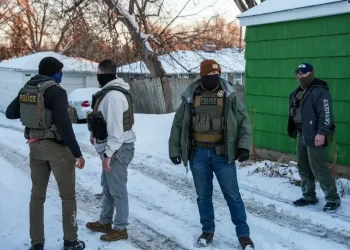
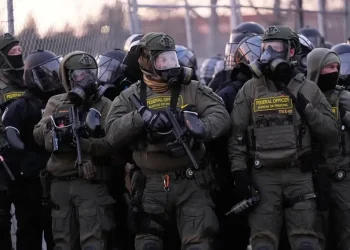
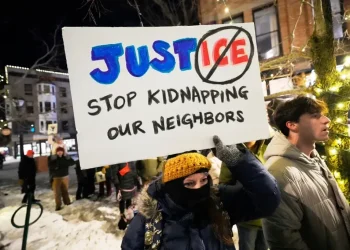
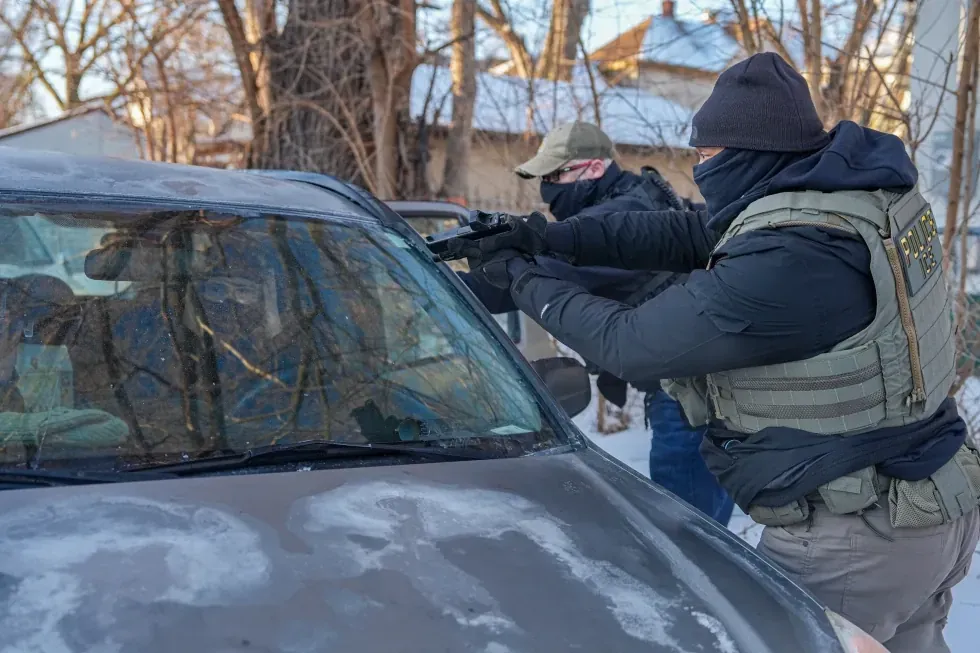
An Associated Press photographer witnessed officers with guns drawn ordering people out of a vehicle in south Minneapolis on Tuesday. At least one individual wearing clothing with an anti-ICE message was seen handcuffed face-down on the ground.
Governor Tim Walz said the atmosphere has changed from the more visible confrontations of previous days to something he described as “more chilling,” particularly as reports increasingly involve schools and children rather than public demonstrations.
Agents stop vehicles following operations
In recent days, federal immigration teams operating in the Twin Cities have adjusted their approach, conducting more targeted arrests at homes and in neighborhoods rather than gathering in large parking lots as they had earlier in the month. As a result, activists monitoring enforcement activity have relied more on informal sightings than confirmed detentions.
On Tuesday, several vehicles followed federal officers through south Minneapolis after reports that agents were knocking on residential doors. Officers then stopped their convoy and ordered the occupants of one vehicle out at gunpoint. Reporters at the scene were told to keep their distance and were warned that pepper spray could be used.
Homeland Security spokesperson Tricia McLaughlin said the activists were detained because they interfered with an attempt to arrest a man who was in the country unlawfully.
The incident comes amid ongoing legal debate over how officers can treat motorists who follow them without physically obstructing operations. A federal judge last month ruled that simply trailing agents at a safe distance does not, on its own, create reasonable suspicion for a stop. That order, however, was later set aside by an appeals court.
Leadership changes and recent unrest
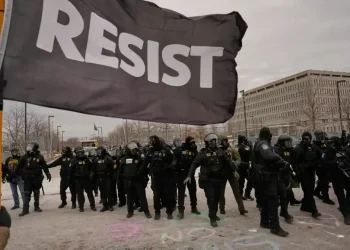
Tensions in Minneapolis have remained elevated following the fatal shooting of protester Alex Pretti earlier in the month. Shortly afterward, Greg Bovino, a senior U.S. Border Patrol official who had been overseeing immigration enforcement in Minneapolis and other major cities, left the area.
He was replaced by Tom Homan, a senior Trump administration immigration official, who has warned publicly that protesters could face consequences if they interfere with federal officers.
State officials say the tone of enforcement activity has shifted alongside the change in leadership. While the use of tear gas and crowd-control measures has subsided, the focus on neighborhoods and reports involving schools have drawn particular concern from local leaders.
School leaders describe fear and disruption
Walz appeared at a news conference with education officials who said the presence of immigration officers in residential areas has alarmed school communities.
Brenda Lewis, superintendent of Fridley Public Schools in a Minneapolis suburb, said she has twice been followed by Immigration and Customs Enforcement vehicles since speaking publicly about enforcement concerns in late January. She said some school board members have also noticed ICE vehicles outside their homes.
Lewis, who is a U.S. citizen, described seeing SUVs with tinted windows and masked occupants, some with out-of-state license plates. She said she has begun conducting patrols near schools with a security guard.
“Students are afraid to come to school, parents are afraid to drop them off,” Lewis said. “Staff are coming to work wondering if today will be the day something happens in one of our buildings.”
Fridley schools, which serve Somali and Ecuadorian communities, have added security measures, adjusted student drop-off procedures, and expanded mental health support for families. In nearby Columbia Heights, social worker Tracy Xiong said she has been coordinating grocery deliveries and volunteer drivers for families reluctant to travel.
The Department of Homeland Security and ICE did not immediately respond to requests for comment on the educators’ concerns.
Federal grand jury seeks local records
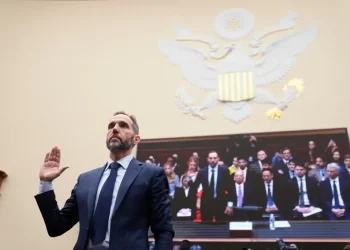
At the same time, Minneapolis city officials faced a Tuesday deadline to provide materials requested by a federal grand jury. The request, issued by the U.S. Justice Department, seeks records related to any efforts to impede the administration’s immigration enforcement campaign.
City leaders have criticized the subpoenas as politically motivated. Ally Peters, spokesperson for Minneapolis Mayor Jacob Frey, said the city was complying with the request but described it as an attempt to pressure political opponents.
“We have done nothing wrong and have nothing to hide, but when the federal government weaponizes the criminal justice system against political opponents, it’s important to stand up and fight back,” Peters said.
Other Democratic-run state and local offices in Minnesota have also received subpoenas, though it is unclear whether they face the same deadlines. People familiar with the matter have told AP that investigators are examining whether public statements by officials amounted to obstruction of enforcement efforts.
Separate case involving Rep. Ilhan Omar
In a related development, a man accused of squirting apple cider vinegar on Democratic U.S. Representative Ilhan Omar during a public event will remain in federal custody.
U.S. Magistrate Judge David Schultz granted a prosecutor’s request to detain Anthony Kazmierczak ahead of further proceedings. Assistant U.S. Attorney Benjamin Bejar argued that public officials must be able to conduct events without fear of assault.
Defense attorney John Fossum said the vinegar posed minimal risk and raised concerns about his client’s medical care while in custody, arguing for his release.
A city on edge
The convergence of enforcement operations, school concerns, federal investigations, and recent unrest has left Minneapolis in a state of heightened sensitivity. While visible street confrontations have decreased, the quieter nature of operations in neighborhoods and near schools has created a different kind of strain for residents.
Officials and educators alike say the impact is now felt less in public protest zones and more in daily routines — on school mornings, in residential streets, and in the uncertainty facing families unsure of what the next day may bring.
This article was rewritten by JournosNews.com based on verified reporting from trusted sources. The content has been independently reviewed, fact-checked, and edited for accuracy, neutrality, tone, and global readability in accordance with Google News and AdSense standards.
All opinions, quotes, or statements from contributors, experts, or sourced organizations do not necessarily reflect the views of JournosNews.com. JournosNews.com maintains full editorial independence from any external funders, sponsors, or organizations.
Stay informed with JournosNews.com — your trusted source for verified global reporting and in-depth analysis. Follow us on Google News, BlueSky, and X for real-time updates.