BERLIN (Journos News) — European allies issued a sharp warning to Washington after U.S. President Donald Trump threatened tariffs on countries opposing American control of Greenland, cautioning that the move could seriously harm transatlantic relations.
In a coordinated response, eight European governments said using trade pressure against allies undermines trust at a time of growing global instability. The statement marked one of the most direct collective criticisms of Trump’s foreign and trade policy since his return to the White House nearly a year ago, following months of careful diplomatic engagement by European leaders.
More broadly, the dispute exposes rising strain within NATO as Arctic security, trade policy, and questions of sovereignty collide. While European officials emphasized their willingness to continue talks with Washington, they also signaled that economic coercion would not go unanswered.

Joint European warning over tariffs and sovereignty
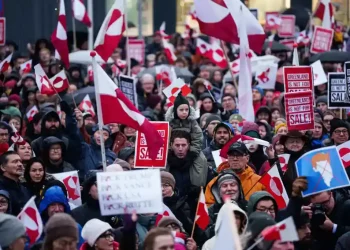
Denmark, Norway, Sweden, France, Germany, the United Kingdom, the Netherlands, and Finland jointly condemned Trump’s threat to impose a 10% tariff on their exports. They linked the move to their opposition to U.S. control of Greenland, a vast Arctic territory that remains semiautonomous under the Kingdom of Denmark and part of NATO through Copenhagen.
“We stand in full solidarity with the Kingdom of Denmark and the people of Greenland,” the statement said. It warned that tariff threats between allies “undermine transatlantic relations and risk a dangerous downward spiral.” The governments stressed that any discussions must respect sovereignty and territorial integrity.
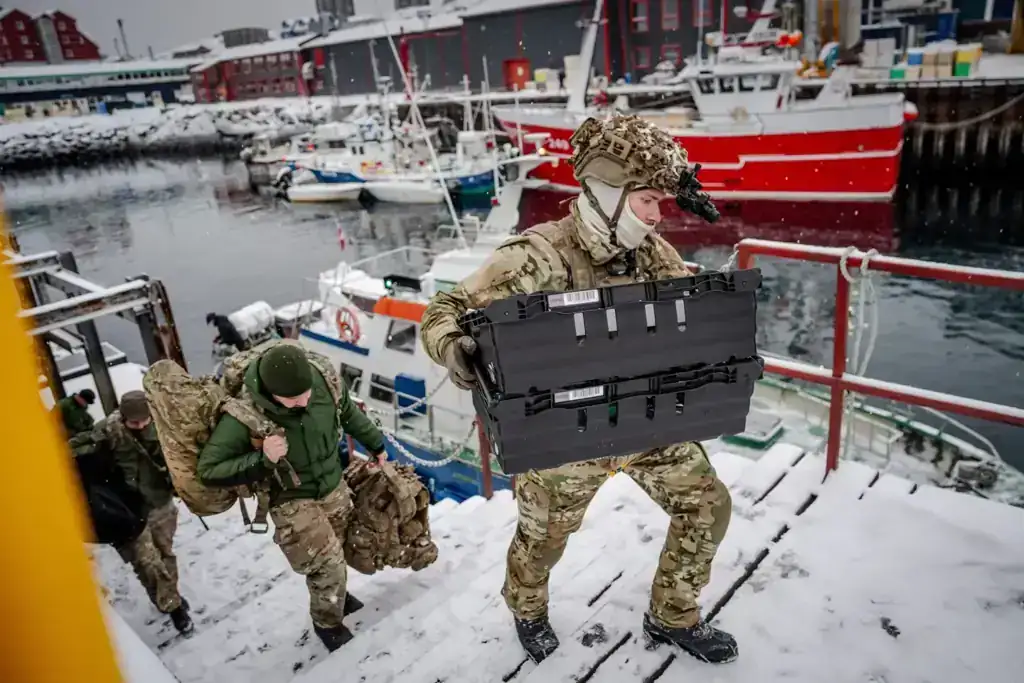
At the same time, several European countries sent limited troop contingents to Greenland for a Danish-led military exercise known as Operation Arctic Endurance. The allies said the deployment was defensive and posed “no threat to anyone,” rejecting claims that it targeted the United States.
Danish Foreign Minister Lars Løkke Rasmussen said talks with Washington had begun the previous week and that Copenhagen remained committed to dialogue. “We will stay on track — unless the U.S. decides differently,” he said in Oslo.
Norwegian Foreign Minister Espen Barth Eide took a firmer tone. He described the tariff threat as unacceptable between close allies and said Norway would not submit to pressure.
European Union signals readiness to respond
Six of the eight targeted countries belong to the European Union, which acts as a single trade bloc. After emergency consultations in Brussels, European Council President António Costa said EU leaders agreed that tariffs would damage transatlantic relations and conflict with existing EU-U.S. trade commitments.
As a result, the bloc expressed “readiness to defend ourselves against any form of coercion,” Costa said. He is expected to convene an EU leaders’ summit later this week, raising the prospect of a coordinated response if Washington proceeds.
However, uncertainty remains over how such tariffs could be implemented. Under U.S. law, Trump could invoke emergency economic powers, though those authorities face legal challenges before the U.S. Supreme Court. Any tariffs on the EU would also risk retaliation from one of America’s largest trading partners.
Meanwhile, EU foreign policy chief Kaja Kallas warned that rifts between the United States and Europe would benefit rival powers. “If Greenland’s security is at risk, we can address this inside NATO,” she said, pointing to alliance mechanisms rather than unilateral action.
Trump doubles down, citing Arctic security
Trump has long argued that Greenland is vital to U.S. national security because of its strategic Arctic position. Melting ice has opened new shipping routes and increased access to natural resources, intensifying global interest in the region.
Over the weekend, Trump directly tied the tariff threat to leverage over Greenland’s status. In a social media post late Sunday, he said NATO had warned Denmark for decades about the Russian threat to Greenland and accused Copenhagen of failing to act. “Now it is time, and it will be done!!!” he wrote, without detailing next steps.
That rhetoric unsettled European governments already working to preserve U.S. support for Ukraine. Intelligence sharing, military aid, and potential future security guarantees for Kyiv all depend heavily on sustained American engagement.
Analysts see unprecedented escalation
Rasmus Søndergaard, a senior researcher at the Danish Institute for International Studies, described Trump’s approach as highly unusual among allies.
“Tariff threats usually come from trade disputes, not territorial disagreements,” he said. In his view, that distinction explains the unusually firm European response. “If governments give in now, they have to ask what the next demand might be.”
Søndergaard added that while Europe cannot match U.S. military power, the EU holds significant economic leverage through reciprocal tariffs. That capability, he said, makes a collective pushback more viable.
NATO and allied leaders seek to contain fallout
NATO Secretary General Mark Rutte said he had spoken with Trump and would continue efforts to defuse tensions. He added that he expected to meet the U.S. president later this week in Davos during the World Economic Forum.
British Prime Minister Keir Starmer also raised the issue directly with Trump. According to Downing Street, Starmer told him that “applying tariffs on allies for pursuing the collective security of NATO allies is wrong.” He also consulted with Rutte, Danish Prime Minister Mette Frederiksen, and European Commission President Ursula von der Leyen.
In Italy, Prime Minister Giorgia Meloni, a frequent Trump ally, publicly criticized the tariff threat as “a mistake.” She said European troop deployments to Greenland had been misunderstood in Washington and were aimed at deterring other, unnamed actors rather than the United States.
Domestic U.S. criticism and political backlash
Trump’s proposal drew criticism inside the United States as well. Democratic Senator Mark Kelly of Arizona said tariffs on allies would raise prices for Americans “to try to get territory we don’t need,” warning that the policy was damaging U.S. credibility.
Former Vice President Mike Pence also voiced concern. While he supports the idea of the United States eventually owning Greenland, he questioned Trump’s tactics and legal authority. Pence warned that unilateral tariffs and talk of military action could fracture long-standing alliances.
Even among Europe’s populist movements, often sympathetic to Trump, reactions were mixed. Jordan Bardella, president of France’s far-right National Rally, labeled the threat “commercial blackmail” and urged the EU to suspend a recent tariff deal with Washington.
In Britain, criticism crossed party lines, uniting the governing Labour Party, the Conservatives, and the hard-right Reform UK. The rare consensus highlighted the sensitivity of the Greenland issue across Europe.
A test for alliance cohesion
The dispute comes as Arctic security gains prominence amid rising Russian and Chinese activity in the region. Greenland’s position between North America and Europe makes it strategically important for missile defense, early warning systems, and control of North Atlantic sea lanes.
So far, European leaders have framed the issue as one of alliance management rather than confrontation. They continue to stress NATO as the proper forum for resolving shared security concerns.
For now, Europe’s message remains consistent: using tariffs to pressure allies risks escalating a political disagreement into a wider economic and strategic rupture, with consequences that reach far beyond Greenland.
This article was rewritten by JournosNews.com based on verified reporting from trusted sources. The content has been independently reviewed, fact-checked, and edited for accuracy, neutrality, tone, and global readability in accordance with Google News and AdSense standards.
All opinions, quotes, or statements from contributors, experts, or sourced organizations do not necessarily reflect the views of JournosNews.com. JournosNews.com maintains full editorial independence from any external funders, sponsors, or organizations.
Stay informed with JournosNews.com — your trusted source for verified global reporting and in-depth analysis. Follow us on Google News, BlueSky, and X for real-time updates.