COLORADO CITY, Ariz. (JN) – Standfirst: Colorado City, Arizona, and Hildale, Utah, once tightly controlled by the Fundamentalist Church of Jesus Christ of Latter-Day Saints (FLDS), have undergone a marked shift toward conventional civic life. The towns’ evolution highlights both the challenges of dismantling long-standing religious authority and the complexities of social reintegration.
For decades, Colorado City and Hildale operated under the tight control of the FLDS, a polygamous offshoot of the mainstream Church of Jesus Christ of Latter-day Saints. The sect’s leadership, most notably Warren Jeffs, imposed strict social rules, dictated family structures, and limited residents’ access to public services. Under Jeffs’ rule, children were pulled from public schools, sports were curtailed, and civic governance was effectively an extension of the church.
The towns’ shift began with Jeffs’ criminal convictions for sexual assault and arranged marriages involving minors, leading to court interventions that gradually separated municipal governance from church authority. Residents now report broader freedoms, including new businesses, civic participation, and social activities previously prohibited. However, the legacy of decades-long religious control continues to shape the communities’ social and economic landscape, creating both opportunities and challenges.
Historical Control and Social Enforcement
The FLDS established itself in Colorado City and Hildale in the 1930s, maintaining polygamous practices after the mainstream LDS church formally renounced plural marriage in 1890. For much of the 20th century, local authorities largely ignored polygamy, avoiding confrontations after the 1953 raid on the sect drew public criticism. This de facto autonomy allowed the FLDS to consolidate both religious and municipal authority, including control over land, schools, and law enforcement.
Under Warren Jeffs’ leadership from 2002, the sect’s internal enforcement intensified. Families were reassigned, children removed from schools, and communal rules tightly regulated daily life. Former residents recall restrictions on sports, recreation, and dietary choices, illustrating the depth of social control. Jeffs’ subsequent criminal convictions and imprisonment marked a critical turning point, prompting federal courts to oversee a structural separation of church and civic governance.
Legal Interventions and Institutional Transition
Federal oversight, initiated in 2017, aimed to dismantle the FLDS’ municipal influence, establish independent civic administration, and ensure equal access to public services. This included excising the church from local government and creating a community-controlled board to manage formerly sect-owned real estate. Court-appointed monitors documented progress in developing representative governance structures, transitioning the towns from theocratic to municipal decision-making.
Residents and former officials emphasize that adapting to these changes required significant cultural adjustment. Private property ownership, previously restricted by the sect’s trust system, became a new norm, while government transparency and non-discrimination policies replaced religiously contingent access to services. By mid-2025, courts deemed supervision largely unnecessary, signaling measurable institutional stability despite the ongoing need for social reconciliation.
Social Reintegration and Community Dynamics
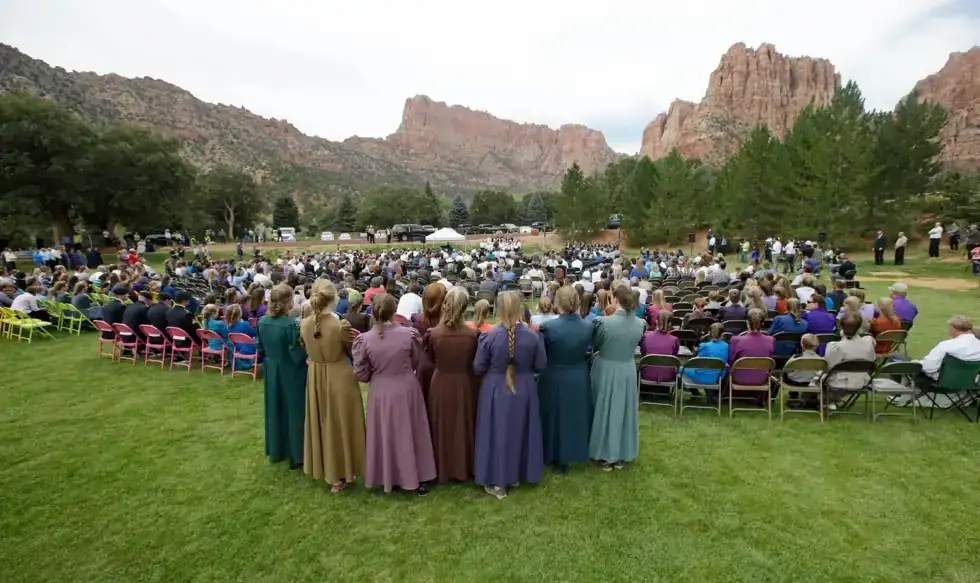
With the FLDS’ influence diminished, new social and economic patterns have emerged. Many former members left the sect, while others integrated into a more pluralistic civic environment. Hildale and Colorado City now host varied religious congregations, businesses, and recreational opportunities, with former sect members and newcomers coexisting in a more conventional town structure.
Individuals such as Briell Decker, who left the sect after being forcibly married as a teenager, highlight the human dimension of this transition. She and others working in social support roles illustrate the communities’ efforts to reconcile past abuses with current civic engagement. Nevertheless, isolated instances of ongoing polygamy and criminal prosecutions underscore that structural reforms do not immediately eliminate entrenched practices.
Economic and Cultural Shifts
The influx of new residents and businesses signals a broader economic transition. Entrepreneurs have introduced tourism-related activities, wineries, and outdoor recreation services, reflecting the region’s natural appeal near Zion National Park. This diversification contrasts with decades of insular economic activity controlled by the FLDS. Residents note improvements in basic services, retail access, and public safety, though emerging social challenges such as substance abuse indicate that increased openness also brings conventional societal pressures.
Generational and Long-Term Implications
Analysts and residents suggest that fully overcoming the FLDS legacy will likely span generations. Decades of social isolation, religious indoctrination, and disrupted family networks have created intergenerational challenges in trust, civic participation, and cultural adaptation. While legal and administrative interventions have established foundational governance and personal freedoms, long-term social cohesion depends on sustained engagement, accountability, and reconciliation initiatives.
Colorado City and Hildale illustrate the complex interplay between legal intervention, cultural transformation, and individual agency. Their experiences provide a lens to examine how communities emerging from long-standing religious authoritarianism navigate freedom, responsibility, and societal integration. Though progress is evident, the enduring imprint of the FLDS remains a critical factor in shaping both current community dynamics and future trajectories.
This article was rewritten by JournosNews.com based on verified reporting from trusted sources. The content has been independently reviewed, fact-checked, and edited for accuracy, neutrality, tone, and global readability in accordance with Google News and AdSense standards.
All opinions, quotes, or statements from contributors, experts, or sourced organizations do not necessarily reflect the views of JournosNews.com. JournosNews.com maintains full editorial independence from any external funders, sponsors, or organizations.
Stay informed with JournosNews.com — your trusted source for verified global reporting and in-depth analysis. Follow us on Google News, BlueSky, and X for real-time updates.