February’s television slate showcases a mixture of revival series, historical dramas, thrillers, and genre hybrids. From returning favorites like Scrubs to Ryan Murphy’s controversial biographical miniseries on JFK Jr., this month’s offerings highlight both the continuation of legacy content and a push into experimental storytelling.
Television in 2026 reflects an interplay between nostalgia-driven revivals, high-concept thrillers, and socially resonant narratives. These premieres illustrate how networks and streaming platforms balance risk, audience familiarity, and creative ambition.
Nostalgia and Revival: Scrubs and the Power of Legacy Content
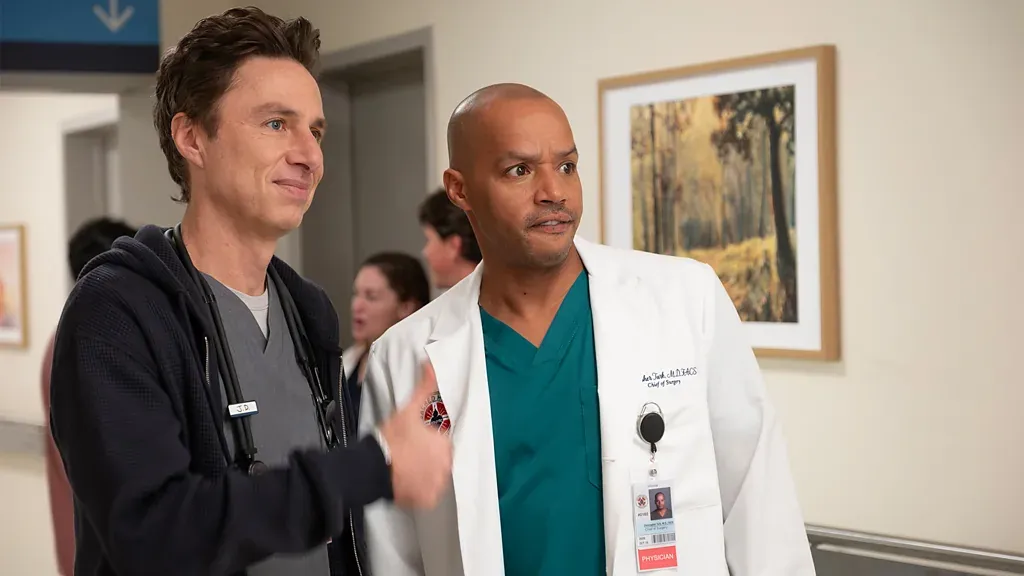
The revival of Scrubs, premiering 25 February on ABC (26 February on Hulu in the US), emphasizes how legacy series continue to anchor network programming. Zach Braff and Donald Faison return, not as a rebooted concept but as a continuation of previously established narratives, highlighting the appeal of character evolution over complete reinvention.
This approach contrasts with the miniseries Love Story: John F. Kennedy Jr and Carolyn Bessette, which leans on historical dramatization and celebrity intrigue. While Scrubs leverages familiarity and intergenerational humor, Murphy’s Kennedy biopic faces ethical scrutiny over the portrayal of real individuals, raising questions about how audiences consume dramatized history versus fictional nostalgia. Both demonstrate different strategies for engaging viewers through pre-existing cultural capital.
Genre Hybrids and Experimentation: Thrillers and Mystery
Several February premieres showcase experimentation with genre boundaries. Vanished (1 February, MGM+ US / 27 February, Prime Video UK) merges romantic drama with thriller elements, evoking Hitchcockian suspense but framed in a contemporary, sunlit French setting. Its use of a classic narrative premise in a modern European context highlights how familiar story structures are repurposed to attract international audiences.
Similarly, 56 Days (18 February, Prime Video) translates Catherine Ryan Howard’s erotic thriller into serialized television, removing the pandemic backdrop to focus on interpersonal tension and suspense. James Wan’s involvement indicates a strategy of leveraging established horror expertise to heighten narrative tension in non-horror genres, reflecting a trend toward cross-genre directorial influence in streaming content.
How to Get to Heaven from Belfast (12 February, Netflix) and The ‘Burbs (8 February, Peacock) demonstrate a blend of comedy and mystery. Lisa McGee’s series integrates female friendship with a narrative of investigation, paralleling the suburb-set dark comedy of Palmer and Whitehall’s series. These programs indicate an ongoing appetite for mystery-comedy hybrids, particularly those that integrate character-driven humor into suspenseful plots.
Serialized Procedurals and Cultural Representation
Dark Winds (15 February, AMC/AMC+) exemplifies the continuing adaptation of literary crime procedurals with cultural specificity. The series foregrounds Navajo traditions while maintaining a crime procedural format, balancing narrative suspense with ethnographic fidelity. Season four’s focus on “ghost sickness” and translocation of investigative work from New Mexico to Los Angeles illustrates the show’s commitment to expanding narrative scope without compromising cultural context.
This contrasts with Paradise (23 February, Hulu / Disney+ UK), which blends post-apocalyptic drama with political thriller elements. Sterling K. Brown’s protagonist navigates survival in both subterranean and surface societies, reflecting broader trends in serialized speculative fiction where geopolitical stakes intersect with personal drama. Both shows highlight the industry’s investment in high-concept serialized storytelling with layered social and cultural implications.
Historical and Biographical Dramas
February’s historical programming emphasizes diverse approaches to period storytelling. The Gray House (26 February, Prime Video) situates espionage narratives within the US Civil War, foregrounding perspectives of women across social hierarchies. The series employs contemporary musical scoring to connect historical events with modern audiences, a stylistic choice increasingly common in period television.
In contrast, Ryan Murphy’s Kennedy miniseries attempts to dramatize a recent historical event, eliciting ethical and social debate about representation and sensationalism. The public critique by Caroline Bessette’s family underscores the tension between storytelling and historical fidelity, particularly when dramatizing recognizable figures.
Comedy, Mockumentary, and Character-Driven Narratives
The Fall and Rise of Reggie Dinkins (23 February, NBC / 24 February, Peacock) and The ‘Burbs exemplify the continued evolution of comedic storytelling through mockumentary formats and suburban settings. Tracy Morgan’s odd-couple dynamic with Daniel Radcliffe’s filmmaker character illustrates how comedy can interrogate fame, reputation, and media representation. These series provide commentary on contemporary celebrity culture and narrative authority within comedic frameworks.
Observations on Platform Strategy and Audience Targeting
Across these ten premieres, a pattern emerges: streaming platforms and networks are leveraging a combination of familiar IP (e.g., Scrubs, Kennedy miniseries) and high-concept originals (e.g., Paradise, Vanished) to capture segmented audiences. US premieres dominate, with international releases often staggered, reflecting ongoing negotiations of global licensing, local content regulations, and audience segmentation strategies.
Notably, February’s programming illustrates a reliance on cross-genre experimentation, diverse character perspectives, and socially resonant storytelling, suggesting that audiences increasingly value layered narratives that extend beyond traditional genre conventions.
Conclusion
February’s television lineup demonstrates the industry’s dual focus on legacy content and experimental storytelling. Revivals like Scrubs capitalize on nostalgia, while thrillers, procedural dramas, and historical series explore complex narratives and cross-genre innovation. Ethical considerations, particularly in biographical dramas, underscore the delicate balance between storytelling and historical representation. As networks and streaming platforms navigate audience expectations, these premieres reflect a broader industry trend toward diversified, culturally attuned, and narratively ambitious programming.
This article was rewritten by JournosNews.com based on verified reporting from trusted sources. The content has been independently reviewed, fact-checked, and edited for accuracy, neutrality, tone, and global readability in accordance with Google News and AdSense standards.
All opinions, quotes, or statements from contributors, experts, or sourced organizations do not necessarily reflect the views of JournosNews.com. JournosNews.com maintains full editorial independence from any external funders, sponsors, or organizations.
Stay informed with JournosNews.com — your trusted source for verified global reporting and in-depth analysis. Follow us on Google News, BlueSky, and X for real-time updates.