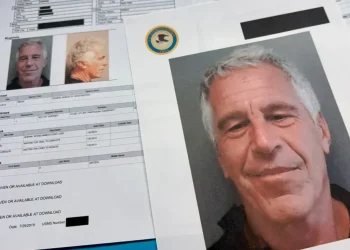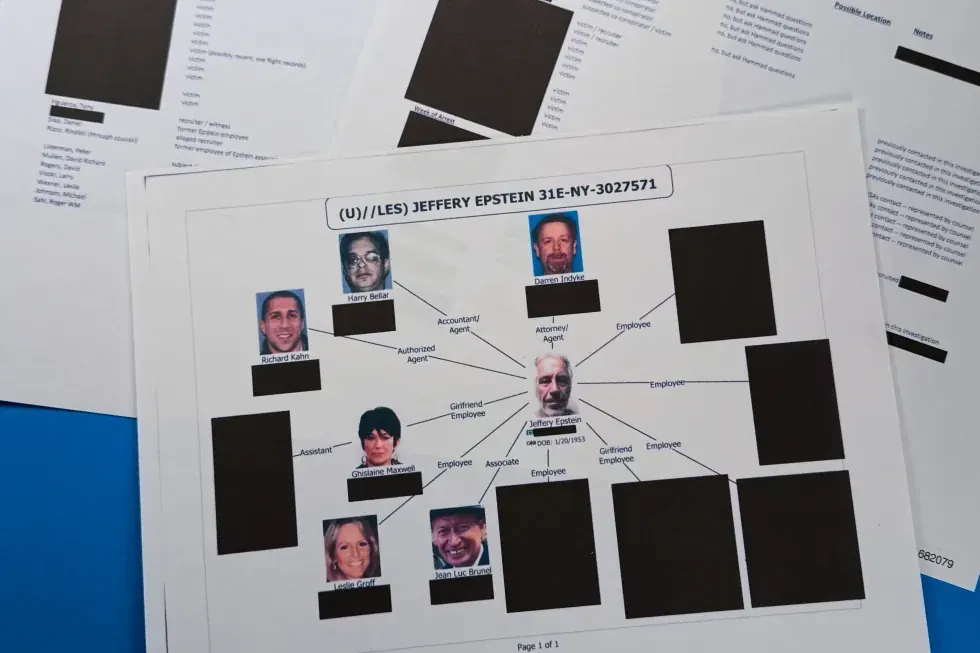
WASHINGTON (JN) – The U.S. Justice Department’s release of hundreds of thousands of records tied to Jeffrey Epstein has opened a detailed window into the convicted sex offender’s communications with political advisers, corporate leaders and public figures in the years before his death.
The disclosure, mandated by a law passed by Congress, includes more than 600,000 documents published so far from a larger cache exceeding three million pages, along with videos and photographs. Millions of additional files identified by prosecutors as potentially releasable remain sealed, prompting criticism from some lawmakers who say the process lacks transparency.
A review of the material by Associated Press reporters shows Epstein engaged in exchanges with individuals across politics and business, alongside previously undisclosed details about the handling of his death in federal custody in 2019.
Epstein’s messages with political advisers
Among the files are hundreds of text messages exchanged between Epstein and Steve Bannon, a former adviser to President Donald Trump, in the months before Epstein’s death.
The correspondence ranged from political discussions and travel logistics to references to a documentary project Bannon was said to be considering that could have helped reshape Epstein’s public image. In one 2019 message, Bannon asked whether Epstein’s private aircraft could pick him up in Rome.
In another message, Epstein wrote to Bannon that Trump “wakes up in the middle of the night sweating” at the thought of their friendship. The context of the remark is unclear due to redactions and limited accompanying material.
The documents also show Epstein communicating in 2018 with Kathy Ruemmler, a former Obama White House counsel who later worked in private legal practice. In an email containing several typographical errors, Epstein warned that Democrats should stop portraying Trump as a criminal figure, while also referring to the president as a “maniac.”
Ruemmler, through a spokesperson, said her contact with Epstein was strictly professional and that she now regrets having known him. Bannon did not immediately respond to requests for comment.
Emails referencing possible island visits with business figures
Separate emails show Epstein corresponding in 2012 and 2013 with Tesla founder Elon Musk regarding a potential visit to Epstein’s private island in the U.S. Virgin Islands, where many allegations of sexual abuse later centered.
Epstein asked how many guests Musk might want transported by helicopter. Musk responded that it would likely be only him and his partner at the time, adding in one message, “What day/night will be the wildest party on our island?”
The documents do not indicate whether such a visit occurred. Musk has previously said he declined invitations to the island, writing on social media in 2025 that he “refused” Epstein’s overtures. Representatives for Musk’s companies did not immediately respond to requests for comment.
The files also include an invitation sent by Epstein in December 2012 to Howard Lutnick, now U.S. commerce secretary, and correspondence suggesting Lutnick’s family intended to arrive by yacht with their children. The two also appeared to have social contact in earlier years and later exchanged emails about property construction near their homes.
Lutnick has publicly described Epstein as “gross” and has said he severed ties decades ago. He did not respond to a request for comment on the newly released records.
New insight into Epstein’s death in custody
The records also shed additional light on the period following Epstein’s July 2019 arrest on federal sex trafficking charges and his death in a Manhattan jail cell weeks later.
Emails between investigators note that Epstein’s final written communication did not resemble a traditional suicide note, though multiple official investigations previously concluded he died by suicide.
Interview notes in the files describe how jail staff created a decoy using boxes and sheets to mislead media gathered outside the facility while Epstein’s body was removed. A white van marked for the Office of the Chief Medical Examiner was loaded with the decoy, while the actual body was transported in a separate, unmarked vehicle that departed without notice.
These operational details were not widely known at the time and add to the public record surrounding the high-profile death, which fueled intense scrutiny and conspiracy theories.
Ongoing review of millions of pages
The Justice Department said the disclosures are part of a continuing process to review and publish materials in compliance with federal law. The documents released so far are heavily redacted and lack clear organization, making review labor-intensive for journalists and researchers.
Lawmakers have pressed the department to accelerate the release of additional materials that prosecutors previously identified as potentially subject to disclosure.
The files offer a deeper, though still incomplete, account of Epstein’s network and the handling of events surrounding his death, providing fresh documentation in a case that has continued to draw public attention years after his conviction and suicide.
This article was rewritten by JournosNews.com based on verified reporting from trusted sources. The content has been independently reviewed, fact-checked, and edited for accuracy, neutrality, tone, and global readability in accordance with Google News and AdSense standards.
All opinions, quotes, or statements from contributors, experts, or sourced organizations do not necessarily reflect the views of JournosNews.com. JournosNews.com maintains full editorial independence from any external funders, sponsors, or organizations.
Stay informed with JournosNews.com — your trusted source for verified global reporting and in-depth analysis. Follow us on Google News, BlueSky, and X for real-time updates.