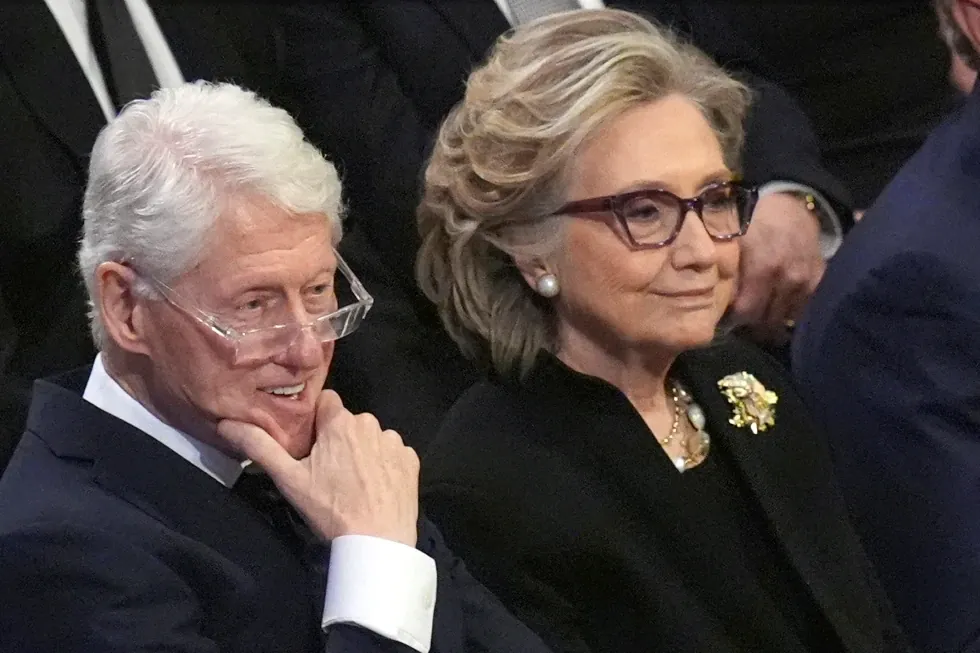
WASHINGTON (JN) – A standoff between House Republicans and former President Bill Clinton over testimony in the Jeffrey Epstein investigation has intensified, as the chair of the House Oversight Committee rejected an offer for a transcribed interview and pushed ahead with plans for sworn depositions. The dispute brings Congress closer to a potential vote on criminal contempt charges against both Bill and Hillary Clinton.
The confrontation reflects widening partisan tensions around how Congress is pursuing unanswered questions tied to Epstein’s case, including what information remains undisclosed within Justice Department files and how high-profile figures connected to Epstein are being scrutinized. Lawmakers from both parties have said the public deserves clarity, but they disagree sharply on how that accountability should be pursued.
At issue is whether the Clintons have complied with subpoenas issued in August and whether their proposed alternative forms of testimony satisfy congressional requirements.
Republicans insist on depositions under oath
Rep. James Comer, the Kentucky Republican who chairs the House Oversight Committee, said Monday he would not accept the Clintons’ proposed arrangements and would instead require both to appear for sworn depositions before the committee.
“The Clintons do not get to dictate the terms of lawful subpoenas,” Comer said in a public statement, underscoring his position that only in-person, sworn depositions would meet the legal standard set by the committee’s subpoenas.
According to a letter from the committee to the Clintons’ attorneys, Bill Clinton had offered to participate in a four-hour transcribed interview covering matters related to the investigations and prosecutions of Epstein. Hillary Clinton, the former secretary of state, offered to submit a sworn written declaration.
Committee Republicans rejected both proposals, arguing that they fall short of the subpoena requirements and limit the committee’s ability to question the former officials directly.
Contempt vote looms in the full House
The Oversight Committee advanced criminal contempt of Congress resolutions last month, bringing the matter closer to a potential vote in the full House of Representatives.
If the House approves the resolutions, the matter would be referred for possible prosecution, exposing the Clintons to potential fines or other penalties if a court ultimately upholds the charges. Such a move would be historically significant: Congress has rarely pursued contempt proceedings against former presidents, and none has ever been compelled to testify before lawmakers.
Nine of the committee’s 21 Democrats joined Republicans in supporting the contempt resolution against Bill Clinton, while three Democrats supported the measure concerning Hillary Clinton — an unusual show of bipartisan support in a politically sensitive inquiry.
Focus on Epstein connections resurfaces
The renewed scrutiny centers on Bill Clinton’s past association with Epstein, the financier who was facing federal sex trafficking charges when he died by suicide in a New York jail in 2019.
Clinton’s relationship with Epstein in the late 1990s and early 2000s has been publicly documented, including flights on Epstein’s private plane and social interactions. Clinton has not been accused of wrongdoing in connection with Epstein, and no allegations have emerged that he was involved in Epstein’s criminal conduct.
Republicans argue that the Oversight Committee must thoroughly examine any connections between prominent public figures and Epstein as part of a broader effort to bring transparency to the case and to assess how law enforcement and federal agencies handled investigations over the years.
Dispute over subpoena validity and DOJ records
After the subpoenas were issued in August, attorneys for the Clintons questioned their validity and scope, according to committee correspondence. As Republicans signaled they would pursue contempt proceedings, negotiations began over alternative forms of cooperation.
The Clintons’ representatives have accused Comer and committee Republicans of politicizing the investigation. They argue that the committee has focused more on targeting former political figures than on pressing the Justice Department to release additional case materials related to Epstein.
Democrats have echoed that concern, saying the Justice Department has not yet made public all documents in its possession related to Epstein and that congressional oversight should prioritize transparency from federal agencies.
Democratic leaders oppose contempt action
House Democratic leader Hakeem Jeffries said his caucus would discuss the contempt resolutions later this week, but he personally opposes the move.
Jeffries described the effort as political rather than investigative and argued that the committee’s approach risks turning a sensitive inquiry into a partisan confrontation.
“They don’t want a serious interview, they want a charade,” Jeffries said, criticizing what he described as a preference for spectacle over substantive inquiry.
Democratic leaders have not yet indicated whether they will actively whip votes against the resolutions, leaving the outcome uncertain if the measures reach the House floor.
Rare test of congressional authority over former presidents
The dispute underscores a broader constitutional question about how far Congress can go in compelling testimony from former presidents and senior officials. Historically, lawmakers have shown deference to former presidents, who have sometimes provided voluntary testimony or written statements but have not been forced to appear under subpoena.
Legal experts say a contempt referral involving a former president would likely face significant judicial scrutiny, potentially setting a precedent on the limits of congressional oversight powers.
For now, the Oversight Committee’s position remains firm: compliance with the subpoenas, in its view, requires sworn depositions. The Clintons, meanwhile, continue to argue that they are willing to cooperate, but not under the specific terms demanded by the committee.
As the House weighs possible votes, the clash has become another flashpoint in the long-running political and legal fallout from the Epstein case, which continues to draw scrutiny years after his death.
This article was rewritten by JournosNews.com based on verified reporting from trusted sources. The content has been independently reviewed, fact-checked, and edited for accuracy, neutrality, tone, and global readability in accordance with Google News and AdSense standards.
All opinions, quotes, or statements from contributors, experts, or sourced organizations do not necessarily reflect the views of JournosNews.com. JournosNews.com maintains full editorial independence from any external funders, sponsors, or organizations.
Stay informed with JournosNews.com — your trusted source for verified global reporting and in-depth analysis. Follow us on Google News, BlueSky, and X for real-time updates.