Beijing, China (Journos News) – China has begun building what is expected to become the world’s most powerful hydropower system in a remote stretch of the Himalayas, a project that underscores Beijing’s push for clean energy while raising concerns about environmental damage, community displacement, and downstream impacts in South Asia.
The project, located along the lower reaches of Tibet’s Yarlung Tsangpo river, carries an estimated price tag of $168 billion and is designed to generate more electricity than any hydropower system currently in operation. Chinese authorities say it will support climate goals, boost local development, and strengthen energy security, but details about its design and operation remain limited.
The lack of transparency has unsettled scientists, rights groups, and officials in India and Bangladesh, where tens of millions of people rely on the river—known downstream as the Brahmaputra—for farming, fishing, and daily life.
A strategic river in a sensitive region
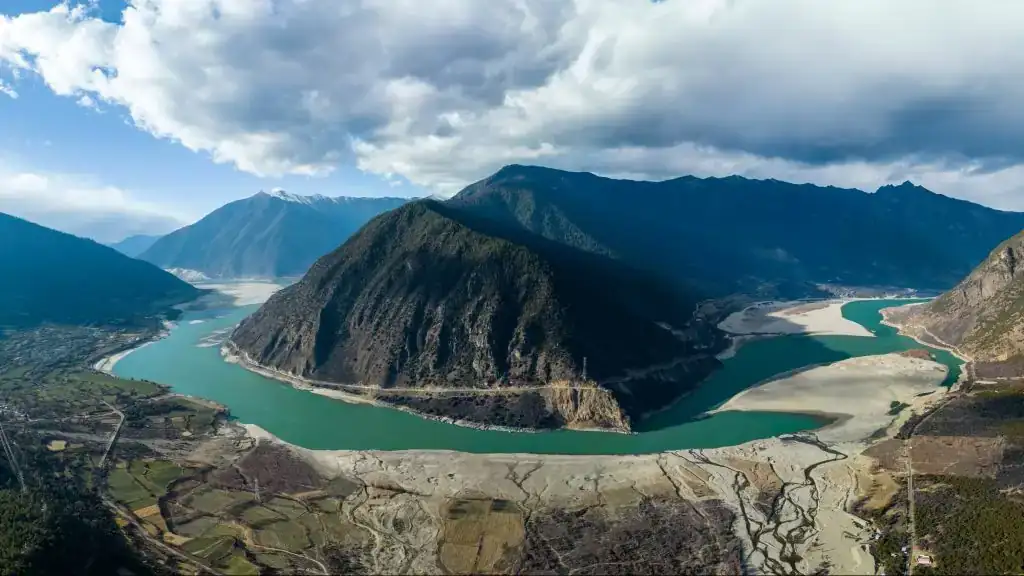
The Yarlung Tsangpo is the world’s highest major river, originating from Himalayan glaciers and winding across the Tibetan plateau before plunging south toward India and Bangladesh. Along one dramatic stretch near Tibet’s de facto border with India, the river forms the so-called Great Bend, dropping around 2,000 meters in elevation over roughly 50 kilometers.
That steep descent gives the area enormous hydropower potential. Chinese estimates have suggested it could produce about 300 billion kilowatt-hours of electricity annually—roughly three times the output of the Three Gorges Dam, currently the world’s largest power station.
Chinese leader Xi Jinping publicly urged officials to push the project forward during a visit to Tibet earlier this year, framing it as part of a broader drive to secure clean energy and promote development in strategically sensitive regions. State-owned Power Construction Corporation of China has previously described hydropower development on the lower Yarlung Tsangpo as a matter of national security, encompassing water, energy, and territorial considerations.
Engineering ambition—and risk
Experts describe the project as an unprecedented engineering undertaking. Plans referenced in official documents and academic studies suggest a system of multiple dams and reservoirs combined with long tunnels blasted through mountains, allowing water to be diverted through a series of underground power stations.
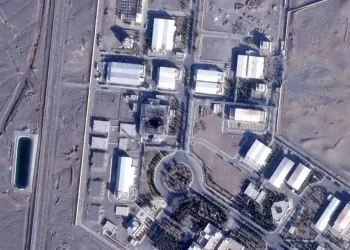
Such a design would take advantage of the river’s sharp elevation drop while limiting the number of large surface dams. Analysts who have reviewed open-source material, including satellite imagery and corporate filings, say the system could stretch roughly 150 kilometers from its first to its final power station.
Chinese officials have said the project has undergone decades of study and includes extensive safety and environmental safeguards. The Foreign Ministry has stated that Beijing will share necessary information with downstream countries as construction progresses and insists the project will not harm areas beyond China’s borders.
Independent experts say it is difficult to assess those claims without more detailed data. The region is among the most seismically active in the world, with risks from earthquakes, landslides, glacial lake outburst floods, and debris flows—hazards expected to become more unpredictable as the climate warms.
Building and maintaining complex infrastructure under such conditions poses significant challenges, even for China, which leads the world in large dam construction.
Environmental stakes at the Great Bend
The Great Bend of the Yarlung Tsangpo is also one of China’s most ecologically rich and fragile regions. The river cuts through the world’s deepest canyon, flanked by old-growth forests and designated national-level nature reserves.
The area is home to rare and endangered species, including Bengal tigers, clouded leopards, red pandas, and black bears, as well as plant life that ranges from alpine to tropical within a short distance. Scientists continue to discover new species there.
Researchers from Chinese universities have called for comprehensive biodiversity surveys before large-scale construction proceeds, warning that the environmental value of the region has not been fully assessed. Rights groups have raised questions about whether parts of the project intrude into protected areas, arguing that the environmental review process has not been made public.
Chinese authorities say the project complies with ecological protection laws and includes advanced monitoring systems to protect wildlife habitats. A company notice reviewed by media outlets indicated that biodiversity assessments are required for construction permits, though results have not been disclosed.
Communities facing relocation
Beyond environmental concerns, the hydropower project is expected to reshape the lives of local residents. Several tens of thousands of people live in the counties affected by construction, including members of the Monpa and Lhoba communities, two of China’s smallest officially recognized ethnic minorities.
Officials have acknowledged that villages will be relocated and have said new housing and places of worship are being built. Local governments have reported verifying household registrations and managing an influx of migrant workers drawn by the project.
On Chinese social media, some residents have described the emotional toll of moving from ancestral homes. While authorities say resettlement plans will prioritize residents’ rights and cultural heritage, critics argue that large infrastructure projects in Tibet have historically led to profound social disruption.
Downstream anxieties in India and Bangladesh
Concerns are especially acute downstream. In India’s northeastern Arunachal Pradesh state, leaders have warned that the dam could threaten livelihoods and be used as leverage in times of political tension. Indian officials say they are monitoring developments closely and have called for greater data sharing.
China and India have discussed cooperation on trans-boundary rivers, and Beijing has agreed to share hydrological data during emergencies. Still, analysts note that past disputes over rivers such as the Mekong have fueled mistrust.
Experts say upstream dams can, in theory, help regulate floods—an important issue for both India and Bangladesh during intense monsoon seasons. But they caution that poor coordination or sudden water releases could increase risks rather than reduce them.
Changes to sediment flow and fish migration could also affect downstream ecosystems, even if overall water volumes remain largely dependent on monsoon rains and tributaries.
A project with global implications
China already accounts for nearly one-third of global installed hydropower capacity and has met many of its renewable energy targets ahead of schedule. In Tibet, authorities envision a vast clean-energy base combining hydropower with solar and wind, supplying electricity to eastern China and powering energy-intensive industries.
Supporters see the Yarlung Tsangpo project as central to China’s long-term transition away from fossil fuels. Critics counter that concentrating so much infrastructure in an ecologically sensitive and geopolitically tense region carries significant risks.
Until more information is released, independent experts say it will remain difficult to fully evaluate the project’s safety, environmental impact, and downstream consequences. For now, the vast hydropower system rising in the Himalayas stands as both a symbol of China’s engineering ambition and a focal point for regional unease.
This article was rewritten by JournosNews.com based on verified reporting from trusted sources. The content has been independently reviewed, fact-checked, and edited for accuracy, neutrality, tone, and global readability in accordance with Google News and AdSense standards.
All opinions, quotes, or statements from contributors, experts, or sourced organizations do not necessarily reflect the views of JournosNews.com. JournosNews.com maintains full editorial independence from any external funders, sponsors, or organizations.
Stay informed with JournosNews.com — your trusted source for verified global reporting and in-depth analysis. Follow us on Google News, BlueSky, and X for real-time updates.