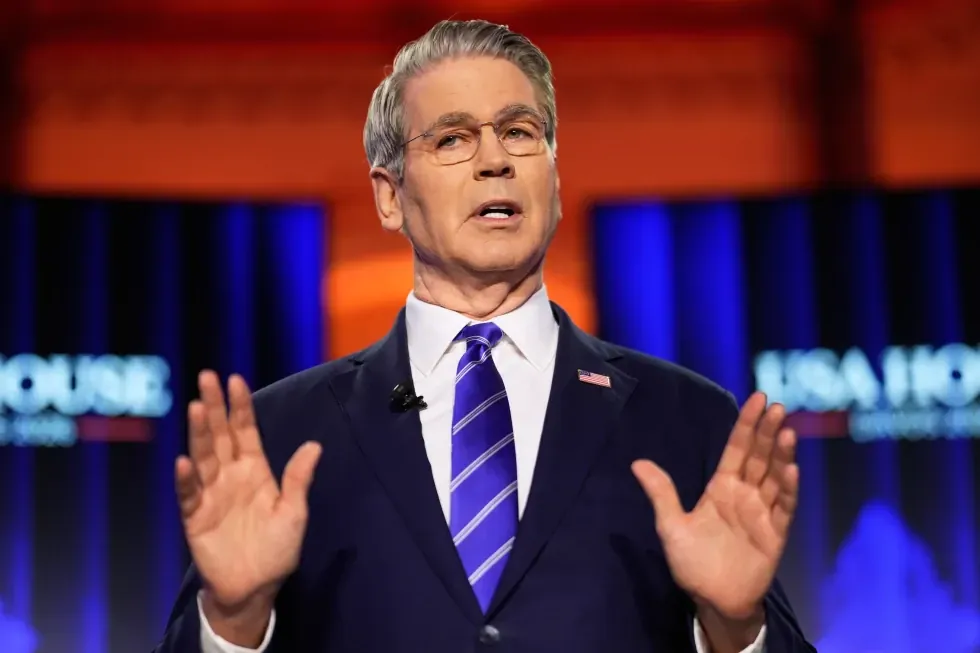
WASHINGTON (AP) – U.S. Treasury Secretary Scott Bessent cautioned Canadian Prime Minister Mark Carney on Wednesday, suggesting that public criticism of U.S. trade policy could complicate the upcoming formal review of the U.S.-Mexico-Canada Agreement (USMCA). The trade deal, signed during the Trump administration, remains central to managing tariffs and economic relations across North America. The exchange underscores rising diplomatic sensitivity ahead of negotiations.
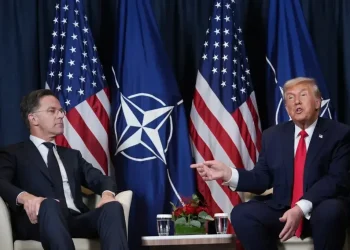
Bessent’s warning came after Carney delivered a high-profile speech at the World Economic Forum in Davos, Switzerland, criticizing economic coercion by larger powers toward smaller countries. His remarks have since prompted responses from both U.S. officials and President Donald Trump, highlighting tensions over trade issues, including Canada’s ongoing discussions with China.
The situation escalated when Trump threatened on Saturday to impose a 100% tariff on Canadian imports linked to the Beijing trade initiative, intensifying pressure on diplomatic channels.
Treasury Secretary’s Caution
Speaking to CNBC, Bessent emphasized that Carney should avoid public confrontations that could be seen as politically motivated. “I would not pick a fight going into USMCA to score some cheap political points — either you’re working for your own political career or you’re working for the Canadian people,” he said.
Bessent, referencing Carney’s past as a central banker, added: “I’ve seen what happens when a technocrat tries to pivot and become a politician. It never really works out well.”
Diplomatic Exchanges
Following the Davos speech, Trump and Carney spoke on Monday. Bessent later told Fox News that Carney had been “very aggressively walking back some of the unfortunate remarks he made at Davos.” However, Carney offered a different characterization the next day, telling reporters: “To be absolutely clear, and I said this to the president, I meant what I said in Davos.”
Context of the USMCA
The USMCA, signed in 2020 during Trump’s first term, is designed to safeguard North American trade, particularly protecting Canada from the most severe impacts of U.S. tariffs. Trump has recently expressed ambivalence toward the agreement, stating earlier this month, “I don’t really care about it.”
Bessent struck a more optimistic note in his CNBC interview, suggesting that despite friction, negotiations could still yield positive outcomes. “I think we will end up in a good place — may not be a straight line,” he said, indicating that challenges remain but a resolution is possible.
Implications for Canada-U.S. Trade Relations
The exchange reflects broader tensions between economic diplomacy and domestic political messaging. Observers note that high-profile criticisms of trade partners can carry risks, particularly when formal negotiations are imminent. Canada’s engagement with China adds another layer of complexity, prompting U.S. officials to closely monitor messaging ahead of the USMCA review.
This article was rewritten by JournosNews.com based on verified reporting from trusted sources. The content has been independently reviewed, fact-checked, and edited for accuracy, neutrality, tone, and global readability in accordance with Google News and AdSense standards.
All opinions, quotes, or statements from contributors, experts, or sourced organizations do not necessarily reflect the views of JournosNews.com. JournosNews.com maintains full editorial independence from any external funders, sponsors, or organizations.
Stay informed with JournosNews.com — your trusted source for verified global reporting and in-depth analysis. Follow us on Google News, BlueSky, and X for real-time updates.