Mattel has unveiled its first Barbie representing a person with autism, adding to a growing lineup of dolls designed to reflect physical, sensory, and neurological diversity. The new doll, developed over more than 18 months with autistic advocates, is intended to broaden representation while avoiding a one-size-fits-all portrayal of autism.
The announcement marks the latest expansion of Mattel’s Barbie Fashionistas range, which in recent years has included dolls with Down syndrome, hearing aids, vitiligo, prosthetic limbs, and chronic health conditions.
Collaboration with autistic advocates
The autistic Barbie was developed in partnership with the Autistic Self Advocacy Network (ASAN), a U.S.-based nonprofit that promotes the rights and accurate media representation of autistic people. Mattel said the collaboration was central to ensuring the doll reflected lived experiences rather than stereotypes.

Autism encompasses a wide spectrum of traits, many of which are not immediately visible, making representation particularly complex. Noor Pervez, ASAN’s community engagement manager, who worked closely on the project, said the goal was not to define autism but to reflect some common ways autistic people experience the world.
“Autism doesn’t look any one way,” Pervez said. “But we can try and show some of the ways that autism expresses itself.”
Design choices rooted in lived experience
Several physical design elements were incorporated to reflect behaviors and sensory preferences that are familiar to many autistic people, while acknowledging that no single depiction can be universal.
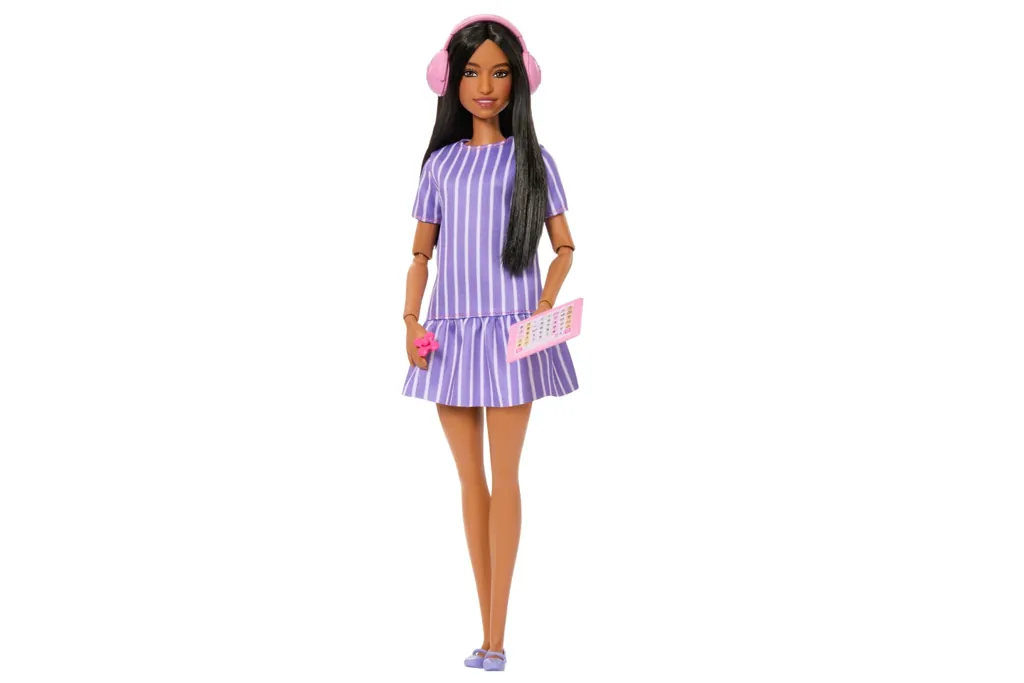
The doll’s eyes are angled slightly to the side, representing how some autistic individuals may avoid sustained eye contact. Its articulated elbows and wrists allow for hand movements associated with stimming — repetitive motions such as hand flapping or fidgeting that some people use to regulate sensory input or express emotion.
Clothing choices were also shaped by consultation with autistic advocates. Designers debated whether the outfit should be loose or form-fitting, reflecting differing sensory needs. Some autistic people prefer loose clothing to reduce irritation from seams, while others favor tighter garments that provide proprioceptive feedback — a sense of body position in space.
The final design features an A-line dress with short sleeves and a flowing skirt, intended to minimize fabric-to-skin contact. The doll wears flat shoes, chosen for stability and ease of movement.
Accessories reflecting communication and sensory tools
Each doll includes several accessories commonly used by autistic people. These include a pink fidget spinner that clips onto a finger, noise-canceling headphones, and a tablet modeled on augmentative and alternative communication (AAC) devices used by some individuals who have difficulty with spoken language.
Mattel said the accessories were selected to normalize tools that support communication and sensory regulation, rather than portraying them as unusual or medicalized.
Representation beyond disability
The release also reflects an effort to broaden cultural representation within the autism community. The doll’s facial features were inspired by Mattel employees in India, using internal mood boards that reflected women from Indian backgrounds.
Pervez said this was an important aspect of the collaboration, noting that autistic people from non-Western and non-white backgrounds are often underrepresented in media portrayals.
A growing push for inclusive dolls
The autistic Barbie joins a Fashionistas lineup that has steadily expanded over the past decade. Mattel introduced its first Barbie with Down syndrome in 2023 and added a doll representing a person with Type 1 diabetes in 2024. Other dolls in the range include characters with hearing aids, prosthetic limbs, vitiligo, and varying body types, heights, hair textures, and skin tones.
Jamie Cygielman, Mattel’s global head of dolls, said the company sees inclusion as central to the brand’s evolution.
“Barbie has always strived to reflect the world kids see and the possibilities they imagine,” Cygielman said in a statement. “We’re proud to introduce our first autistic Barbie as part of that ongoing work.”
Availability and pricing
The autistic Barbie is scheduled to go on sale Monday through Mattel’s online store and at Target locations in the United States, with a suggested retail price of $11.87. Walmart is expected to begin carrying the doll in March, according to the company.
Autism prevalence and public awareness
The release comes amid growing public awareness of autism spectrum disorder. According to the U.S. Centers for Disease Control and Prevention, an estimated 1 in 31 eight-year-old children in the United States has been identified with autism, based on data from the CDC’s Autism and Developmental Disabilities Monitoring Network.
The CDC has reported higher diagnosis rates among Black, Hispanic, Asian, and Pacific Islander children compared with white children, as well as significantly higher prevalence among boys than girls. Researchers caution that diagnostic access, screening practices, and social factors influence reported prevalence.
While Mattel has emphasized that the new doll does not represent all autistic people, advocates involved in the project say increased visibility can help normalize neurodiversity and encourage broader understanding, particularly among children.
This article was rewritten by JournosNews.com based on verified reporting from trusted sources. The content has been independently reviewed, fact-checked, and edited for accuracy, neutrality, tone, and global readability in accordance with Google News and AdSense standards.
All opinions, quotes, or statements from contributors, experts, or sourced organizations do not necessarily reflect the views of JournosNews.com. JournosNews.com maintains full editorial independence from any external funders, sponsors, or organizations.
Stay informed with JournosNews.com — your trusted source for verified global reporting and in-depth analysis. Follow us on Google News, BlueSky, and X for real-time updates.