NEW YORK (JN) – Amazon is closing all of its Amazon Go and Amazon Fresh physical grocery stores as it sharpens its focus on Whole Foods Market and grocery delivery, the company said Tuesday. Some of the affected locations will be converted into Whole Foods stores as Amazon consolidates its brick-and-mortar strategy.
The move marks a significant retrenchment from Amazon’s own branded grocery concepts, which were launched over the past decade as the company experimented with cashierless technology and alternative store formats. Amazon said customers will continue to have access to Amazon Fresh through online ordering and delivery in eligible areas.
The decision comes as Amazon reports sustained growth at Whole Foods Market and rising consumer demand for online grocery delivery, prompting the company to prioritize scale and operational efficiency over further expansion of its standalone grocery brands.
Stores to close as Amazon refocuses grocery strategy
In a blog post, Amazon said it will shut all 57 Amazon Fresh stores and 15 Amazon Go locations. Most stores will cease operations on Feb. 1, with California locations remaining open for a longer period to comply with state labor requirements.
“While we’ve seen encouraging signals in our Amazon-branded physical grocery stores, we haven’t yet created a truly distinctive customer experience with the right economic model needed for large-scale expansion,” the company said.
Amazon added that customers in supported markets can continue shopping Amazon Fresh online for what it described as fast and convenient grocery delivery.
The closures underscore the challenges Amazon has faced in translating its technological innovations into profitable, scalable grocery stores under its own brand, even as its broader grocery business continues to grow.
Whole Foods emerges as the core physical footprint
Amazon acquired Whole Foods Market in 2017, a deal that gave the company an immediate nationwide grocery presence and a premium brand with an established customer base. Since then, Amazon said Whole Foods has recorded more than 40% sales growth and expanded to over 550 locations.
The company now plans to open more than 100 additional Whole Foods stores over the next several years, signaling that it views the chain as the cornerstone of its physical grocery operations.
Some Amazon Fresh and Amazon Go sites will be converted into Whole Foods locations, Amazon said, though it did not specify how many conversions are planned or where they will occur.
The renewed emphasis on Whole Foods reflects Amazon’s assessment that the brand offers a clearer path to long-term growth compared with its newer, internally developed grocery formats.
Online grocery delivery continues to expand
At the same time, Amazon is increasing its investment in grocery delivery, an area where it says consumer demand remains strong. The company currently delivers groceries to about 5,000 U.S. cities and towns, including thousands of locations served by same-day delivery.
Customers in these areas can order fresh produce and perishable items alongside household staples, Amazon said. Based on what it described as strong customer feedback, the company plans to expand same-day delivery of fresh groceries to additional regions this year.
The growth of delivery services has reshaped grocery shopping habits in recent years, and Amazon appears to be prioritizing logistics and fulfillment capabilities that leverage its existing infrastructure rather than expanding physical storefronts under multiple brands.
New store concepts still under development
Despite the closures, Amazon said it is not abandoning experimentation with physical retail entirely. The company revealed plans to open a new “supercenter” concept designed to offer fresh groceries, household essentials, and general merchandise under one roof.
Amazon did not provide details on the timing, size, or location of the planned supercenter, but described it as a way for customers to shop a broad selection of Amazon products in a physical setting.
Separately, Amazon is testing an in-store format called Amazon Grocery, which it launched alongside Whole Foods Market in Chicago. The concept is also being tested at a Whole Foods location in Plymouth Meeting, Pennsylvania, allowing customers to shop both traditional groceries and Amazon household essentials in the same space.
The limited rollout suggests Amazon is proceeding cautiously as it evaluates which physical formats can complement its online business.
Amazon Go’s technology lives on
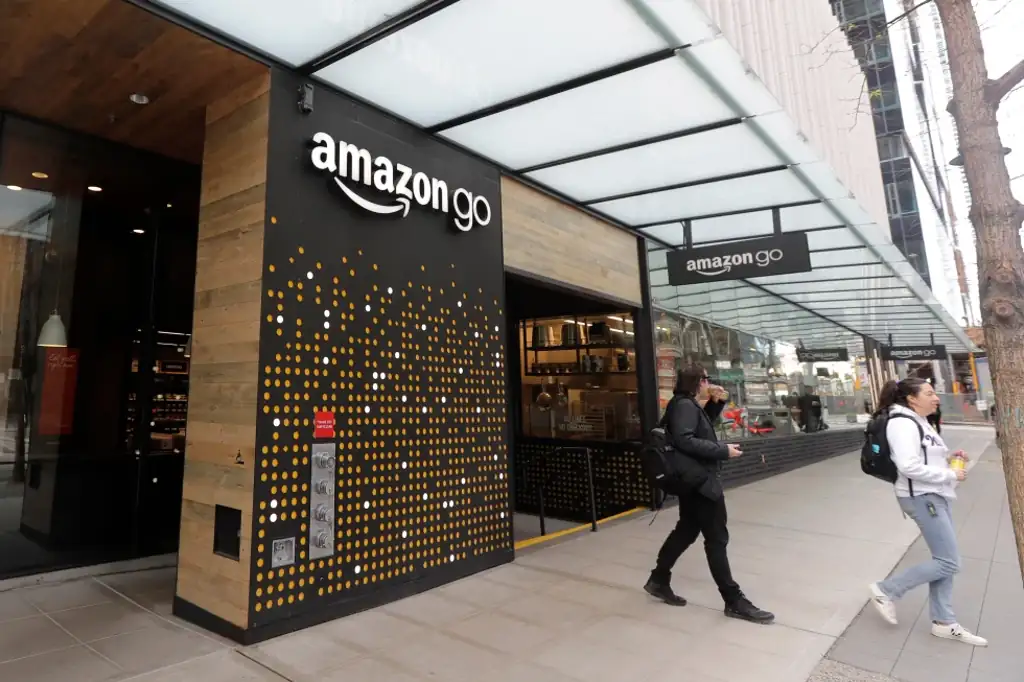
Amazon opened its first Amazon Go store in Seattle in 2018, attracting attention for its “just walk out” technology that allows shoppers to pick up items and leave without stopping at a checkout. Sensors and cameras track purchases and charge customers automatically after they exit.
While the Amazon Go stores themselves are closing, the company said the technology developed there has been widely adopted elsewhere. Amazon described the Go locations as “innovation hubs” that helped refine cashierless systems now operating in more than 360 third-party locations across five countries.
Amazon is also expanding the use of the technology within its own operations. More than 40 North American fulfillment centers now use “just walk out” systems in employee breakrooms, allowing workers to grab meals without checkout delays. Additional deployments are planned this year.
The company said the lessons learned from Amazon Go will continue to influence its retail and logistics operations even as the stores disappear.
Amazon Fresh stores fail to scale
Amazon introduced its first Amazon Fresh physical store in 2020, featuring national brands, produce, meat, and seafood. The stores were positioned as a modern grocery alternative tied closely to Amazon’s broader ecosystem.
However, Amazon’s decision to close all Amazon Fresh locations highlights the difficulty of competing in a crowded and low-margin grocery market, particularly as consumer behavior shifts toward online ordering and delivery.
By consolidating its efforts around Whole Foods and logistics-driven grocery delivery, Amazon is signaling a more focused approach to food retail—one that leans on established brands and scale rather than experimental storefronts.
This article was rewritten by JournosNews.com based on verified reporting from trusted sources. The content has been independently reviewed, fact-checked, and edited for accuracy, neutrality, tone, and global readability in accordance with Google News and AdSense standards.
All opinions, quotes, or statements from contributors, experts, or sourced organizations do not necessarily reflect the views of JournosNews.com. JournosNews.com maintains full editorial independence from any external funders, sponsors, or organizations.
Stay informed with JournosNews.com — your trusted source for verified global reporting and in-depth analysis. Follow us on Google News, BlueSky, and X for real-time updates.