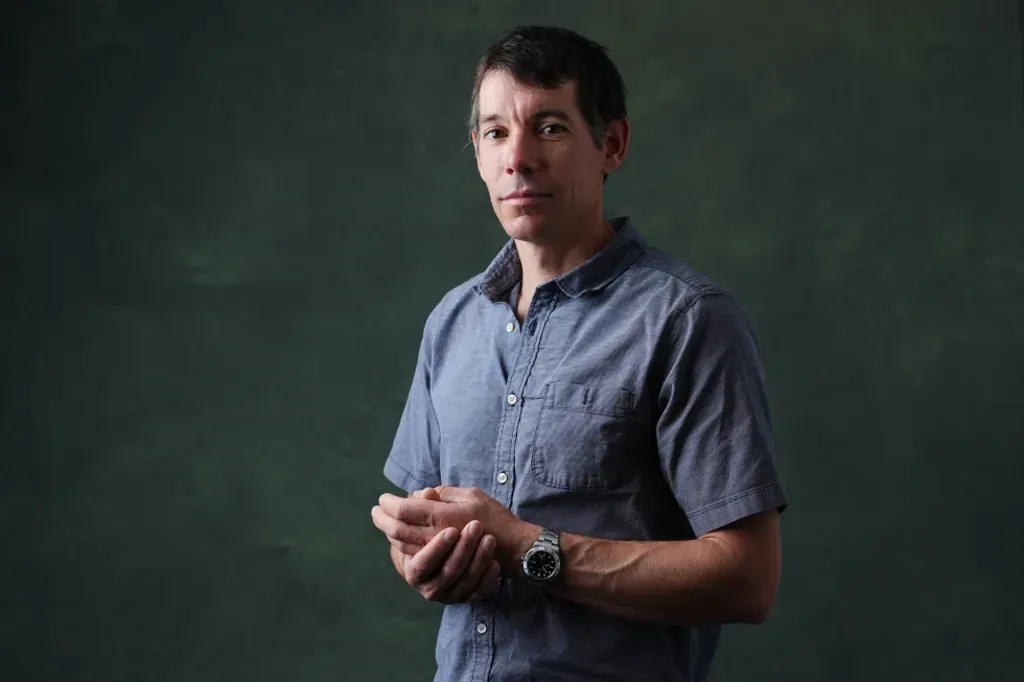
TAIPEI, Taiwan (JN) – Taipei’s iconic Taipei 101 will become the stage for an unprecedented climbing feat this weekend, as American rock climber Alex Honnold attempts to ascend the 508-meter (1,667-foot) skyscraper without ropes or protective equipment. The climb, scheduled for Saturday morning local time, will be broadcast live by Netflix on a short delay, marking the first time a free-solo ascent of a building of this scale has been televised in real time.
Honnold, widely known for his ropeless climb of El Capitan in Yosemite National Park featured in the Oscar-winning documentary Free Solo, has said the Taipei 101 project has been in his mind for more than a decade. While the announcement has generated global excitement, it has also reignited long-running debates about safety, responsibility, and the ethics of broadcasting extreme risk to mass audiences.
The climb places one of the world’s most recognizable athletes in an urban environment unlike any he has previously tackled, blending spectacle, personal ambition, and live television in a way rarely seen in professional climbing.
A singular objective in the urban skyline
Completed in 2004, Taipei 101 was once the tallest building in the world and remains a defining feature of Taiwan’s capital. Designed to withstand earthquakes and typhoons, its stacked, pagoda-like sections — often referred to as “bamboo boxes” — give the tower its distinctive silhouette.
Honnold said the building appealed to him for the same reasons El Capitan once did: its scale, uniqueness, and prominence.
“When you look at climbing objectives, you look for things that are singular,” he told The Associated Press in an interview late last year, describing Taipei 101 as standing “way bigger and way prouder than all the things around it.”
Although other climbers have ascended the tower, none have done so without ropes. French climber Alain Robert scaled Taipei 101 during its opening celebrations on Christmas Day in 2004 using ropes, a climb that took nearly four hours amid wind, rain, and an injured elbow.
Preparing to climb a skyscraper without ropes
Honnold has spent months preparing for the ascent and has practiced specific sequences on the building. He has also discussed the climb with Robert on his podcast, drawing on earlier experience with the structure.
The building’s 101 floors are divided into eight major sections. The most demanding portion, according to Honnold, is the central stretch of 64 floors, where steep, overhanging surfaces dominate. Each section ends with a balcony, offering brief opportunities to rest.
“I don’t think it’ll be that extreme,” Honnold said. “I think it’s the perfect sweet spot — hard enough to be engaging for me and obviously an interesting climb.”
The live broadcast, titled Skyscraper Live, will begin Friday evening for U.S. audiences, operating on a 10-second delay to allow producers to intervene if necessary.
Safety planning behind a high-risk broadcast
Plimsoll Productions, which is producing the event, says risk management has been central to planning. Executive producer James Smith said safety advisers were consulted early, and the production is working with Secret Compass, a firm experienced in high-risk television projects.
Camera operators will be stationed inside the building and suspended externally on ropes, while multiple exit points and hatches will allow Honnold to abandon the climb if conditions deteriorate. Smith and Honnold will remain in constant communication throughout the ascent.
“These people all know Alex. They trust Alex,” Smith said, adding that crew members will be positioned close enough to monitor conditions without interfering in the climb.
Professional meteorologists have also been commissioned to provide forecasts leading up to the event. Light rain remains a possibility, and Smith said the climb would be postponed if weather conditions become unsafe.
Local reaction and climbing culture
Among Taiwan’s climbing community, anticipation has been building. Chin Tzu-hsiang, a Taiwanese climber and coach, said Taipei 101 has long inspired climbers in the city.
“Honnold is a household name, even here,” Chin said, noting that some of his newer students are eager to watch. While acknowledging the risks, Chin said Honnold’s reputation for preparation and restraint reassures many within the sport.
“For Alex Honnold to finish the climb,” he said, “it’s like he’s helping us fulfill our dream.”
Ethics, influence, and responsibility
The decision to broadcast the climb live has drawn scrutiny from media ethicists and veteran climbers. Subbu Vincent, director of media and journalism ethics at Santa Clara University, said safeguards such as the broadcast delay and clear options to halt the event are essential.
“It’s important that the production does not increase the risk he is already taking,” Vincent said, adding that live footage should not continue if something goes wrong.
Concerns have also been raised about the influence such events may have on young or inexperienced viewers. Fatal accidents linked to free soloing and illegal “roof-topping” stunts have fueled debate over whether high-profile broadcasts encourage imitation.
Jeff Smoot, author of All and Nothing: Inside Free Soloing, said these tensions have existed for decades. From within climbing culture, he said, free soloing is often viewed not as thrill-seeking but as a deeply focused, almost meditative discipline.
“When the public looks at this, they see danger,” Smoot said. “From the climber’s perspective, it’s something else entirely.”
Even so, Smoot acknowledged his own initial doubts about the Taipei 101 climb and its live broadcast. Ultimately, he said, the spectacle is inseparable from the risk.
“If it wasn’t dangerous,” he asked, “would people want to watch?”
This article was rewritten by JournosNews.com based on verified reporting from trusted sources. The content has been independently reviewed, fact-checked, and edited for accuracy, neutrality, tone, and global readability in accordance with Google News and AdSense standards.
All opinions, quotes, or statements from contributors, experts, or sourced organizations do not necessarily reflect the views of JournosNews.com. JournosNews.com maintains full editorial independence from any external funders, sponsors, or organizations.
Stay informed with JournosNews.com — your trusted source for verified global reporting and in-depth analysis. Follow us on Google News, BlueSky, and X for real-time updates.