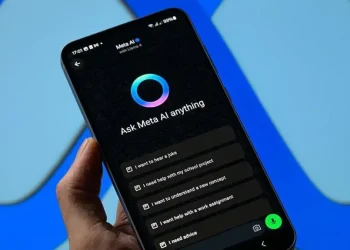
Blind individuals are increasingly accessing AI-powered tools that provide visual feedback about their own appearance—a capability long denied to them. These developments, while technically empowering, raise complex questions about body image, emotional wellbeing, and cultural standards of beauty. The technology moves beyond description, offering evaluative insights and comparisons, and in doing so, is beginning to reshape how blind users perceive themselves.
For decades, blind people have relied on auditory cues or tactile feedback to navigate their environment and understand social interactions. Visual self-perception, however, has been largely inaccessible. Applications like Be My Eyes and Envision have begun bridging this gap, using artificial intelligence to interpret images and offer detailed assessments of a user’s appearance. Users can now receive feedback that ranges from basic skin condition analysis to nuanced evaluations aligned with conventional beauty standards. The rise of such AI “mirrors” introduces both empowerment and psychological complexity.
From Description to Evaluation
Early iterations of AI tools for blind users focused on functional assistance, such as text recognition and environmental description. Karthik Mahadevan, CEO of Envision, notes that the technology’s initial purpose was purely practical: reading printed text, recognizing objects, and helping users navigate. Today, AI applications increasingly provide evaluative feedback, including advice on appearance, fashion coordination, and even aesthetic judgments aligned with cultural beauty norms.
While some blind users report feeling empowered by these capabilities, research in body image psychology underscores potential risks. Helena Lewis-Smith, a health psychology researcher at the University of Bristol, highlights that increased access to evaluative feedback can lower body image satisfaction in sighted populations. For blind individuals, who have limited previous exposure to visual norms, AI’s assessments could be psychologically impactful in unexpected ways. The technology effectively introduces comparisons previously unavailable, such as matching a user’s features to algorithmically derived ideals or peer images.
Psychological Implications of AI Mirrors
Blind users report mixed emotional outcomes. Lucy Edwards, a blind content creator, describes using AI feedback to assess skin, facial features, and overall appearance—sometimes resulting in dissatisfaction despite the novelty of self-visualization. “Suddenly we have access to all this information about ourselves… it changes our lives,” she notes. Yet, AI-generated feedback may reinforce narrow, culturally specific beauty ideals, particularly Western-centric or thin-centric standards embedded in training datasets.
Meryl Alper, a researcher on media, body image, and disability, emphasizes the multidimensional nature of body image, which AI cannot fully contextualize. Unlike human observers, AI typically analyzes purely visual metrics without accounting for individuality, personality, or lived experience. Consequently, feedback may be reductionist, offering a “mirror” that is both highly detailed and potentially misleading.
Furthermore, the interpretive control afforded to users—choosing descriptive style, tone, or evaluative criteria—can amplify these effects. While this personalization can empower, it may also intensify insecurities. Edwards illustrates this double-edged nature: positive prompts can boost self-perception, but queries about perceived flaws may elicit recommendations that reinforce dissatisfaction or encourage conformity to arbitrary standards.
Bias and Algorithmic Limitations
AI models continue to exhibit systemic biases. Training datasets emphasize Eurocentric, thin, and sexualized ideals, often excluding the diversity of global populations. Blind users relying on these models for self-assessment are exposed to these limitations, potentially internalizing unrealistic or culturally narrow standards. Errors in AI interpretation, or “hallucinations,” where the system invents features not present in the image, compound the challenge. Joaquín Valentinuzzi, a blind user experimenting with AI for dating profile optimization, reports frequent mismatches between AI feedback and reality, such as altered hair color or misinterpreted facial expressions.
These discrepancies highlight a critical tension: AI provides unprecedented access to self-knowledge while simultaneously imposing mediated, often flawed frameworks. The technology does not yet integrate emotional context, historical imagery, or subjective factors that contribute to a holistic sense of self. In doing so, it risks creating feedback loops that may affect mental health, self-esteem, and social behavior.
Comparative Considerations and Emerging Practices
Comparing AI-assisted perception to traditional mechanisms of body image reveals several trade-offs. Traditional tactile or verbal feedback allowed for subjective interpretation and context-dependent evaluation, whereas AI feedback is precise, quantitative, and standardized. The technology’s strength—its ability to generate consistent, rapid, and detailed assessments—also creates vulnerability: the feedback is treated as objective when it is inherently partial and biased.
Some mitigation strategies are emerging. Developers encourage user prompts to calibrate AI responses, shaping the style and focus of feedback. Researchers suggest incorporating multidimensional metrics, integrating context-aware analysis, and emphasizing user agency to interpret results critically. These interventions may help balance the benefits of enhanced perception with the risks of algorithmically mediated judgment.
Conclusion
AI “mirrors” for blind individuals are redefining the boundaries of self-perception, offering access to visual insights previously unattainable. The technology introduces opportunities for empowerment, independence, and aesthetic engagement. However, it also carries risks, including exposure to biased standards, psychological strain, and potential misalignment with lived reality. As adoption grows, careful design, contextualized interpretation, and ongoing research will be essential to ensure these tools enhance, rather than undermine, well-being.
The experience of blind users illustrates a broader tension in AI-mediated experiences: the power to access information previously unavailable, coupled with the responsibility to interpret and contextualize that information critically. These “mirrors” are not merely technological tools—they are interfaces between identity, perception, and social norms, and their evolution will continue to shape the ways blind individuals navigate visual culture.
This article was rewritten by JournosNews.com based on verified reporting from trusted sources. The content has been independently reviewed, fact-checked, and edited for accuracy, neutrality, tone, and global readability in accordance with Google News and AdSense standards.
All opinions, quotes, or statements from contributors, experts, or sourced organizations do not necessarily reflect the views of JournosNews.com. JournosNews.com maintains full editorial independence from any external funders, sponsors, or organizations.
Stay informed with JournosNews.com — your trusted source for verified global reporting and in-depth analysis. Follow us on Google News, BlueSky, and X for real-time updates.