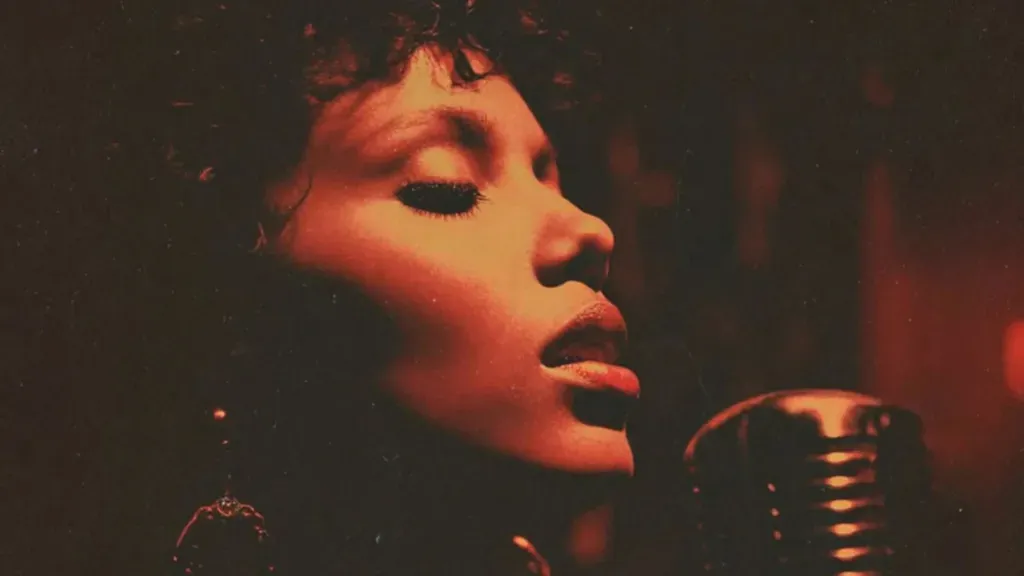
Sienna Rose has emerged as one of the most talked-about new names on streaming platforms in recent weeks, racking up millions of plays without interviews, concerts or even an active public profile. Three of her tracks sit on Spotify’s Viral Top 50, led by Into the Blue, a jazz-tinged soul ballad that has been streamed more than five million times.
Yet as her audience has grown, so have doubts about whether the singer exists at all. Music streaming service Deezer says many of Rose’s tracks have been flagged by its detection systems as likely to be generated using artificial intelligence, placing her at the centre of an accelerating debate over AI’s role in the global music industry.
The case highlights how quickly AI-generated music is entering mainstream listening spaces, often without clear disclosure, and how difficult it has become for audiences to distinguish between human and machine-made art.
Signs of an artist without a footprint
Unlike most emerging artists who build an audience through live shows, social media and press exposure, Sienna Rose appears to exist almost entirely within streaming algorithms. She has no confirmed live performances, no interviews, no music videos and no sustained social media presence.
Between late September and early December, at least 45 tracks credited to Rose appeared on major streaming platforms. The volume alone raised eyebrows among listeners and industry observers, given that even famously prolific artists rarely release at that pace.
Her now-deactivated Instagram account offered little reassurance. The images that were briefly visible showed a series of highly similar headshots, marked by soft lighting and facial consistency often associated with AI image generators rather than conventional photography.
The music itself also prompted suspicion. Rose’s songs sit comfortably within a contemporary soul and jazz-pop lane, drawing stylistic comparisons to artists such as Norah Jones and Alicia Keys. But some listeners reported subtle anomalies they associated with AI-generated audio.
How streaming services detect AI music
Deezer, which has invested heavily in AI-detection tools, told the BBC that many of Rose’s tracks had been identified as computer-generated. According to the company, these systems analyse mathematical patterns in audio files rather than relying on subjective listening alone.
Gabriel Meseguer-Brocal, a senior research scientist at Deezer, said AI music often contains imperceptible errors introduced during the generation process. While these flaws may not be audible to listeners, they act as a kind of fingerprint that allows platforms to identify both the presence of AI and, in some cases, the software used to create the track.
Some listeners claim they can hear more obvious clues. A persistent background hiss, occasionally noted in Rose’s songs, is commonly linked to AI music tools such as Suno or Udio, which generate tracks by refining white noise into structured sound.
Others point to creative limitations: rigid melodies, repetitive lyrics and a lack of expressive variation, particularly in climactic moments where human singers often push beyond strict melodic boundaries.
Listeners react to the “uncanny valley”
As Rose’s popularity grew, so did online discussion about her authenticity. Music commentators on TikTok, X and other platforms described a sense of unease, saying the songs felt polished but emotionally flat.
One TikTok critic said the music initially appealed, but triggered what they described as an “uncanny valley” response. After reviewing Rose’s profile, the critic concluded the artist was likely AI-generated. Similar reactions appeared across social platforms, with listeners describing the music as pleasant but ultimately “generic”.
BBC Radio 4 broadcaster Gemma Cairney questioned whether something essential was missing from the recordings, asking whether “some of the soul in the soul” had been lost.
Despite the scepticism, Rose’s tracks have attracted high-profile listeners. Pop star Selena Gomez briefly used one of her songs as background music in an Instagram post related to the Golden Globes, before removing it as questions about Rose’s identity spread. The post significantly amplified public interest in the case.
For some fans, the possibility that Rose does not exist was disappointing rather than infuriating. Several listeners posted online expressing regret that music they enjoyed might not come from a human artist.
Labels, credits and unanswered questions
Adding to the uncertainty are conflicting label credits. Several of Rose’s songs are linked to US indie label Broke, which has previously helped viral acts transition into mainstream success. However, Rose does not appear on the label’s official artist roster.
Another company, Nostalgic Records, lists Rose on its website and describes her as a London-based storyteller. Neither label has publicly clarified whether Rose is a human performer, a pseudonym, or an AI-generated project. The BBC has contacted both organisations, but no definitive response has been provided.
The ambiguity reflects a broader industry challenge, where attribution and transparency often lag behind technological capability.
AI music’s rapid expansion
According to Deezer, around 34% of the music uploaded to its platform each day—roughly 50,000 tracks—is now generated using AI tools. Less than two years ago, the figure was estimated at closer to 5%.
Other platforms have taken different approaches. Bandcamp announced this week that it would ban AI-generated music entirely, while Spotify has said it is focused on removing harmful AI content, including impersonations and spam, without imposing a blanket ban.
The financial incentives are clear. Launching an AI-generated act requires minimal investment, yet successful tracks can generate thousands of pounds in weekly royalties. By contrast, traditional pop industries, such as K-pop, invest heavily in training, production and marketing for each artist.
Growing backlash from artists
The rise of AI music has triggered increasing resistance from musicians and songwriters. Last year, several high-profile artists, including Paul McCartney, Kate Bush and Annie Lennox, released a silent album to protest the use of copyrighted material in training AI models without permission.
At the 2024 Ivor Novello Awards, British singer Raye said she did not believe audiences would ultimately choose algorithmically generated music over human storytelling. She described songwriting as a deeply personal process rooted in lived experience, rather than competition or efficiency.
Rapper and poet Kojey Radical struck a lighter tone, joking that he was more concerned about everyday technology failures than the prospect of AI replacing musicians.
For now, Sienna Rose remains an unresolved case. Whether she is an AI creation, a marketing experiment, or a reclusive human artist, her sudden success underscores how artificial intelligence is reshaping the boundaries of creativity, commerce and trust in the global music ecosystem.
This article was rewritten by JournosNews.com based on verified reporting from trusted sources. The content has been independently reviewed, fact-checked, and edited for accuracy, neutrality, tone, and global readability in accordance with Google News and AdSense standards.
All opinions, quotes, or statements from contributors, experts, or sourced organizations do not necessarily reflect the views of JournosNews.com. JournosNews.com maintains full editorial independence from any external funders, sponsors, or organizations.
Stay informed with JournosNews.com — your trusted source for verified global reporting and in-depth analysis. Follow us on Google News, BlueSky, and X for real-time updates.