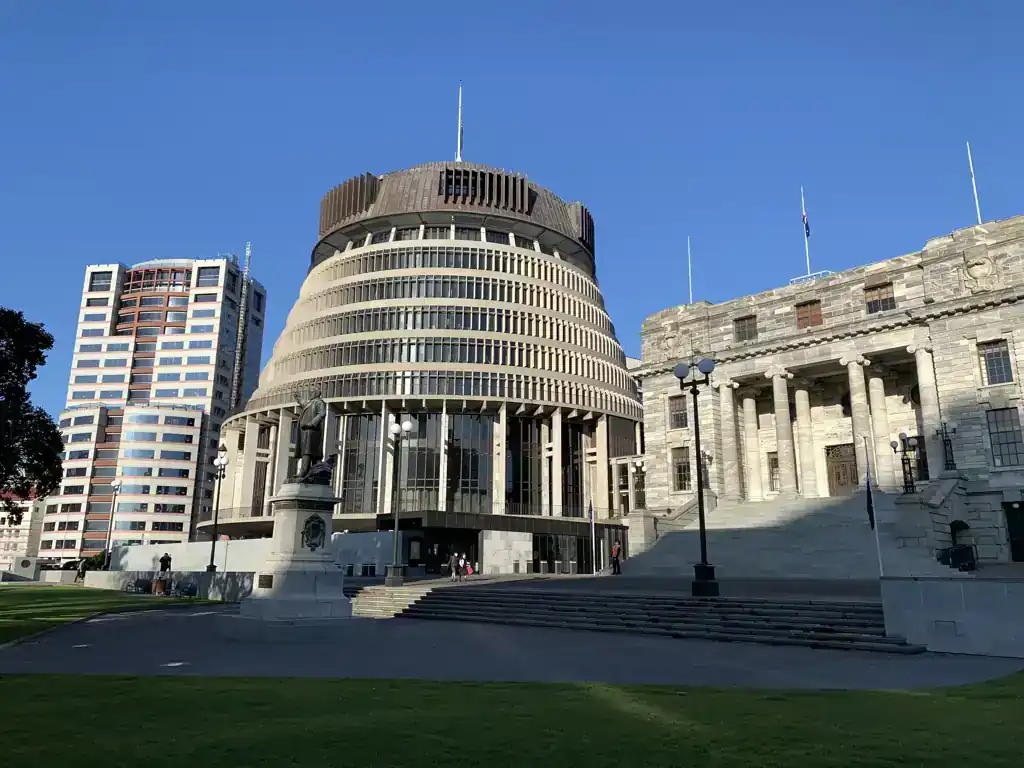
WELLINGTON, New Zealand — New Zealand’s governing centre-right coalition has fallen one seat short of a parliamentary majority after the Electoral Commission declared the official results of the November 7 general election.
The National Party, ACT New Zealand and New Zealand First secured a combined 65 seats in the 130-member Parliament. They need 66 to command a majority, leaving Prime Minister Christopher Luxon facing negotiations with the newly elected Opportunity Party.
National won 40 seats, ACT secured 13 and New Zealand First took 12. The main opposition Labour Party won 36 seats, followed by the Green Party with 17 and Te Pāti Māori with five.

Opportunity, led by Qiulae Wong, secured seven seats. Its support could lift the National-led grouping to 72 seats if the parties reach an agreement.
Special votes change parliamentary balance
The final count changed the balance from the preliminary election-night results, which had given the National-led coalition 67 seats and a two-seat majority.
National lost two seats in the final allocation, falling from 42 to 40. The Green Party gained one seat, increasing its total from 16 to 17. Labour remained on 36, while ACT, New Zealand First, Opportunity and Te Pāti Māori retained their preliminary seat totals.
The Electoral Commission counted 2,931,604 votes, including 484,865 special votes. Special votes represented 16.5% of the total and included 99,118 overseas votes.
Labour received the largest share of the party vote, with 29.88%, compared with National’s 28.35%. However, National won more seats overall through its performance in electorate contests.

The final results also confirmed three changes in electorate outcomes. Labour candidates won Hamilton East and Wairarapa, while Green Party candidate Julie Anne Genter won Wellington Bays.
Opportunity becomes central to government negotiations
The final seat distribution gives Opportunity a potentially decisive role in negotiations.
National, ACT and New Zealand First have 65 seats between them. An agreement with all seven Opportunity MPs would raise their combined total to 72.
The opposition grouping of Labour, the Greens and Te Pāti Māori has 58 seats. Even with Opportunity’s support, that combination would reach only 65, leaving it one seat short of a majority.
The figures establish the parliamentary arithmetic but do not determine which parties will form the next government. Any governing arrangement will depend on negotiations and the support parties are prepared to provide.
Wong previously said Opportunity would approach the party with the largest number of parliamentary seats first. She also said the party intended to negotiate with one political bloc at a time rather than engage both sides simultaneously.
At the time of those comments on November 9, National had 42 seats in the preliminary count. It remains the largest party following the final count, with 40 seats.
Wong’s stated approach therefore puts National first in the sequence she described. However, no agreement between the parties had been announced following the official results.
Policy differences could complicate negotiations
The negotiations could prove challenging because Opportunity has campaigned on a low-emissions future and has said any governing arrangement must reflect its policy priorities.
Those priorities could require compromises with National and its existing coalition partners, ACT and New Zealand First. The parties have different policy positions, and the final seat count does not establish what concessions either side may accept.
The National-led coalition has a direct numerical route to a majority through an agreement with Opportunity. The opposition parties would need additional parliamentary support or a different arrangement to reach the same threshold.
Recounts could affect final parliamentary arrangements
The Electoral Commission said the official results remain subject to possible judicial recount applications.
Applications must be filed with a District Court by December 2. If no recounts are requested, the commission expects to return the election writ on December 3 and formally allocate list seats through a Gazette notice.
If a recount is ordered, those steps will be delayed until the process is complete.
Until a new government is appointed, the incumbent administration will continue under New Zealand’s caretaker convention. The current government remains responsible for ordinary administration while negotiations determine which parties can command the confidence of Parliament.
The official count has settled the current distribution of parliamentary seats. The next stage will determine whether Luxon can secure a governing agreement with Opportunity or whether another arrangement emerges.
Source:
1. New Zealand Electoral Commission — 2026 General Election Official Results, November 27, 2026, Primary source for the official party-vote totals, percentages, electorate and list seats, parliamentary composition, special-vote figures, changes from preliminary results and judicial recount deadlines. The Commission confirmed 2,931,604 total votes, including 484,865 special votes, and declared the official results.
2. New Zealand Electoral Commission — 2026 General Election Preliminary Results, November 7, 2026, Provides the election-night results used to establish the changes following the special-vote count. National initially had 42 seats and the Greens 16.
3. New Zealand Parliament — Qiulae Wong, Member of Parliament Official parliamentary record confirming Wong’s election as an Opportunity Party list member on November 7, 2026, and her position as party leader.
4. Qiulae Wong — Interview with Interest.co.nz, November 9, 2026 Wong said Opportunity would approach the party with the most seats first and negotiate with one political bloc at a time. The interview provides the basis for the article’s description of her negotiating approach.
5. New Zealand Department of the Prime Minister and Cabinet — Government Decision Making during the Period of Caretaker Government, November 2026, Official guidance confirming that the incumbent government would operate under the caretaker convention until a new government was appointed. It also outlines the arrangements during government-formation negotiations.