NEW YORK – Federal student loan defaults have climbed to their highest level since payments resumed following the COVID-19 pandemic, with approximately 9.5 million borrowers now in default as repayment obligations and recent policy changes place growing financial pressure on households across the United States.
An Associated Press analysis of federal data found that roughly one in five federal student loan borrowers is now in default, meaning they are at least 270 days behind on required payments. The increase follows the expiration of pandemic-era protections that temporarily suspended payments and shielded borrowers from default during the public health emergency.
Education advocates say rising living costs, combined with increasing monthly student loan payments, are making it more difficult for many borrowers to remain current on their obligations.

“Folks are struggling to make ends meet and cover all the rising costs of everything else. The growing student loan bills are making things worse and folks are falling behind,” Aissa Canchola Bañez, policy director at Protect Borrowers, told The Associated Press.
Although missed payments can damage borrowers’ credit scores, default carries more serious consequences, including potential wage garnishment, offsets of federal tax refunds and reductions in certain federal benefits. The Trump administration has not yet resumed involuntary collections.
Defaults Accelerated After Pandemic Protections Expired
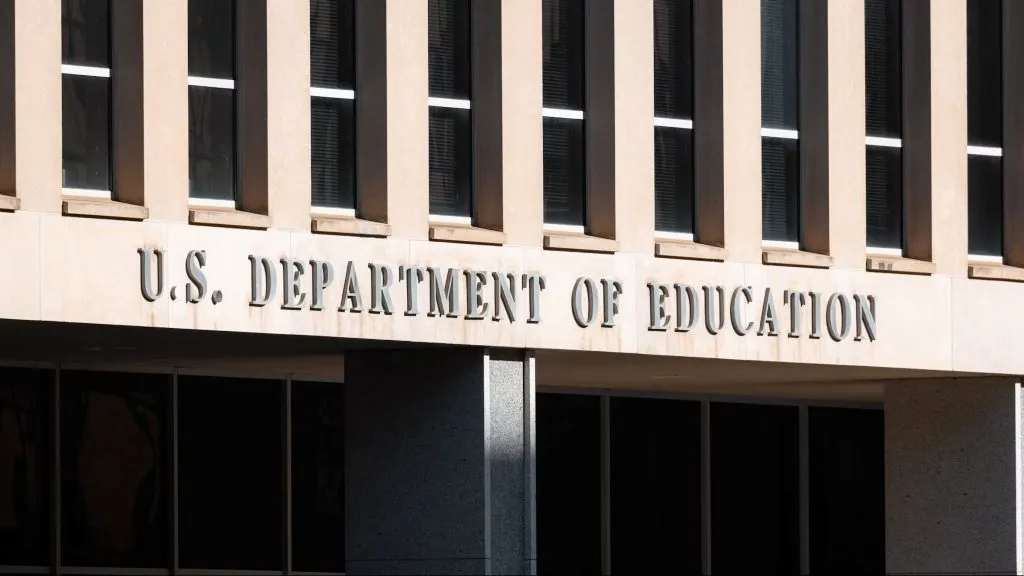
Federal student loan payments were suspended during the pandemic under relief measures administered by the U.S. Department of Education.
Although repayment officially resumed in 2023, the Biden administration created a one-year transition period that protected delinquent borrowers from entering default through the fall of 2024.
During that period, loans could not enter default, while federal rehabilitation initiatives and debt-relief programs helped millions of borrowers leave default status.
Once those protections expired, defaults began rising again. Beginning in June 2025, nine months after the transition period ended, borrowers once again became eligible to enter default.
■ Related News




Since then, the number of borrowers in default has increased from about 5.3 million to approximately 9.5 million, according to the Office of Federal Student Aid. Agency data show that $233.3 billion of the nation’s roughly $1.7 trillion in federally backed student loans is currently in default.
Another increase could follow as borrowers adjust to recent changes in the federal loan system. The Trump administration ended the Saving on a Valuable Education (SAVE) income-driven repayment plan, requiring millions of borrowers to transition to alternative repayment options that may result in higher monthly payments.
Beginning this month, new federal student loan borrowers also face fewer repayment choices, generally selecting between one standard repayment plan and one income-driven option. The Education Department said the revised structure is intended to simplify what it described as a fragmented repayment system.
Southern States Report the Highest Default Rates
The AP’s analysis found that many of the nation’s highest student loan default rates are concentrated in Southern states.
Mississippi recorded the highest default rate among U.S. states at 28.3%.
Other states with comparatively high default rates include:
- Louisiana
- Alabama
- West Virginia
- Oklahoma
- Georgia
- South Carolina
- Texas
The analysis also identified Alaska, Arizona, Ohio, Indiana, Michigan, New Mexico and Nevada among the 15 states with the highest shares of borrowers in default.
Puerto Rico reported an even higher default rate of 30.9%, exceeding every U.S. state.
Bañez said the geographic distribution challenges common assumptions about who is affected by student loan debt.
“These are folks who live in states that President Trump won in the previous election,” she told The Associated Press.
She added that many borrowers falling behind are working-class Americans struggling to balance student loan payments with broader increases in living expenses.
Borrowers From For-Profit Colleges Face Greater Challenges
Borrowers who attended for-profit colleges continue to experience significantly greater repayment difficulties than those who attended public institutions, according to Office of Federal Student Aid data released this year.
The data show that 33% of borrowers from for-profit schools were at least 90 days behind on their student loan payments—more than twice the rate among borrowers who attended public colleges.
Among institutions in the highest quarter for nonpayment rates, 76% were for-profit schools.
The Office of Federal Student Aid said elevated nonpayment rates are a strong indicator that schools may also experience higher default rates among former students.
The trend has prompted action within the career education sector.
Career Education Colleges and Universities, an association representing private trade schools and career colleges, has established a task force focused on improving student loan repayment awareness.
Jason Altmire, the organization’s president, told The Associated Press that several factors may be contributing to repayment difficulties, including lingering economic effects from the pandemic and confusion following the Biden administration’s unsuccessful student loan forgiveness initiative.
“We take it seriously,” Altmire said. “It’s a real problem.”
This report is based on reporting by The Associated Press.
Article Topics: Student Loan Defaults | Federal Student Loans | Higher Education | Office of Federal Student Aid | Student Debt | Loan Repayment | For-Profit Colleges | Education Policy