


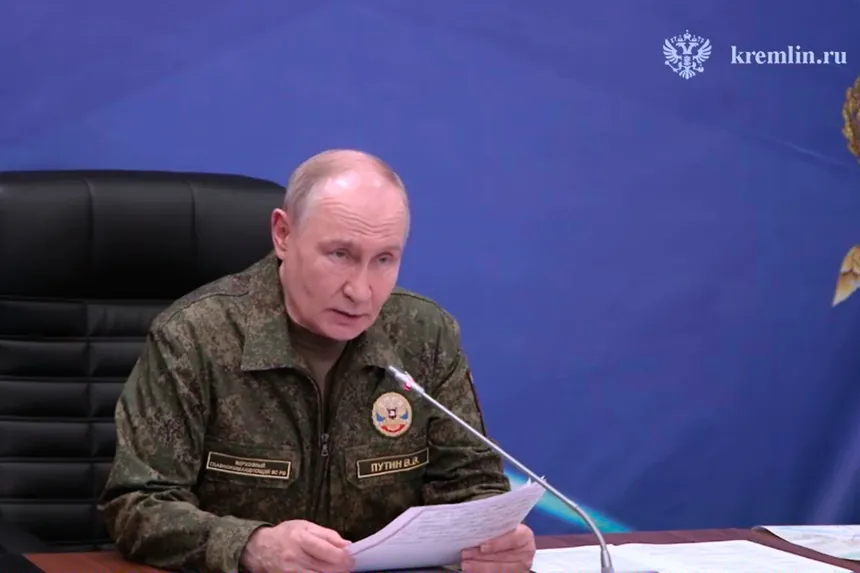
Russian President Vladimir Putin has dismissed the impact of worsening fuel shortages caused by repeated Ukrainian strikes on Russia’s oil infrastructure, insisting the disruptions are temporary while reaffirming that Moscow will continue its military campaign until its objectives are achieved.
The stance comes as Ukraine intensifies long-range attacks on Russian energy facilities, a strategy Kyiv has said is intended to weaken Russia’s war effort and increase pressure on the Kremlin. The strikes have added a new dimension to the conflict by affecting critical infrastructure inside Russia while the battlefield remains contested.
Ukrainian strikes strain Russian fuel supplies
Since March, more than 50 Ukrainian attacks have reportedly targeted oil refineries and other energy facilities in Russia and Russian-occupied Crimea. Ukrainian officials have described the campaign as an effort to pressure Moscow into ending the war.

According to Chris Weafer, chief executive of consultancy Macro-Advisory, roughly one-third of Russia’s refining capacity has been disrupted. The reported damage has reduced fuel production and is expected to require extensive repairs.
Government statistics cited in the source material show Russia’s gasoline production has fallen by about 17% to approximately 850,000 barrels per day. Fuel rationing has been introduced in several regions, while motorists have faced long queues at filling stations.
Authorities have also permitted the production of lower-grade gasoline with higher sulfur content through the end of the year in an effort to ease supply shortages.
Crimea, which Russia annexed from Ukraine in 2014 in a move widely rejected internationally as illegal, has experienced some of the most severe shortages, with gasoline sales to private individuals periodically suspended.
Putin minimizes impact while promising stronger defenses
Speaking during a televised government meeting, Putin acknowledged that Russia was experiencing what he described as a “difficult period” but characterized the shortages as temporary rather than a major strategic problem.
He said repairs to damaged energy facilities would be accelerated and indicated Russia could consider importing gasoline to stabilize supplies. Putin also announced plans to increase production of air defense systems to counter future Ukrainian attacks.
The Russian president argued that Ukraine’s strikes were intended to undermine public confidence and force Moscow into negotiations on terms favorable to Kyiv.
“We will not give them that chance,” Putin said.
While Putin maintained that attacks on oil facilities have had no effect on Russia’s military operations, Western military analysts cited in the source material say Ukrainian strikes against Russian logistics have slowed Moscow’s offensive in recent months and contributed to battlefield stalemate.
Russia presses offensive as Kyiv challenges territorial claims
Putin also visited Russia’s military headquarters overseeing operations in Ukraine, where he received reports on the claimed capture of Kostyantynivka following weeks of fighting.
He described control of the transport and industrial hub as strategically important for future operations aimed at nearby Sloviansk and Kramatorsk in Ukraine’s Donetsk region.
Ukrainian officials did not immediately comment on Russia’s claim. Earlier the same day, Ukraine’s General Staff reported repelling 24 Russian assaults near Kostyantynivka and surrounding settlements.
Putin warned that continued Ukrainian strikes on Russian territory could prompt Moscow to expand what he called a security zone inside Ukraine. He also cautioned Ukraine’s Western partners that Russia would assess their involvement in the conflict before making what he described as future “responsible decisions.”
Ceasefire proposals remain at an impasse
Putin again rejected ceasefire proposals backed by Ukraine and its Western allies, arguing that any pause in fighting would allow Ukrainian forces to regroup.
He has continued to insist that any settlement must include Ukraine’s withdrawal from parts of the Donetsk region still under Kyiv’s control, abandonment of its NATO membership ambitions, reductions in its military capabilities, and guarantees for the protection of Russian language and culture.
The Russian leader also claimed Ukraine had privately proposed limiting active combat to the four regions Russia annexed but does not fully control—Donetsk, Luhansk, Kherson and Zaporizhzhia. According to the Kremlin, the proposal was conveyed through confidential channels.
Ukrainian officials have not publicly confirmed that such an offer was made.
Putin additionally rejected Kyiv’s proposal for both sides to halt long-range strikes deep inside each other’s territory, arguing that Russia’s attacks were more powerful and destructive.
Civilian toll continues to mount
The renewed exchange of long-range strikes unfolded alongside one of the deadliest attacks on Kyiv in recent months.
An overnight Russian barrage lasting about 11 hours killed at least 30 people in the Ukrainian capital, according to the source material. Russia said it was targeting military facilities, although residential areas were also struck.
The United Nations has recorded more than 16,000 Ukrainian civilian deaths since Russia launched its full-scale invasion, underscoring the continuing humanitarian consequences of the conflict as diplomatic efforts remain stalled.
With both sides maintaining military pressure and ceasefire negotiations at an impasse, there is no immediate indication that the conflict is moving toward a negotiated settlement.
Topics: Russia | Ukraine War | Vladimir Putin | Energy Infrastructure | Fuel Shortages | Ceasefire | Donetsk | International Security



