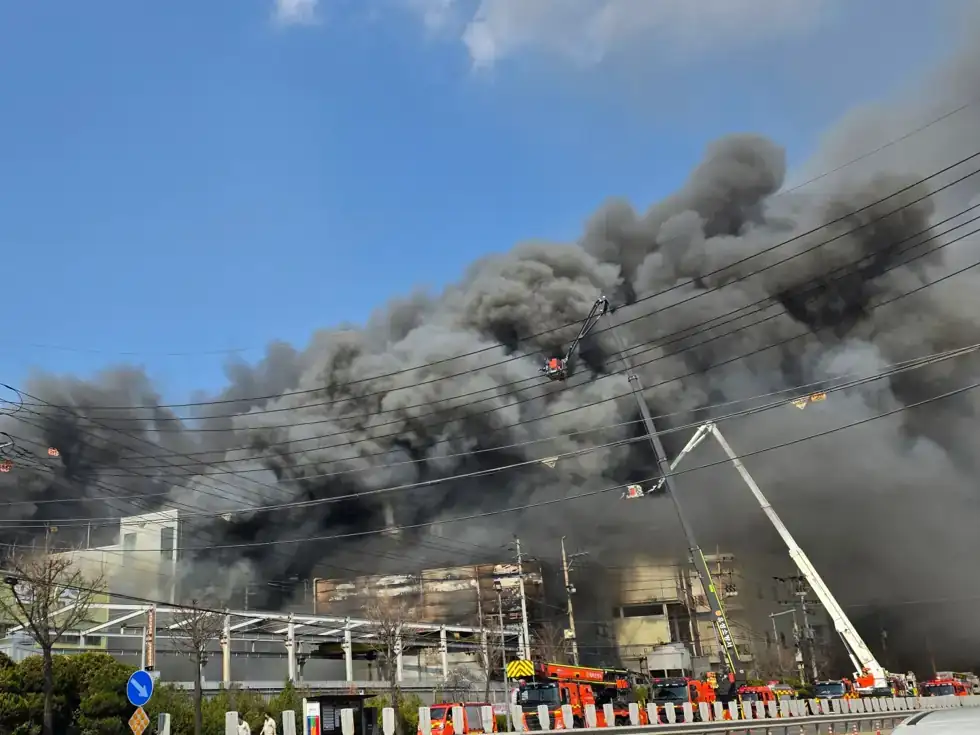
A deadly factory fire in South Korea’s central city of Daejeon has killed 14 people and injured dozens more, raising renewed concerns over industrial safety standards in one of Asia’s leading manufacturing economies. Authorities say the blaze, triggered by an apparent explosion at an auto parts plant, underscores the risks posed by hazardous materials in densely operated industrial zones.
Emergency crews recovered the final victims on Saturday following an intensive overnight search operation, confirming that all workers previously reported missing have now been accounted for. The scale of the casualties and the rapid spread of the fire have drawn national attention, with officials pledging a full investigation into the incident’s cause and safety compliance.
Industrial Safety Under Scrutiny
According to fire officials cited by The Associated Press, at least 59 people were injured in the incident, including 25 seriously, though the severity of their conditions remains unclear. Many victims suffered injuries while attempting to escape, including jumping from upper floors or inhaling toxic smoke.

The fire broke out early Friday afternoon at a facility operated by Anjun Industrial, with witnesses reporting a powerful explosion that rapidly engulfed the structure. Authorities noted that more than 100 kilograms of highly reactive chemicals were stored at the site, complicating firefighting efforts and raising concerns about chemical handling practices.
Analysts say the incident highlights persistent vulnerabilities in industrial safety management, particularly in facilities handling volatile substances. The presence of such materials can significantly accelerate fire spread and hinder rescue operations, increasing the risk of mass casualties.
Emergency Response Tested
More than 500 firefighters, police officers and emergency personnel were deployed to contain the blaze, supported by over 120 vehicles and specialized equipment. Rescue teams initially faced difficulties entering the building due to fears of structural collapse, delaying access to potential survivors.
Officials deployed unmanned firefighting robots and remote-controlled water cannons to stabilize the structure before search teams could proceed. Nine victims were later found on the third floor, believed to be in a gym area, while others were discovered on lower levels.
The use of robotic systems in the response effort reflects South Korea’s growing reliance on advanced technologies in disaster management. However, the scale of the casualties suggests limitations in mitigating fast-moving industrial fires, particularly when explosions are involved.




Government Response and Policy Implications
President Lee Jae Myung visited the site on Saturday, meeting with victims’ families and urging authorities to prioritize both rescue operations and structural safety. He also called for measures to prevent further collapse during recovery efforts.
In remarks reported by local media and international outlets, officials indicated that a full investigation would examine the cause of the explosion and whether safety regulations were adequately enforced. The findings could have broader implications for South Korea’s manufacturing sector, which plays a critical role in global supply chains.
Industry observers note that such incidents can prompt regulatory tightening, particularly around chemical storage, worker safety protocols, and emergency preparedness. Any resulting policy changes may also influence international partners concerned about supply chain resilience and risk exposure.
Strategic Implications for Industrial Hubs
The Daejeon incident comes as South Korea continues to position itself as a key player in high-value manufacturing, including automotive components and advanced materials. Disruptions linked to safety failures could have ripple effects beyond national borders, especially if production delays or regulatory changes impact exports.
Experts say the tragedy may accelerate calls for enhanced international safety benchmarks and stricter compliance monitoring in industrial zones. As global supply chains become increasingly interconnected, localized incidents can carry broader economic and reputational consequences.
Authorities have not yet confirmed the exact cause of the explosion, but investigations are expected to focus on chemical handling procedures and workplace safety measures. The outcome could shape future industrial policy and reinforce the importance of risk management in high-density manufacturing environments.