The 2026 NBA trade deadline was defined as much by its subtler strategic repositioning as by headline-grabbing player movement. While some franchises chose bold midseason pivots, others exercised restraint or targeted incremental depth — a pattern that signals differing priorities as teams calibrate for the remainder of the 2025-26 season and beyond.
This analysis parses the trade data to contextualise why certain patterns matter, how teams’ choices reflect competing risk profiles, and what the resulting roster structures suggest about the evolving competitive landscape.
Evolving Motivations at the Deadline
The NBA trade deadline — set at 3 p.m. ET on February 5, 2026 — served as both a cap-management pressure point and a strategic balancing mark for franchises with divergent short- and long-term incentives. Some contenders emphasised rotational depth, others crystallised rebuild trajectories, and a handful refrained from significant movement.
At its core, the deadline reflects an implicit triage of competing priorities: maximise current playoff positioning, manage luxury tax and cap burdens, or maximise future assets through draft capital accumulation. The disposition of these priorities varied markedly across the league.
Spotlight on Notable Transactions
Analysing the league-wide movement shows a mix of veteran acquisitions, youth pivots and draft considerations, rather than a cascade of blockbuster star trades — contradicting pre-deadline speculation that centred on marquee names.
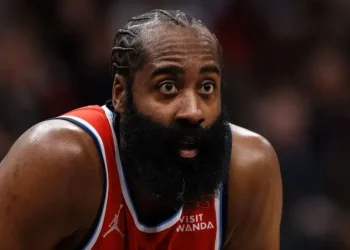
James Harden to Cleveland Cavaliers: In one of the more consequential deals, Harden was traded to the Cavaliers in exchange for guard Darius Garland and picks. The move underscores Cleveland’s intent to reallocate offensive leadership around Donovan Mitchell, even as Garland’s departure reshapes ball-handling duties.
Ivica Zubac and First-Round Picks to Indiana: The Pacers acquired Zubac and a younger roster presence at centre, while the Clippers collected Bennedict Mathurin, Isaiah Jackson and multiple first-round picks. Structurally, this trade highlights contrasting organisational priorities: Indianapolis adds to its core to solidify defensive presence, whereas Los Angeles opts for future optionality over present consistency.
Utah Jazz’s Frontcourt Upgrade: The Jazz acquired Jaren Jackson Jr., signalling a shift from pure asset hoarding to near-term competitiveness in a strong Western Conference. This type of move suggests the team sees a plausible windows of contention rather than a multi-year rebuild.
Wizards Bolster Frontcourt with Anthony Davis: Washington’s acquisition of Anthony Davis represents a rare All-Star calibre move at the deadline, albeit intertwined with multiple moving parts including Jaden Hardy and D’Angelo Russell. The transaction increases frontcourt firepower but also foregrounds the complexities of cap commitments and fit relative to existing rotation structures.
A Spectrum of Strategic Postures
The deadline revealed distinct competitive postures across the league:
Contenders Seek Depth and Specific Fits
Some playoff-qualified teams moved for role specificity rather than star overhauls — acquiring shooters, defenders or rim protectors to address clear rotational shortfalls. These moves suggest an incremental optimisation mentality: resolve identifiable weaknesses without disrupting established chemistry.
Rebuilders Accumulate Options
Lottery-bound clubs doubled down on future optionality, trading veterans or expiring contracts for draft picks and younger talent. This pattern aligns with statistical evidence that accumulating high draft equity can correlate with roster ascendancy over multi-year windows. While draft outcomes are inherently uncertain, this approach reserves flexibility.
Restraint as Strategy
Notably, a small subset of teams opted against significant deadline trades. Miami, Houston and San Antonio did not execute noteworthy transactions, reflecting strategic restraint that may be tied to cap positioning, confidence in internal continuity, or prioritisation of offseason opportunities.
Implications for Conference Dynamics
The ripples extend into conference balance and tactical matchups:
-
Eastern Conference: Cleveland’s reorientation around Harden potentially shifts mid-seed dynamics, given his playmaking and scoring versatility. Washington’s Davis addition could alter its interior matchup profile. Meanwhile, incumbent powers like the Boston Celtics recalibrated financial and rotational flexibility through multiple roster adjustments.
-
Western Conference: Utah’s infusion of frontcourt talent and Memphis’s asset redistribution foreground varied trajectories within a deep conference. The Pacers and Clippers’ contrasting strategies — present centre strength versus future picks — may affect matchups should either reach late-season play-ins.
These positional shifts are not deterministic but suggest heterogeneous paths to postseason viability: some teams optimise around current cores; others invest in optionality that may pay dividends next season.
Trade Deadline as a Barometer of Risk Appetite
The 2026 deadline reveals that risk appetite and organisational philosophy exert a significant influence on transaction patterns. Teams with a strong present-season outlook traded with minimal disruption, while others reallocated assets toward future frames or accepted short-term competitive cost for structural gains.
This variation highlights an inherent trade-off: maximise present competitiveness versus protect long-term flexibility. There is no singularly “correct” path; rather, the deadline outcomes expose a continuum of valid strategic frameworks anchored in each organisation’s internal evaluation of playoff odds, financial constraints, and roster fit.
Contextualising Within Broader League Trends
Contrasted with previous seasons that saw headline-grabbing superstars switch teams at the deadline, 2026’s activity was more evenly distributed across role-player and frontcourt depth moves. This pattern may point to several structural evolutions: increased front office sophistication in asset valuation, deeper analytics-driven rotational optimisation, and rising emphasis on cost-controlled flexibility.
Conclusion
The 2026 NBA trade deadline was less about singular blockbuster trades and more about strategic rebalancing — reflective of varied organisational priorities. Some teams recalibrated for sustained present competitiveness, others acquired future optionality, and a few exercised restraint, each path anchored in different risk assessments and resource constraints. The resulting transactional landscape enriches the analytical frame for how teams construct rosters in an era of complex compounding incentives — from luxury tax considerations to draft equity valuation.
– JN –
This article was rewritten by JournosNews.com based on verified reporting from trusted sources. The content has been independently reviewed, fact-checked, and edited for accuracy, neutrality, tone, and global readability in accordance with Google News and AdSense standards.
All opinions, quotes, or statements from contributors, experts, or sourced organizations do not necessarily reflect the views of JournosNews.com. JournosNews.com maintains full editorial independence from any external funders, sponsors, or organizations.
Stay informed with JournosNews.com — your trusted source for verified global reporting and in-depth analysis. Follow us on Google News, BlueSky, and X for real-time updates.