The Arctic is shifting from a remote frontier to a strategic corridor. For NATO and Europe, the challenge is less about intent than about whether existing doctrines, technologies, and budgets can adapt to the region’s extreme demands.
The Arctic’s transformation is no longer primarily an environmental story. As sea ice recedes and access improves seasonally, the region is emerging as a zone where military geography, digital infrastructure, and commercial routes increasingly intersect. For NATO, this creates a dilemma that is as much technical and financial as it is strategic: the alliance recognises the region’s importance, but its ability to operate there remains uneven and, in many cases, underdeveloped.
Recent discussions among European defence planners reflect a growing consensus that the Arctic is not simply an extension of existing theatres such as the Baltic or North Atlantic. Instead, it presents a set of operational constraints that challenge assumptions about mobility, surveillance, communication, and endurance. These constraints, analysts suggest, explain why Russia has been able to build a comparatively dense network of Arctic bases while NATO’s presence remains sporadic and heavily dependent on the United States.
The issue, therefore, is not only geopolitical competition but whether European allies possess the doctrines and equipment suited to a region where conventional systems degrade quickly, logistics are stretched, and infrastructure is largely absent.
The Arctic’s strategic geography and the GIUK gap
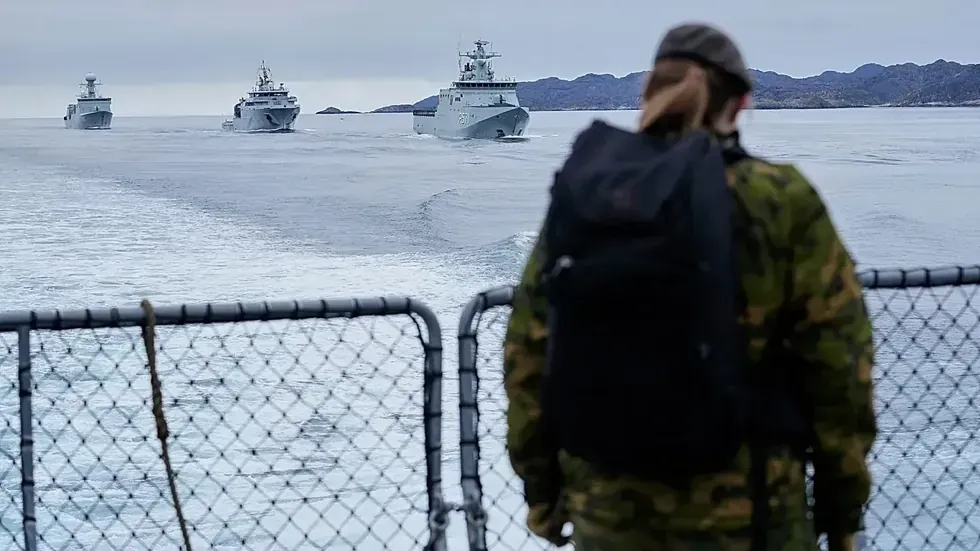
At the centre of NATO’s Arctic calculations lies a longstanding maritime chokepoint: the Greenland–Iceland–UK (GIUK) gap. During the Cold War, this corridor was critical for tracking Soviet submarines moving between the Arctic Ocean and the North Atlantic. That logic has returned to prominence as Russia’s Northern Fleet remains concentrated on the Kola Peninsula, with direct access to Arctic waters.
Security analysts argue that any movement by Russian naval forces toward the North Atlantic or the UK would likely transit through this area. Monitoring it effectively, however, requires persistent domain awareness across vast, sparsely populated waters where weather, ice, and distance limit conventional patrol methods.
This geography also intersects with a second, less visible layer of strategic importance: subsea cables. Much of the digital traffic between Europe and North America runs along the seabed through northern routes. These cables carry financial transactions, cloud data, government communications, and commercial traffic that underpin modern economies.
The vulnerability of this infrastructure has drawn increased attention from policymakers after several high-profile incidents of suspected cable damage in European waters in recent years. While not all incidents have been conclusively attributed, they have highlighted how difficult it is to monitor and protect underwater assets even in temperate seas. In Arctic conditions, the challenge is amplified.
Planned projects such as Far North Fiber and Polar Connect, which aim to link Europe, North America, and Asia through Arctic routes, add an economic dimension to the security calculus. Protecting future infrastructure requires capabilities that many European militaries are only beginning to consider.
Climate change and new shipping routes
As seasonal ice retreats, new maritime routes are becoming more viable, including the Northern Sea Route along Russia’s coast and the Northwest Passage through Canadian waters. These passages can significantly shorten transit times between Asia and Europe compared with the Suez or Panama canals.
While commercial viability remains constrained by weather, insurance costs, and regulatory issues, the strategic implications are clearer. States with Arctic coastlines have strong incentives to assert control over these routes, regulate access, and protect emerging economic interests.
Russia has invested heavily in Arctic ports, airfields, and military facilities to support this posture. NATO, by contrast, has not established a comparable year-round presence in the region. The imbalance is not necessarily about numbers of ships or aircraft but about infrastructure and permanence.
Reliance on the United States and Greenland’s role
Greenland occupies a unique position in Arctic security thinking. Its location offers a vantage point for early warning, satellite tracking, and monitoring of movements through the GIUK gap. Yet much of the operational presence there remains American.
For European allies, this dependence illustrates a broader structural issue: Arctic capabilities have historically been concentrated in a handful of countries with direct geographic exposure, notably Norway and Denmark, and, more recently, Sweden and Finland following their closer integration with NATO. Other European powers, including the UK and France, have maritime reach but lack dedicated Arctic doctrines or specialised forces on a comparable scale.
This unevenness complicates NATO’s collective planning. While the alliance operates on principles of shared burden, the Arctic imposes requirements that cannot easily be met by redeploying assets from other regions. Equipment designed for temperate or desert environments often performs poorly in extreme cold. Personnel require specialised training. Logistics chains must account for long distances and minimal infrastructure.
The technical limits of existing systems
Defence technology companies and analysts increasingly describe the Arctic as an environment where standard assumptions about drones, sensors, communications, and navigation break down.
Extreme cold reduces battery life dramatically. Ice accumulation can immobilise drones within minutes. Magnetic interference near the pole complicates navigation. Communication links are intermittent, especially under ice, where resurfacing to transmit data may be impossible for extended periods.
Even basic tasks, such as setting up radio communication, can require hours of work and multiple personnel in harsh conditions. Satellite communications offer coverage but introduce vulnerabilities, including dependence on commercial providers and potential interference.
These limitations are particularly acute for underwater operations. Monitoring subsea cables or mapping seabeds for future infrastructure requires autonomous systems capable of operating for weeks or months without resurfacing. Conventional underwater drones typically lack this endurance.
Newer platforms, including autonomous underwater vehicles powered by alternative energy sources such as hydrogen fuel cells, are under development. However, these remain at an early stage and are not yet widely deployed.
Investment trade-offs and European budgets
The Arctic’s scale compounds these challenges. Covering roughly 4% of the Earth’s surface, it offers little in the way of fixed infrastructure. Any force operating there must bring most of what it needs, from communications equipment to shelter and power supplies.
For European governments already balancing commitments in Eastern Europe, the Mediterranean, and Indo-Pacific partnerships, prioritising Arctic investment involves difficult choices. Spending on specialised equipment for a remote theatre can appear less urgent to domestic audiences than more visible deployments elsewhere.
Yet analysts suggest that the cost of inaction may be harder to measure but no less significant. If subsea infrastructure is inadequately protected, or if monitoring gaps allow adversarial movements to go undetected, the economic and security consequences could be substantial.
France’s recent publication of an Arctic defence strategy reflects a recognition among some European states that long-term planning is required. However, translating strategy into capability takes time, procurement cycles, and sustained funding.
Why the subsea domain is drawing attention
Several experts argue that the future of Arctic security may be decided less by surface ships or aircraft than by what happens beneath the ice. As more cables are laid and as underwater surveillance becomes more important, the ability to operate persistently in the subsea domain becomes central.
This shifts the focus from visible military presence to endurance, autonomy, and data collection. It also aligns with broader trends in naval warfare, where submarines and underwater drones play an increasingly prominent role.
For Europe, developing these capabilities could contribute to what policymakers describe as “strategic autonomy” — the ability to act independently in critical domains without excessive reliance on external partners. In the Arctic, that autonomy depends not only on diplomacy but on technical capacity.
A region where doctrine lags behind reality
One of the recurring themes in defence discussions is that many European militaries lack a dedicated Arctic doctrine. Cold-weather training exists, particularly in Nordic countries, but broader planning often treats the Arctic as a peripheral extension of other theatres rather than a distinct operational environment.
This doctrinal gap affects procurement decisions, training priorities, and alliance coordination. Without a clear framework, investments risk being piecemeal rather than systematic.
As the Arctic’s profile rises in NATO discussions, the debate is shifting from whether the region matters to how quickly allies can adapt to its unique demands.
Implications for NATO cohesion
The Arctic highlights a broader issue within NATO: differing regional priorities among member states. For countries on the alliance’s southern flank, migration and instability in the Mediterranean may appear more pressing. For eastern members, the land border with Russia dominates security planning. For Nordic states, the Arctic is immediate and tangible.
Balancing these perspectives while developing a coherent northern strategy requires coordination and compromise. It also requires recognising that Arctic security is intertwined with economic infrastructure, digital connectivity, and climate change — issues that extend beyond traditional military planning.
A slow but visible shift
There are signs that attention is increasing. More exercises are taking place in northern latitudes. Research funding is flowing into cold-weather technologies and autonomous systems. Policy documents are beginning to reflect the Arctic’s growing relevance.
However, the pace of adaptation may be slower than the pace of change in the region itself. As ice retreats and infrastructure projects advance, the operational demands on NATO and European forces are likely to grow.
The central question is not whether Europe recognises the Arctic’s importance. It is whether recognition can be translated into the specialised capabilities, doctrines, and sustained investment required to operate effectively in one of the planet’s most challenging environments.
This article was rewritten by JournosNews.com based on verified reporting from trusted sources. The content has been independently reviewed, fact-checked, and edited for accuracy, neutrality, tone, and global readability in accordance with Google News and AdSense standards.
All opinions, quotes, or statements from contributors, experts, or sourced organizations do not necessarily reflect the views of JournosNews.com. JournosNews.com maintains full editorial independence from any external funders, sponsors, or organizations.
Stay informed with JournosNews.com — your trusted source for verified global reporting and in-depth analysis. Follow us on Google News, BlueSky, and X for real-time updates.