China has become the first country to ban hidden door handles on electric vehicles (EVs), citing safety concerns. The move comes after a series of accidents, including two fatal crashes involving Xiaomi EVs, in which power failures were suspected to have prevented doors from opening. The new regulations, announced by the Ministry of Industry and Information Technology, will take effect on 1 January 2027.
The rules mandate that all passenger vehicle doors, except for the boot, must have a mechanical release accessible both inside and outside the car. Exterior handles must feature a recessed area measuring at least 6cm by 2cm by 2.5cm, while interior signage showing how to operate the doors must measure at least 1cm by 0.7cm. Vehicles already approved for sale in China will have a two-year grace period to update their designs.
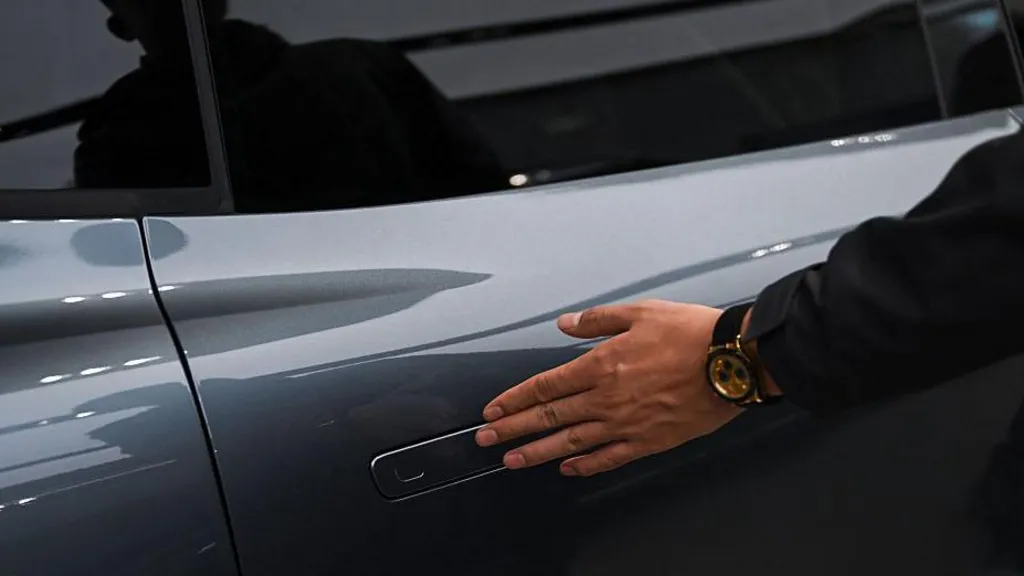
Hidden door handles, popularized by Tesla, are common in China’s new energy vehicle (NEV) market, which includes electric, hybrid, and fuel cell vehicles. According to China Daily, roughly 60% of the top 100 best-selling NEVs in China use such handles. Analysts say the regulation could have global implications, given China’s central role in the automotive industry.
Global Safety Scrutiny of Hidden Handles
Tesla’s retractable handles have drawn attention from regulators worldwide. In November, the U.S. National Highway Traffic Safety Administration (NHTSA) opened a probe into Tesla’s electric handles after reports that they occasionally failed, trapping occupants. Nine complaints were logged regarding Tesla’s 2021 Model Y, with four owners forced to break windows to exit their vehicles.
European authorities are also considering regulations on the technology, reflecting growing international concern over EV safety. Hidden handles, while favored for sleek design and aerodynamics, have raised questions about emergency access and reliability during power outages or system malfunctions.
China’s ban reflects a broader trend of regulators balancing innovation with consumer safety in the rapidly growing EV sector. As EV adoption expands, governments are increasingly examining safety standards for both conventional features, such as doors, and advanced technologies like autonomous driving systems.
Industry observers note that China’s mandate may influence manufacturers worldwide, potentially prompting design revisions even for vehicles intended for export. While the ban applies only to the domestic market, China’s position as a key EV producer makes compliance a practical consideration for global automakers.
This article was rewritten by JournosNews.com based on verified reporting from trusted sources. The content has been independently reviewed, fact-checked, and edited for accuracy, neutrality, tone, and global readability in accordance with Google News and AdSense standards.
All opinions, quotes, or statements from contributors, experts, or sourced organizations do not necessarily reflect the views of JournosNews.com. JournosNews.com maintains full editorial independence from any external funders, sponsors, or organizations.
Stay informed with JournosNews.com — your trusted source for verified global reporting and in-depth analysis. Follow us on Google News, BlueSky, and X for real-time updates.