The 2026 Grammy Awards were not defined by spectacle alone. They became a venue where political speech, cultural tribute, and industry change intersected in unusually visible ways.
The analytical question emerging from this year’s ceremony is not simply who won, but what the Grammys now represent. As artists increasingly use high-visibility stages to articulate political and cultural positions, the awards show has become less a celebration of industry achievement and more a reflection of how popular music interacts with public life.
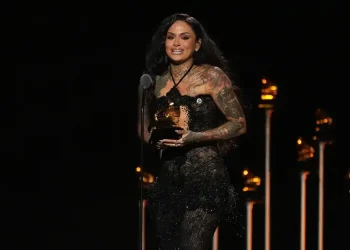
This shift was evident throughout the night. From record-breaking wins by Bad Bunny and Kendrick Lamar to on-stage remarks about immigration policy, from tributes to departed legends to conversations about TikTok’s influence on music discovery, the ceremony illustrated how the Grammys are evolving into a platform where artistic recognition and social context coexist.
The result was a ceremony that functioned as a cultural snapshot: one that captured the tensions, transitions, and transformations shaping global music in 2026.
Political speech moved to the center, not the margins
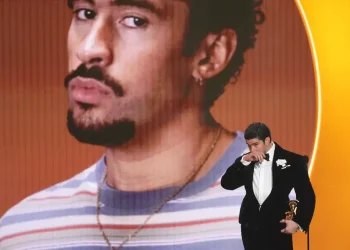
Bad Bunny’s album of the year win for Debí Tirar Más Fotos marked a historic first for a Spanish-language record. But the significance extended beyond representation.
During his acceptance speeches, the Puerto Rican artist referenced immigration enforcement and the lived realities of displacement, using language that resonated far beyond the music industry. His remarks echoed themes present in his recent work and aligned with a broader trend of artists treating award stages as civic platforms rather than ceremonial ones.
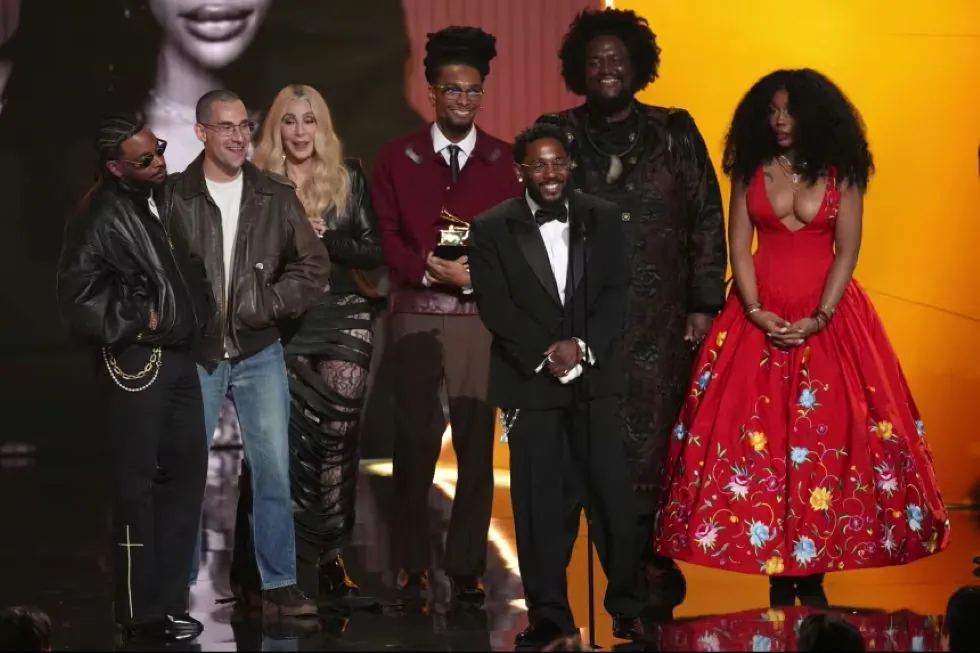
Kendrick Lamar’s dominance reinforced this pattern. Already known for weaving social commentary into his music and performances, Lamar added five Grammys to his record, becoming the most-awarded rap artist in Grammy history. His presence at the ceremony followed a politically charged Super Bowl performance earlier in the year, underscoring how artists increasingly view national stages as opportunities for narrative intervention.
The Grammy stage, traditionally careful to avoid overt politics, now appears less insulated from them. The question is no longer whether artists will speak, but how frequently and how directly.
Awards ceremonies as cultural, not just industry, events
These moments highlight a broader transformation. Awards shows once functioned primarily as industry validation mechanisms. Increasingly, they operate as cultural forums where artists articulate identity, memory, and social positioning.
Lady Gaga’s speech urging women to assert themselves in male-dominated production spaces reflected ongoing conversations about gender equity in music. Billie Eilish’s visible frustration during her speech, partially censored by broadcasters, suggested generational impatience with institutional restraint.
These incidents were not anomalies; they were consistent with how artists now understand visibility. A Grammy stage is a global broadcast opportunity, and many performers appear willing to use it accordingly.
Tributes emphasized continuity across generations
Amid the political overtones, the ceremony devoted significant space to remembrance. The in-memoriam segment carried unusual emotional weight, particularly the tribute to Ozzy Osbourne, featuring musicians from multiple genres performing a Black Sabbath classic.
The presence of Osbourne’s family, visibly emotional, reminded viewers that music history remains a living continuum. Lauryn Hill’s tribute to D’Angelo and Reba McEntire’s first Grammy performance further emphasized the intergenerational thread running through the event.
These moments served a different function than political statements. They reinforced music’s role as collective memory — a shared archive of cultural moments that transcends genre and era.
A changing definition of musical discovery
Another theme running quietly through the night was TikTok’s influence on music exposure. Several performers and winners were either propelled to prominence by the platform or benefited from older songs finding new audiences there.
This reflects an industry reality: discovery is no longer label-driven or radio-dependent. Viral circulation, algorithmic exposure, and social media trends now shape award seasons as much as traditional promotion cycles.
Similarly, the Grammy awarded to “Golden,” a song from the Netflix film K-Pop Demon Hunters, illustrated how streaming platforms, visual media, and global fandoms intersect with music recognition. K-Pop’s growing presence at the Grammys is part of a larger realignment of where cultural influence originates.
Celebrity, error, and unscripted moments
The ceremony was not without its awkward or unscripted interludes. Cher’s envelope misread and teleprompter difficulties created a brief moment of confusion that felt human rather than rehearsed. Broadcast censors struggled to keep pace with emotional acceptance speeches, highlighting the tension between live expression and television standards.
These moments, while minor, underscored how tightly managed events can still produce unpredictability — a quality that increasingly defines live awards shows in the social media era, where clips circulate instantly.
Recognition beyond music performance
Steven Spielberg achieving EGOT status through a Grammy win for a music documentary highlighted another expanding dimension of the awards. The Grammys are increasingly recognizing music’s role in film, streaming content, and multimedia storytelling.
Similarly, the Dalai Lama’s Grammy win for an audiobook reflected how the Recording Academy continues to broaden its definition of audio excellence, extending recognition beyond traditional music categories.
Fashion, spectacle, and visual culture
Red carpet fashion and performance attire — from sheer garments to minimalist outfits — generated significant attention. While these moments often function as entertainment, they also reflect how visual presentation has become inseparable from music branding.
In the social media era, a single image from the red carpet can circulate as widely as a performance clip. Artists appear to understand this, treating visual choices as part of the evening’s narrative.
What the 2026 Grammys suggest about the industry
Taken together, the ceremony suggests several shifts underway in the music world:
-
Political expression is now routine on major entertainment stages
-
Music discovery is increasingly platform-driven rather than industry-driven
-
Global and non-English music holds growing institutional recognition
-
Awards shows function as cultural forums as much as industry ceremonies
-
Legacy, memory, and tribute remain central to how music understands itself
None of these trends are entirely new. What stood out in 2026 was their convergence in a single event.
The Grammys did not simply celebrate recorded music. They reflected how music now operates within a broader social, political, and digital ecosystem — one where artists, audiences, and institutions are negotiating new expectations about visibility, voice, and influence.
This article was rewritten by JournosNews.com based on verified reporting from trusted sources. The content has been independently reviewed, fact-checked, and edited for accuracy, neutrality, tone, and global readability in accordance with Google News and AdSense standards.
All opinions, quotes, or statements from contributors, experts, or sourced organizations do not necessarily reflect the views of JournosNews.com. JournosNews.com maintains full editorial independence from any external funders, sponsors, or organizations.
Stay informed with JournosNews.com — your trusted source for verified global reporting and in-depth analysis. Follow us on Google News, BlueSky, and X for real-time updates.