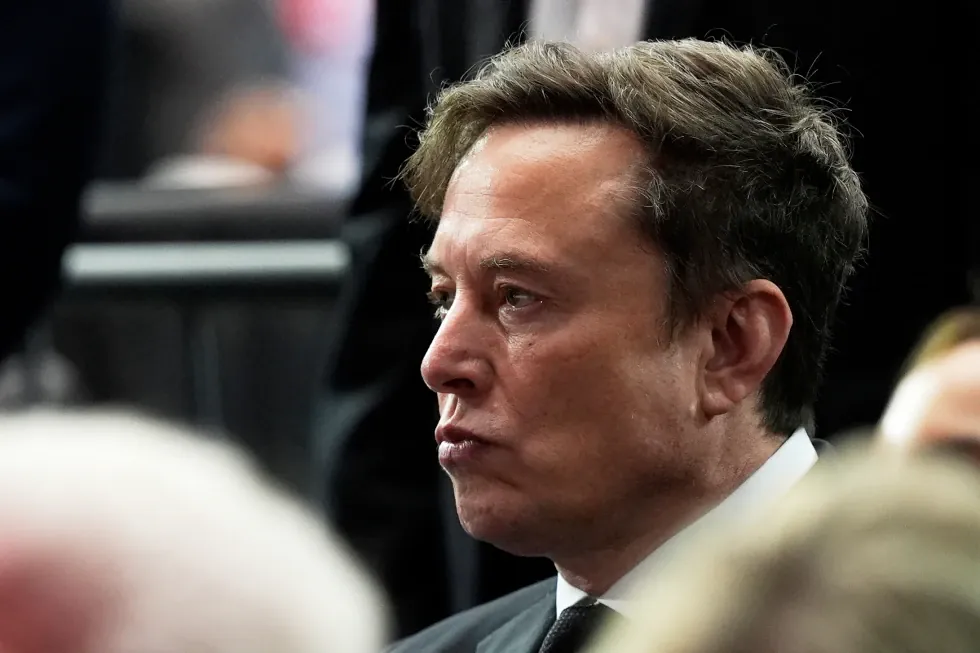
NEW YORK (JN) – Elon Musk has combined his space exploration company SpaceX with artificial intelligence venture xAI, creating a single corporate structure that unites several of his most ambitious businesses ahead of an expected public listing later this year. The move brings together SpaceX’s rocket and satellite operations with xAI’s generative AI platform, alongside the Starlink satellite network and social media platform X.
The consolidation reflects Musk’s long-stated belief that the future of large-scale artificial intelligence infrastructure may extend beyond Earth. In announcing the transaction, SpaceX said the integration would streamline development of technologies aimed at running AI compute systems in orbit, powered by continuous solar energy and freed from terrestrial constraints such as land use, cooling, and grid capacity.
Musk framed the merger as a step toward what he described as a long-term technological necessity. Writing on SpaceX’s website, he argued that “space-based AI is obviously the only way to scale,” adding that solar availability in orbit offers a theoretical advantage: “It’s always sunny in space.”
Corporate restructuring ahead of market debut
The deal signals a broader restructuring of Musk’s business portfolio as he prepares for what is expected to be one of the largest technology IPOs of the year. By placing SpaceX, xAI, Starlink and X under a unified umbrella, Musk appears to be positioning the combined entity as both a space infrastructure provider and an AI technology platform.
The reorganization also reduces fragmentation across Musk-controlled companies that already share technical resources, engineering teams and data infrastructure. Starlink’s global satellite internet network, for instance, provides high-bandwidth connectivity that could theoretically support off-planet computing systems, while xAI’s Grok chatbot depends on large-scale data processing capabilities.
Industry analysts note that the consolidation simplifies the corporate narrative for prospective investors by aligning Musk’s space and AI ambitions into a single strategic story.
The vision of data centers in orbit
Musk has repeatedly argued that AI’s growth is constrained by the rising costs and environmental demands of terrestrial data centers. Facilities built to power advanced AI models consume vast amounts of electricity and water for cooling, increasingly drawing scrutiny from local communities and regulators.
He has suggested that placing data centers in low-Earth orbit could reduce these pressures by harnessing uninterrupted solar energy and eliminating land-based infrastructure needs. In the announcement, Musk estimated that “within two to three years, the lowest-cost way to generate AI compute will be in space.”
The idea remains highly speculative, and most technology companies continue to expand Earth-based data center capacity. Microsoft President Brad Smith told The Associated Press last month that he would be surprised if companies shifted computing infrastructure into orbit, despite growing resistance to new data centers in some U.S. communities.
“I’ll be surprised if people move from land to low-Earth orbit,” Smith said when discussing alternatives to expanding domestic facilities.
Not the first exploration of space-based AI
While Musk’s proposal is among the most high-profile, he is not alone in examining the concept. Google last year disclosed a research initiative known as Project Suncatcher, aimed at studying whether solar-powered satellites equipped with AI chips could operate as computing nodes in space.
These early research efforts underscore growing interest in unconventional approaches to meeting AI’s escalating resource demands, even as practical and economic hurdles remain significant.
Continued investment in terrestrial infrastructure
Despite Musk’s emphasis on orbital computing, xAI is simultaneously investing heavily in conventional data center infrastructure. Mississippi officials announced last month that the company plans to spend $20 billion to build a large data center complex near the state’s border with Tennessee.
The facility, named MACROHARDRR — a likely reference to Microsoft — will become xAI’s third major data center in the greater Memphis region. The project highlights the immediate need for substantial ground-based computing power even as longer-term experimental concepts are explored.
This dual approach suggests that while Musk promotes a vision of space-based compute, practical AI development continues to depend on expanding terrestrial capacity in the near term.
Strategic alignment of Musk’s technology ecosystem
The merger also reflects how Musk’s companies increasingly intersect. SpaceX’s satellite launch capability, Starlink’s communications network, X’s data ecosystem, and xAI’s machine learning models can be viewed as components of a broader technological platform.
Grok, xAI’s chatbot integrated into X, already draws on real-time social media data. Future iterations could, in theory, be supported by satellite connectivity and eventually experimental orbital compute resources if such systems prove viable.
By aligning these operations, Musk creates a vertically integrated structure spanning launch services, communications, data generation and AI processing.
Market and industry reaction
The announcement has drawn attention across both the space and technology sectors. Investors are closely watching how Musk presents the combined company’s value proposition in advance of a potential IPO, particularly given SpaceX’s already high private valuation and xAI’s rapid emergence in the competitive AI landscape.
Skepticism remains, however, about the feasibility of large-scale data centers in orbit within the timeframe Musk has suggested. Technical challenges include radiation exposure, hardware maintenance, launch costs, and data transmission latency between Earth and space.
Even so, the concept reinforces Musk’s reputation for pursuing long-term engineering ambitions that challenge conventional industry thinking.
A unified narrative for space and AI
For now, the merger primarily offers organizational clarity and strategic alignment rather than immediate technological change. The combined entity can continue expanding ground-based AI capacity while advancing research into orbital systems without separating those efforts across companies.
Whether space-based AI becomes practical remains uncertain, but the corporate move underscores Musk’s intent to link his space and artificial intelligence ventures into a single narrative as he prepares to bring the business to public markets.
This article was rewritten by JournosNews.com based on verified reporting from trusted sources. The content has been independently reviewed, fact-checked, and edited for accuracy, neutrality, tone, and global readability in accordance with Google News and AdSense standards.
All opinions, quotes, or statements from contributors, experts, or sourced organizations do not necessarily reflect the views of JournosNews.com. JournosNews.com maintains full editorial independence from any external funders, sponsors, or organizations.
Stay informed with JournosNews.com — your trusted source for verified global reporting and in-depth analysis. Follow us on Google News, BlueSky, and X for real-time updates.