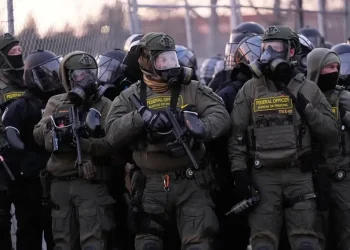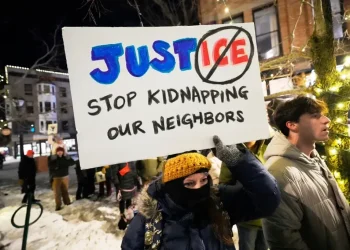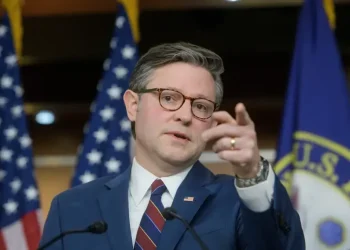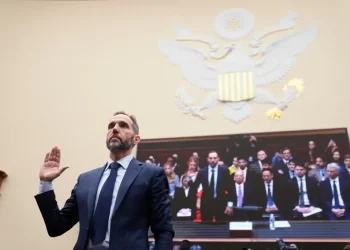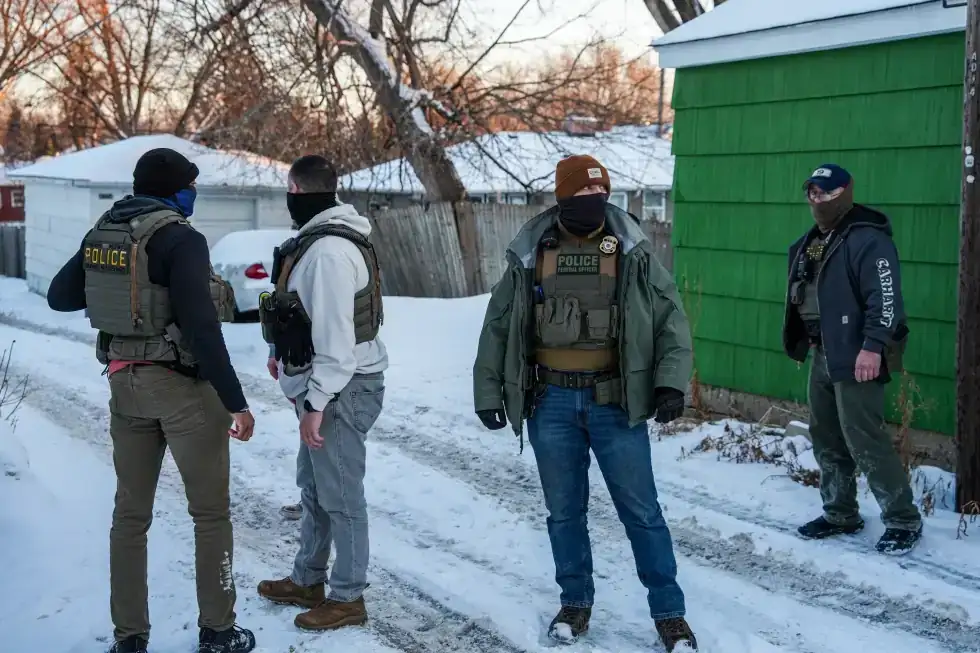
WASHINGTON (JN) – The U.S. Department of Homeland Security will immediately issue body-worn cameras to all federal officers operating on the ground in Minneapolis, including Immigration and Customs Enforcement (ICE) personnel, Homeland Security Secretary Kristi Noem said Monday, following public anger over the fatal shooting of two U.S. citizens during immigration enforcement activity in the city.
Noem announced the move on the social media platform X, describing it as the beginning of a broader effort to equip DHS law enforcement nationwide with body cameras as resources permit. The decision comes amid renewed scrutiny of federal immigration operations and calls for greater transparency and accountability.
Minneapolis has become a focal point of national debate after the shootings, with critics questioning the conduct of immigration enforcement officers and urging stricter oversight measures.
Federal body camera policy resurfaces in debate
In her statement, Noem said DHS would “rapidly acquire and deploy body cameras to DHS law enforcement across the country,” signaling a shift toward expanded use of recording technology during federal enforcement activities.
The issue of body-worn cameras for federal officers is not new. In 2022, President Joe Biden issued an executive order requiring federal law enforcement agencies to adopt body camera policies as part of broader policing reforms. That directive was later rescinded after President Donald Trump began his second term, reversing several elements of the earlier reform framework.
The Minneapolis incident has brought the question back into sharp focus, particularly for agencies responsible for immigration enforcement, where the use of cameras has not been consistently mandated across the country.
Civil liberties advocates and some lawmakers have argued that body cameras can provide an objective record of encounters between officers and civilians, potentially reducing disputes over what occurred during contentious operations. Others caution that cameras alone do not guarantee accountability without clear policies governing use, storage, and public access to footage.
Trump signals openness to cameras for immigration officers
Noem’s announcement follows comments by President Trump over the weekend indicating support for the idea of cameras during immigration enforcement operations.
Asked by reporters while traveling to Florida whether extensive camera use would be beneficial in law enforcement situations, Trump said: “I think it would help law enforcement but I’d have to talk to them.”
While the president did not announce a formal policy change, his remarks appeared to align with Noem’s decision to begin expanding camera deployment within DHS.
Minneapolis incident drives scrutiny of immigration enforcement
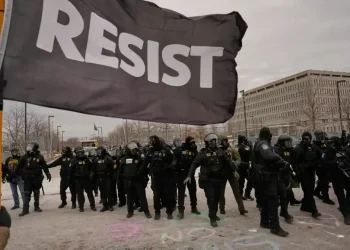
The shootings in Minneapolis have intensified debate over how immigration enforcement is conducted in urban areas and how federal officers interact with protesters and bystanders. Details of the incident have prompted widespread public reaction and renewed attention to the rules of engagement governing federal law enforcement operations.
Critics of DHS have called for mandatory body cameras for all immigration officers, arguing that such measures are standard in many local police departments and should be applied to federal agencies as well. Supporters of the move say it could help rebuild public trust and provide clearer evidence in disputed incidents.
The expansion of cameras in Minneapolis is being viewed as a test case for how DHS may implement similar measures nationwide. Funding, training, and policy frameworks will determine how quickly the initiative can scale beyond the city.
Broader accountability debate for federal law enforcement
The renewed push for body cameras fits into a broader national discussion about transparency in law enforcement. Many local and state agencies adopted body cameras over the past decade following high-profile incidents that raised questions about police conduct.
At the federal level, implementation has been uneven across agencies, with some departments adopting camera programs while others cite cost, logistics, and privacy concerns.
Noem’s statement suggests DHS intends to move toward a more uniform approach, at least within its own enforcement divisions, as public attention remains fixed on Minneapolis.
This article was rewritten by JournosNews.com based on verified reporting from trusted sources. The content has been independently reviewed, fact-checked, and edited for accuracy, neutrality, tone, and global readability in accordance with Google News and AdSense standards.
All opinions, quotes, or statements from contributors, experts, or sourced organizations do not necessarily reflect the views of JournosNews.com. JournosNews.com maintains full editorial independence from any external funders, sponsors, or organizations.
Stay informed with JournosNews.com — your trusted source for verified global reporting and in-depth analysis. Follow us on Google News, BlueSky, and X for real-time updates.