DUBAI, United Arab Emirates (JP) – Satellite imagery has revealed fresh construction at two of Iran’s most sensitive nuclear facilities months after Israeli and U.S. airstrikes heavily damaged them, raising new questions about what activity may be taking place behind the coverings.
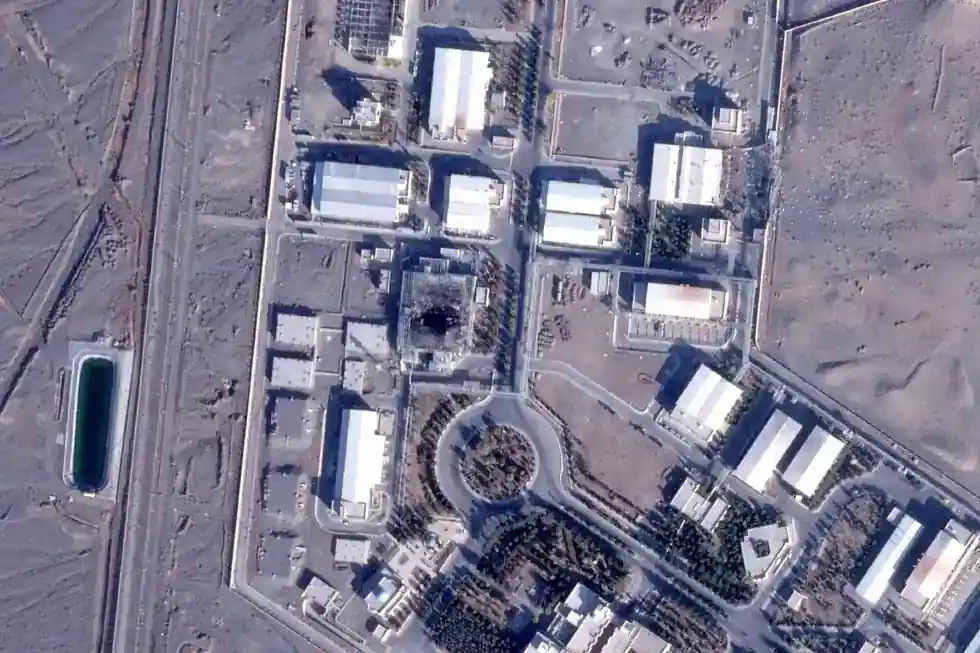
Images captured by Planet Labs PBC show that Iran has erected roofs over parts of damaged structures at the Natanz and Isfahan nuclear sites. The construction marks the first visible activity detected by commercial satellites at the facilities since the strikes during Israel’s 12-day conflict with Iran in June last year.
The roofing obscures ground-level visibility from satellites at a time when inspectors from the International Atomic Energy Agency (IAEA) remain unable to access the sites, leaving open-source imagery as one of the few available monitoring tools.
Iran has made no public statement about the work. The IAEA did not respond to requests for comment.
Key nuclear sites under renewed scrutiny
Natanz and Isfahan have long been central to Iran’s nuclear infrastructure. Natanz, located roughly 220 kilometers south of Tehran, has housed both above-ground and underground enrichment halls where advanced centrifuges enriched uranium to levels as high as 60%, according to previous IAEA reporting. That enrichment level is technically close to weapons-grade material.
Isfahan, meanwhile, has been known for producing uranium hexafluoride gas, the feedstock used in centrifuges for enrichment.
A third hardened site at Fordo, built beneath a mountain southwest of Tehran, was also targeted during the conflict but is not shown in the latest imagery.
Iran maintains that its nuclear program is peaceful. Western governments and the IAEA have said Iran previously ran an organized weapons program until 2003, and have raised concerns in recent years over the scale and level of enrichment.
Roof structures appear to obscure, not rebuild
Experts who reviewed the satellite images say the new roofs do not appear to be part of reconstruction of the damaged facilities.
Andrea Stricker of the Washington-based Foundation for Defense of Democracies said the coverings are likely designed to conceal activity rather than restore operations.
“They appear intended to allow access to any surviving materials or equipment without outside observation,” she said, referring to the possibility that some enriched uranium stocks or components may have survived the strikes.
Sarah Burkhard of the Institute for Science and International Security offered a similar assessment, saying the structures may allow workers to “recover any remaining assets or debris without revealing what is being removed.”
Sean O’Connor, an analyst at the open-source intelligence firm Janes, said the purpose was likely “to obscure activity rather than to repair or rebuild a structure for operational use.”
Details visible at Natanz and nearby excavation
The main above-ground enrichment facility at Natanz, known as the Pilot Fuel Enrichment Plant, was described by IAEA Director-General Rafael Mariano Grossi last year as “functionally destroyed” following Israeli strikes on June 13. A subsequent U.S. strike on June 22 targeted underground halls using bunker-penetrating munitions.
Planet Labs imagery indicates that Iran began installing the roof over the damaged structure in December, completing it by month’s end. The electrical infrastructure at the site still appears heavily damaged.
Satellite images also show continued excavation at Kūh-e Kolang Gaz Lā, sometimes referred to as “Pickaxe Mountain,” just south of the Natanz perimeter. Mounds of excavated earth have grown in recent months, consistent with earlier assessments that Iran may be constructing a new underground facility there.
Activity and tunnel changes at Isfahan
At Isfahan, the new roof was placed over a building near the site’s northeastern corner, completed in early January. The exact function of the structure has not been publicly confirmed. Israeli officials previously said strikes at Isfahan targeted facilities linked to centrifuge manufacturing.
Imagery also shows changes to mountain tunnels near the facility. Two tunnels appear to have been filled with dirt, a method Iran has previously used to protect entrances from missile strikes. A third tunnel appears cleared, with new walls built near its entrance, possibly for added security.
Wider reconstruction efforts elsewhere in Iran
Separate satellite imagery in recent months has shown reconstruction at the Parchin military complex southeast of Tehran, including work at a facility identified by the Institute for Science and International Security as “Taleghan 2.”
Israel destroyed the site in an airstrike in October 2024. Analysts have said the location previously housed equipment used to study explosive tests that could be relevant to nuclear weapons research, though Iran denies pursuing such work.
Lewis Smart, a Janes analyst, said new construction at Taleghan 2 appears extensive and may include installation of a large containment vessel that could be used for high-explosive testing.
“This has been reconstituted very rapidly,” he said. “It’s being expanded in a way that may make it more resistant to future strikes.”
Limited visibility as diplomatic pressure grows
Since the conflict, Iran has not allowed IAEA inspectors to reenter the damaged nuclear sites, limiting independent verification of their condition.
At the same time, tensions between Tehran and Washington have risen over Iran’s internal crackdown on protests and its nuclear activities. The United States has deployed naval assets, including the USS Abraham Lincoln carrier group, to the region as diplomatic pressure intensifies.
The White House’s National Security Strategy released in November said U.S. strikes had “significantly degraded” Iran’s nuclear program, though details of the damage remain largely undisclosed.
The latest satellite imagery adds to a growing body of open-source evidence suggesting that while the facilities remain heavily damaged, activity is underway that may be aimed at securing or retrieving materials from the sites while shielding that work from external observation.
This article was rewritten by JournosNews.com based on verified reporting from trusted sources. The content has been independently reviewed, fact-checked, and edited for accuracy, neutrality, tone, and global readability in accordance with Google News and AdSense standards.
All opinions, quotes, or statements from contributors, experts, or sourced organizations do not necessarily reflect the views of JournosNews.com. JournosNews.com maintains full editorial independence from any external funders, sponsors, or organizations.
Stay informed with JournosNews.com — your trusted source for verified global reporting and in-depth analysis. Follow us on Google News, BlueSky, and X for real-time updates.