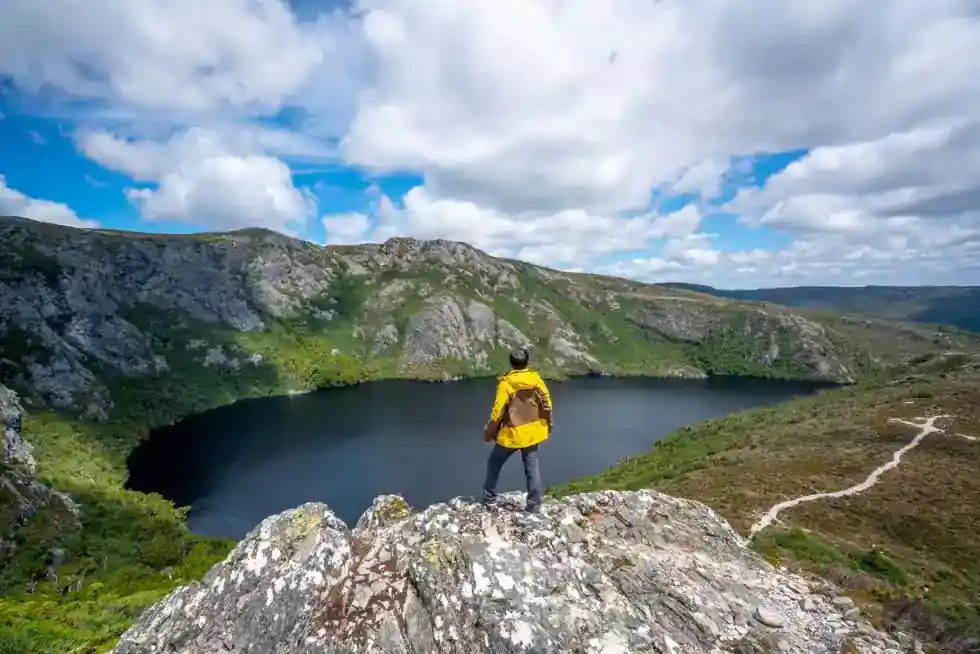
An AI-generated travel blog promoting nonexistent hot springs in northern Tasmania has become a case study in the limits of automation within tourism marketing. While the incident appears benign on the surface, it raises broader questions about trust, verification, and accountability as AI systems increasingly mediate how travelers plan and perceive destinations.
At issue is not a single factual error, but the structural vulnerability created when generative AI produces authoritative-sounding content without grounded verification. As tourism businesses turn to automation to compete on visibility and scale, the Tasmania case illustrates how small inaccuracies can ripple outward, affecting local communities, travelers, and business reputations alike.
This analysis examines what went wrong, why such errors occur, and what the episode suggests about the evolving relationship between AI, tourism, and consumer trust.
The Tasmania incident in context
The controversy centers on a now-deleted blog post published on the website of Tasmania Tours, operated by Australian Tours and Cruises. The article promoted “Weldborough Hot Springs” as a tranquil, forest-surrounded destination in northeast Tasmania—a location that, according to residents and local businesses, does not exist.
The fictional attraction was described in language typical of destination marketing: serene, secluded, and favored by hikers. That tone likely contributed to its credibility, particularly for international tourists unfamiliar with Tasmania’s geography. The result was tangible confusion on the ground. Local businesses in Weldborough, a remote rural town roughly 110 kilometers from Launceston, reported a steady flow of inquiries and visitors searching for the nonexistent site.
The company later acknowledged that the content was AI-generated and published by a third-party marketing provider without final review. The owner described the episode as a mistake rather than intentional deception, emphasizing the pressures faced by small tourism operators competing with larger firms that produce high volumes of online content.
From error to impact: why the mistake mattered
At one level, the incident may appear trivial: tourists arrived expecting hot springs and instead found a cold river and a quiet town. No injuries were reported, and local residents treated the situation with humor. However, the broader implications extend beyond inconvenience.
Tourism relies heavily on informational trust. Travelers make decisions based on digital descriptions that often substitute for local knowledge. When AI-generated content fabricates locations, even unintentionally, it undermines confidence not only in the specific business involved but in online travel information more generally.
In remote regions such as Tasmania’s northeast, misinformation can carry additional risks. Limited infrastructure, sparse mobile coverage, and challenging terrain mean that inaccurate guidance about distances, conditions, or amenities can escalate from annoyance to safety concern. Tourism researchers note that AI-generated itineraries frequently misstate walk lengths, difficulty levels, or environmental conditions—errors that can be consequential in wilderness settings.
Why AI “hallucinations” occur in travel content
Generative AI systems do not verify facts in the human sense. They predict plausible language based on patterns in training data, which may include outdated, incomplete, or geographically vague information. When prompted to produce travel content, these systems tend to fill gaps with convincing but unverified details.
In the Tasmania case, the invented hot springs may reflect a broader pattern: many regions worldwide do have geothermal attractions, and Tasmania itself is known for natural landscapes. The AI system likely synthesized a plausible attraction without confirming its existence.
Tourism content is particularly vulnerable to this phenomenon because it often relies on evocative language rather than precise data. Descriptions of “hidden gems” and “tranquil escapes” can mask factual weaknesses, making hallucinations harder to detect during casual review.
Adoption pressure among small tourism operators
The business context is also significant. Small and medium-sized tourism operators increasingly face pressure to maintain a constant digital presence across websites, blogs, and social platforms. Search engine visibility rewards frequent updates, while travelers expect fresh, detailed content.
For operators with limited staff and budgets, AI tools promise efficiency and scale. Outsourcing content creation to third parties that use generative AI can appear cost-effective, particularly when competing against large travel platforms with dedicated editorial teams.
However, the Tasmania incident suggests that efficiency gains may come with hidden risks. When editorial oversight is reduced or delayed, errors can pass through unnoticed until they manifest in real-world consequences.
Trust dynamics: AI versus human sources
Research cited by tourism academics indicates that a growing share of travelers—more than a third, by some estimates—now use AI tools for itinerary planning or destination research. Some studies suggest travelers may trust AI outputs more than traditional review sites, perceiving them as neutral or comprehensive.
This trust differential amplifies the impact of AI errors. A misleading blog post on a company website might once have reached a limited audience. AI-generated content, however, is often optimized for search engines and can be quickly amplified across platforms.
The result is a paradox: tools designed to streamline information discovery may increase the spread of unverified claims, particularly when users assume that algorithmic outputs carry an implicit seal of accuracy.
Reputational fallout and accountability questions
For Australian Tours and Cruises, the reputational impact appears to have outweighed any short-term marketing benefit. The company reported significant online backlash and emotional distress, despite acknowledging the mistake and removing the content.
This raises unresolved questions about accountability in AI-assisted publishing. When content is produced by third-party vendors using automated tools, responsibility becomes diffuse. Regulators have yet to establish clear standards for disclosure, verification, or liability in such cases, particularly in marketing contexts.
From a newsroom or editorial perspective, the episode underscores a long-standing principle: automation does not eliminate the need for human judgment. Instead, it shifts the burden toward verification and risk management.
Implications for the wider tourism sector
The Weldborough episode is unlikely to be isolated. As AI adoption accelerates, similar errors may surface across destinations, particularly those that are remote, under-documented, or less familiar to global audiences.
For the tourism sector, the challenge is not whether to use AI, but how to integrate it responsibly. Evidence from tourism research suggests that AI-generated itineraries and descriptions frequently contain errors, reinforcing the need for layered verification.
The incident also highlights the importance of local knowledge. Residents and small businesses often serve as de facto fact-checkers when digital narratives collide with reality. Their experiences, while anecdotal, provide early warning signals of systemic issues in automated content pipelines.
What the case suggests, without drawing conclusions
The Tasmania hot springs episode does not indicate that AI is unsuitable for travel marketing, nor that automation should be avoided. It does, however, suggest that current practices may underestimate the editorial oversight required to maintain accuracy and trust.
The case raises questions about how tourism businesses balance scale with reliability, how travelers assess digital information, and how AI-generated narratives shape expectations of place. These questions remain open, particularly as AI tools continue to evolve and proliferate.
What is clear is that plausibility is not the same as truth. In travel, where expectations translate directly into movement across physical landscapes, that distinction matters.
This article was rewritten by JournosNews.com based on verified reporting from trusted sources. The content has been independently reviewed, fact-checked, and edited for accuracy, neutrality, tone, and global readability in accordance with Google News and AdSense standards.
All opinions, quotes, or statements from contributors, experts, or sourced organizations do not necessarily reflect the views of JournosNews.com. JournosNews.com maintains full editorial independence from any external funders, sponsors, or organizations.
Stay informed with JournosNews.com — your trusted source for verified global reporting and in-depth analysis. Follow us on Google News, BlueSky, and X for real-time updates.