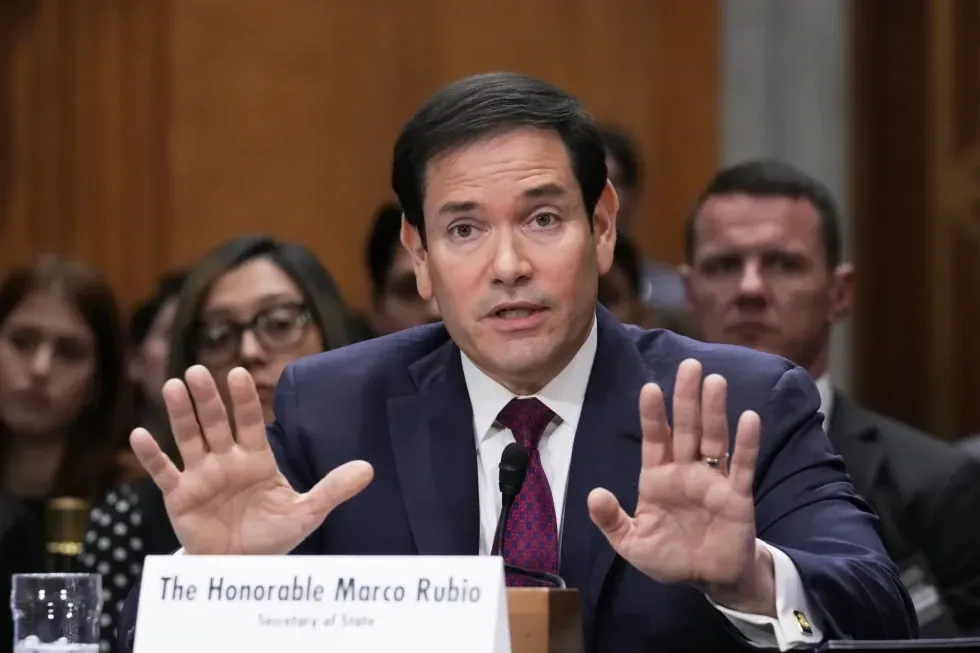
WASHINGTON (JN) – In a detailed congressional hearing, Secretary of State Marco Rubio defended President Donald Trump’s military operation aimed at deposing Venezuelan President Nicolás Maduro, asserting that it strengthened U.S. security in the Western Hemisphere. Speaking to the Senate Foreign Relations Committee, Rubio also sought to allay concerns about Trump’s proposals involving Greenland, NATO commitments, and broader U.S. engagements with Iran and China.
Rubio’s testimony, the first public account since the January 3 raid in Caracas, painted a picture of cautious progress in Venezuela while stressing that Washington does not currently plan further military action. The hearing highlighted the stark partisan divide over Trump’s foreign policy, with Republicans largely supportive and Democrats expressing skepticism about the administration’s approach and its potential international consequences.
Progress in Venezuela and U.S. Security Goals
Rubio framed the Venezuelan operation as a targeted effort to neutralize a major security threat. “We are certainly better off today in Venezuela than we were four weeks ago,” he said, adding that continued cooperation with interim Venezuelan authorities could yield further improvements over the coming months. He outlined plans to allow Venezuela to sell oil currently under U.S. sanctions, with revenue controlled by the U.S. Treasury and earmarked for essential services such as policing and healthcare.
The secretary emphasized that the administration does not anticipate any further military action unless an imminent threat emerges. This marked a shift from earlier, more aggressive statements reportedly prepared for the hearing. Rubio maintained that the current leadership in Venezuela was cooperating with U.S. demands and would soon see tangible benefits from stabilization efforts.
Partisan Responses and International Concerns
Republican lawmakers praised the operation, highlighting its brief and precise execution. Idaho Senator Jim Risch, the committee chairman, noted that approximately 200 troops were involved in a firefight lasting under 30 minutes. He underscored that U.S. and international oversight might be needed to ensure future Venezuelan elections are free and fair.
Democrats questioned the long-term impact of U.S. actions, warning of unintended consequences for global stability. Senator Jeanne Shaheen of New Hampshire pointed to the ongoing economic challenges in Venezuela and suggested that U.S. focus on Caracas diverts attention from domestic priorities. Senator Cory Booker pressed Rubio on collaborating with interim leaders who had previously served under Maduro.
NATO, Greenland, and Broader Foreign Policy
Rubio sought to calm concerns about Trump’s proposals regarding Greenland, noting that discussions with NATO allies were ongoing and tensions had eased. He reiterated that while Trump has pressed NATO members to increase defense spending, the administration does not intend to impose punitive measures on European nations.
On China and Taiwan, Rubio described Beijing’s stated goal of reunification as independent of other global events, including the Venezuelan operation. He also indicated that the increased U.S. military presence in the Middle East is primarily defensive, aimed at deterring potential Iranian threats, and that there is no current plan for military action against Tehran.
Democracy and Diplomatic Engagement
Rubio underscored support for a democratic transition in Venezuela, highlighting ongoing engagement with opposition leader María Corina Machado. The U.S. is seeking to normalize diplomatic relations, including the potential reopening of the U.S. Embassy in Caracas. However, full normalization would require revoking U.S. recognition of the Venezuelan parliament elected in 2015.
Machado reaffirmed her commitment to returning to Venezuela to participate in the country’s political transition, while interim President Delcy Rodríguez’s office confirmed respectful communication channels with the United States. Rubio outlined U.S. demands for energy sector reforms, preferential access for U.S. companies, and the use of oil revenues to purchase American goods.
This article was rewritten by JournosNews.com based on verified reporting from trusted sources. The content has been independently reviewed, fact-checked, and edited for accuracy, neutrality, tone, and global readability in accordance with Google News and AdSense standards.
All opinions, quotes, or statements from contributors, experts, or sourced organizations do not necessarily reflect the views of JournosNews.com. JournosNews.com maintains full editorial independence from any external funders, sponsors, or organizations.
Stay informed with JournosNews.com — your trusted source for verified global reporting and in-depth analysis. Follow us on Google News, BlueSky, and X for real-time updates.