From NBA tunnels to fashion editorials, wired headphones are re-emerging as a visible cultural marker. Their resurgence suggests more than nostalgia, raising questions about cost, reliability, identity, and a broader re-evaluation of always-on digital life.
Once eclipsed by Bluetooth convenience and premium branding, wired headphones are again appearing in public-facing spaces where image, intent, and symbolism matter. This shift does not point to a wholesale rejection of wireless technology, but it does indicate a recalibration in how certain groups — particularly athletes, entertainers, and younger consumers — relate to tech, fashion, and visibility.
The renewed visibility of wired headphones sits at the intersection of affordability, practicality, and cultural signaling. It reflects a moment in which analog cues are being reinterpreted not as outdated, but as deliberate.
From courtside accessory to cultural signal
The relationship between headphones and cultural influence has long been mediated by sport and celebrity. When LeBron James appeared at the 2008 Beijing Olympics wearing Beats by Dre, the brand’s rise was accelerated by visibility rather than technical differentiation. The headphones became shorthand for elite performance, style, and modernity.
Nearly two decades later, the visual language has shifted. NBA players including Stephen Curry, Anthony Edwards, and Kawhi Leonard have been seen entering arenas with wired earbuds, a choice that stands out precisely because it contradicts prevailing tech norms. In a league where tunnel arrivals function as an informal fashion runway, deviations from expectation are amplified.
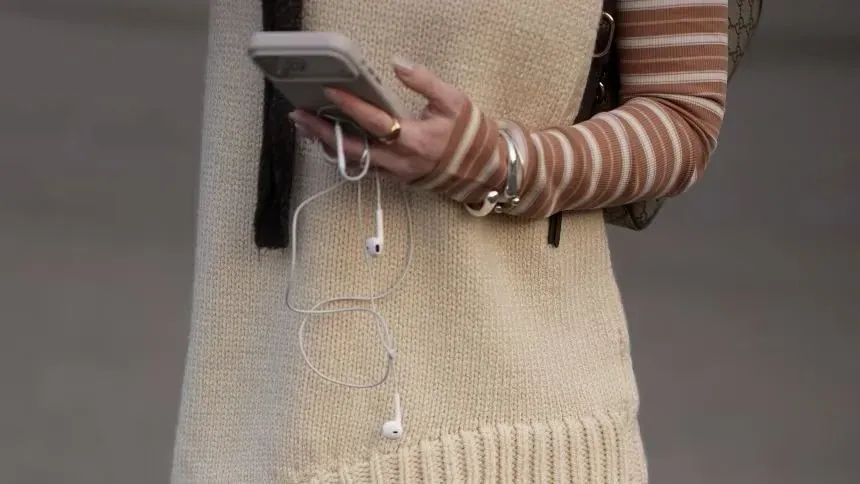
Fashion observers tracking NBA style have noted that wired headphones are increasingly incorporated as part of an overall look rather than concealed as a purely functional object. The cable itself becomes visible, introducing a tactile and slightly anachronistic element into otherwise contemporary outfits.
This visibility matters. In environments where personal branding is carefully managed, the reintroduction of an older technology suggests intentionality rather than default behavior.
Celebrity adoption beyond sport
The trend is not confined to professional athletes. Musicians and actors including Drake, Harry Styles, Zendaya, Lily-Rose Depp, and Dua Lipa have been photographed using wired earbuds in everyday settings. Fashion publications have reinforced this visibility through editorial framing, positioning wired headphones as a stylistic choice rather than a budget compromise.
Interviews and features in outlets such as Vogue and New York Magazine have further contextualized the trend. When public figures explicitly reference preference for wired headphones, the rationale is often framed around simplicity, reliability, or personal comfort, rather than technical superiority.
This framing is notable because it diverges from the dominant consumer electronics narrative, which emphasizes seamless connectivity, ecosystem integration, and premium pricing. By contrast, wired headphones are positioned as unpretentious and functional, attributes that have gained renewed cultural value.
Cost, accessibility, and symbolic restraint
Price differentials between wired and wireless headphones remain substantial. Entry-level wired earbuds from major manufacturers are often priced below $30, while flagship wireless models can exceed $600. This gap introduces an economic dimension to the trend that intersects with questions of accessibility and signaling.
In fashion and cultural analysis, visible restraint can itself function as a form of status. Choosing a low-cost, widely available object despite the ability to afford premium alternatives can communicate detachment from conspicuous consumption. In this sense, wired headphones operate as a counter-symbol to luxury tech.
Observers of online fashion communities have argued that the appeal lies in the object’s ordinariness. Unlike designer accessories, wired earbuds are difficult to counterfeit, rarely exclusive, and largely standardized. Their value comes not from scarcity but from intention.
This dynamic aligns with broader shifts in how younger consumers approach status, particularly in public digital spaces where overt displays of wealth are increasingly scrutinized.
Practical considerations in high-pressure environments
Beyond symbolism, practical factors remain relevant, especially in professional sports contexts. Athletes have publicly cited issues with wireless earbuds, including battery depletion, connectivity failures, and fit instability during movement.
In pre-game routines, where predictability and focus are prioritized, wired headphones offer reliability. They require no charging, pair instantly, and maintain consistent audio quality regardless of environmental interference.
From an operational perspective, wired headphones also eliminate concerns around signal security. While the risk of Bluetooth interception is low for consumer devices, the perception of greater privacy persists, particularly among individuals engaged in high-profile or sensitive conversations.
These factors suggest that, for some users, the wired option represents not regression but risk minimization.
Market data and the persistence of wireless dominance
Despite increased visibility, wired headphones remain a minority in overall market share. Industry data indicates that wireless models continue to dominate global sales, accounting for roughly two-thirds of units sold in recent years.
The removal of headphone jacks from smartphones, beginning with Apple’s iPhone 7 in 2016 and followed by most major manufacturers, structurally reinforced this shift. For many consumers, wireless adoption was not purely preference-based but necessitated by hardware design.
As a result, the resurgence of wired headphones is better understood as a niche cultural phenomenon rather than a reversal of market direction. Their prominence in media and fashion contexts outweighs their numerical footprint in sales data.
This distinction is important when assessing whether the trend reflects broad consumer behavior or a concentrated signal amplified by influential adopters.
Nostalgia and the rise of analog preferences
The appeal of wired headphones overlaps with a wider interest in analog or low-tech experiences. Across creative industries and consumer culture, there has been renewed engagement with film photography, vinyl records, printed books, and limited-function mobile devices.
Sociologists and media analysts have linked this shift to digital saturation. As artificial intelligence, algorithmic feeds, and continuous connectivity become more pervasive, tangible and constrained technologies offer a sense of control.
Wired headphones, by design, impose limits. They tether the user physically to a device, lack firmware updates, and perform a single function. These constraints can be experienced as grounding rather than restrictive.
For younger generations who grew up during the transition from analog to digital, such objects also carry historical texture. They reference a pre-streaming, pre-notification era without requiring full withdrawal from modern systems.
Fashion cycles and generational reinterpretation
Fashion history is cyclical, but repetition rarely implies replication. Objects return with altered meaning, shaped by contemporary context. Wired headphones, once a default accessory, are now reintroduced as a choice laden with implication.
Within youth culture, particularly on social platforms, the visible cable has been reframed as a stylistic flourish. It contrasts with the minimalist invisibility of wireless earbuds, adding visual complexity to outfits and signaling awareness of trend dynamics.
Importantly, this reinterpretation is occurring among consumers who are fully literate in digital technology. The choice is not born of unfamiliarity with wireless options but of selective engagement.
This distinction separates the current trend from earlier periods in which wired headphones were simply the only option available.
Limits of the revival
While visibility has increased, several constraints limit the wired headphone’s resurgence. Hardware compatibility remains an obstacle, as many modern devices require adapters. Wireless headphones also continue to improve in sound quality, latency, and integration with digital assistants.
For everyday consumers prioritizing convenience, exercise, or mobility, wireless options retain clear advantages. The wired headphone’s appeal is situational, often tied to controlled environments, aesthetic contexts, or specific routines.
As such, the trend’s longevity remains uncertain. It may persist as a recurring fashion motif or recede as novelty fades.
What the return suggests
The renewed prominence of wired headphones does not signal a technological regression. Instead, it reflects a moment of reassessment in how technology intersects with identity, labor, and leisure.
In public-facing roles, where image is curated and choices are scrutinized, adopting an older, simpler tool can communicate deliberation. In private routines, it can offer predictability amid increasingly complex digital ecosystems.
Whether this represents a durable cultural shift or a transient aesthetic phase remains unresolved. What is clearer is that the wired headphone’s meaning has changed. It is no longer merely functional, nor obsolete, but contextually expressive.
This article was rewritten by JournosNews.com based on verified reporting from trusted sources. The content has been independently reviewed, fact-checked, and edited for accuracy, neutrality, tone, and global readability in accordance with Google News and AdSense standards.
All opinions, quotes, or statements from contributors, experts, or sourced organizations do not necessarily reflect the views of JournosNews.com. JournosNews.com maintains full editorial independence from any external funders, sponsors, or organizations.
Stay informed with JournosNews.com — your trusted source for verified global reporting and in-depth analysis. Follow us on Google News, BlueSky, and X for real-time updates.