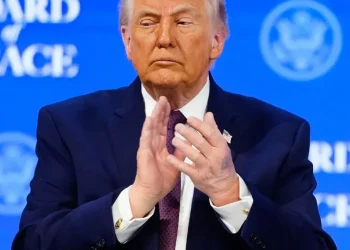
WASHINGTON (AP) – U.S. President Donald Trump has claimed that American forces used a classified weapon to disable Venezuelan military equipment during an operation that led to the capture of President Nicolás Maduro, according to an interview published Friday by the New York Post. Trump offered no technical details and said he was not authorized to discuss the system.
The comments, which have not been independently verified, came as Trump also reiterated threats to expand U.S. military action against drug trafficking networks beyond South America, potentially including targets in Central America and Mexico.
Trump’s remarks add to a series of sweeping assertions made since the reported raid, raising questions among regional governments and security analysts about the scope of U.S. operations and the absence of publicly released evidence supporting several of the claims.
Claims of undisclosed technology
Speaking to the New York Post, Trump said the United States used what he described as a pulsed energy weapon, referring to it as “The Discombobulator,” to render Venezuelan systems inoperable during the operation. He said the weapon caused equipment to fail at a critical moment.
“They never got their rockets off,” Trump said, claiming Venezuelan forces possessed Russian- and Chinese-made rockets that did not function when activated. According to Trump, U.S. forces encountered no resistance because systems “didn’t work” when controls were engaged.
The White House has not released further details, and U.S. defense officials have not publicly confirmed the existence or use of such a weapon. Independent analysts and international observers have also not corroborated Trump’s description of events.
Trump had previously stated that the United States had effectively shut down power across much of Caracas during the raid, though he again declined to explain how that was achieved.
Expansion of anti-cartel operations
In the same interview, Trump said the United States would continue and potentially broaden a campaign of military strikes targeting drug trafficking organizations. He suggested operations could extend beyond South America.
“We know their routes. We know everything about them,” Trump said, adding that strikes could occur “anywhere” when asked whether Central America or Mexico could be included.
On Friday, the United States carried out a strike on what it described as a drug-trafficking vessel in the eastern Pacific Ocean, the first such action since Maduro’s reported capture. U.S. officials say it was part of an ongoing maritime campaign aimed at disrupting narcotics smuggling routes.
According to U.S. figures, there have been at least 36 known strikes on boats in the Caribbean and eastern Pacific since early September, resulting in at least 117 deaths. Those figures have not been independently verified, and details about the legal framework and targeting criteria for the strikes have not been publicly disclosed.
Seized oil and tankers
Trump also said the United States had seized oil from seven tankers connected to Venezuela but declined to say where the ships were taken.
“I’m not allowed to tell you,” he said, adding that Venezuela “doesn’t have any oil” from those shipments. U.S. authorities have previously acknowledged detaining vessels suspected of sanctions violations, though they typically provide limited operational detail.
The Venezuelan government has repeatedly denied U.S. accusations related to sanctions evasion and has condemned American actions as violations of international law.
Diplomatic remarks and other comments
During the interview, Trump said he was still deciding where to display a Nobel Peace Prize awarded to Venezuelan opposition leader María Corina Machado, which he said she had given to him earlier this month. The prize, he said, was leaning against a statue in the Oval Office. Machado’s office has not publicly commented on Trump’s account.
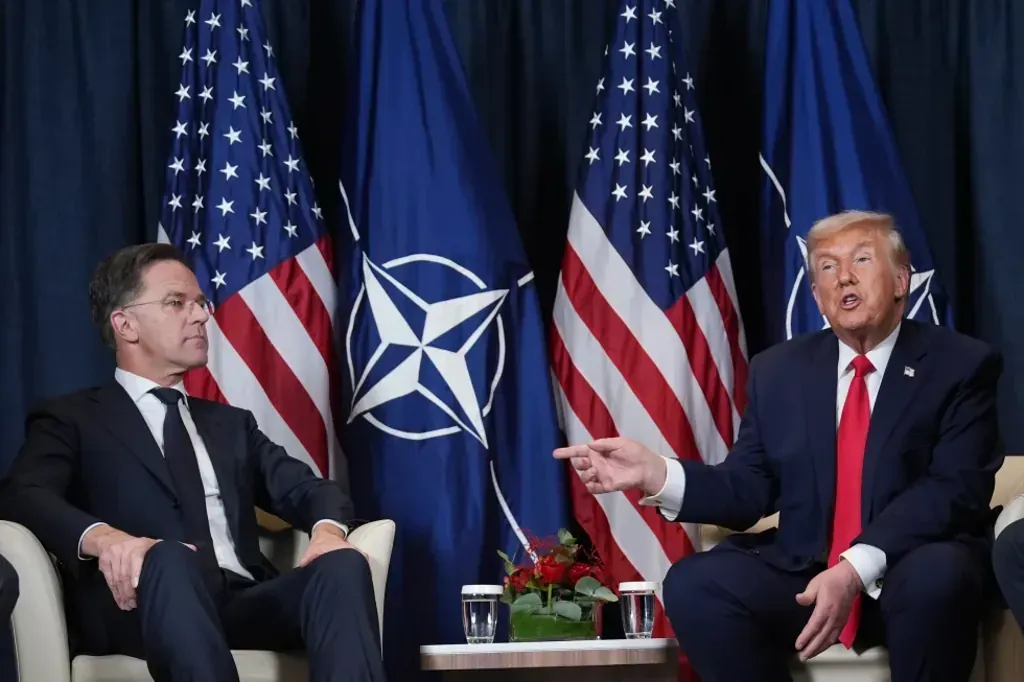
Trump also discussed a preliminary Arctic security framework he said he reached with NATO Secretary General Mark Rutte, claiming it would give the United States ownership of land where American bases are located. Details of any such arrangement remain unclear.
Leaders in Denmark and Greenland have reiterated that Greenland’s sovereignty is non-negotiable, and a NATO spokesperson said Rutte had not proposed any compromise on sovereignty in discussions with Trump.
Separately, Trump said he would not attend the upcoming Super Bowl and criticized the selection of Bad Bunny and Green Day as halftime performers. He attended last year’s game in New Orleans.
This article was rewritten by JournosNews.com based on verified reporting from trusted sources. The content has been independently reviewed, fact-checked, and edited for accuracy, neutrality, tone, and global readability in accordance with Google News and AdSense standards.
All opinions, quotes, or statements from contributors, experts, or sourced organizations do not necessarily reflect the views of JournosNews.com. JournosNews.com maintains full editorial independence from any external funders, sponsors, or organizations.
Stay informed with JournosNews.com — your trusted source for verified global reporting and in-depth analysis. Follow us on Google News, BlueSky, and X for real-time updates.