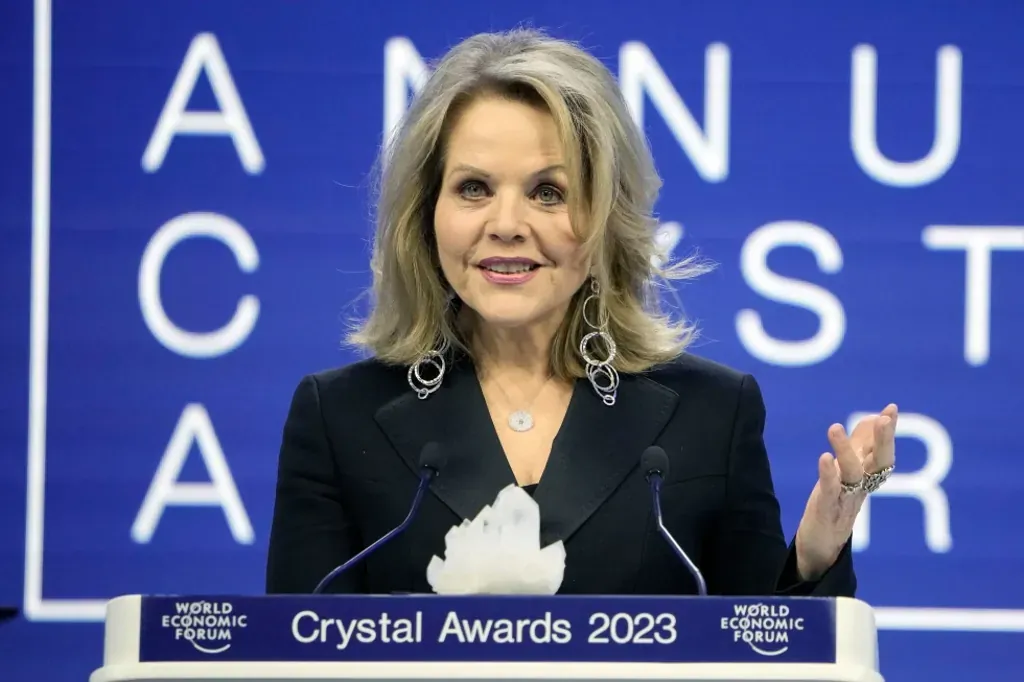
NEW YORK (JN) – Renée Fleming has canceled two planned appearances at Washington’s Kennedy Center in May, adding her name to a growing list of prominent artists who have withdrawn from the venue following recent leadership changes and political controversy surrounding the institution.
The Kennedy Center confirmed this week that Fleming would no longer perform with conductor James Gaffigan and the National Symphony Orchestra, citing a “scheduling conflict.” A replacement soloist and revised repertoire will be announced later, while the remainder of the program is expected to proceed as planned.
Fleming, one of the most internationally recognized American sopranos of her generation, did not immediately respond to requests for comment. Her decision comes as the Kennedy Center faces sustained scrutiny after President Donald Trump removed its previous leadership and the newly installed administration announced plans to rename the venue the Trump Kennedy Center.
Background to Fleming’s decision
Fleming’s withdrawal follows a public break with the institution last year, when she resigned from her unpaid role as Artistic Advisor at Large. At the time, she cited the forced departures of longtime Kennedy Center chair David Rubenstein and president Deborah Rutter, both of whom had overseen the center during a period of expansion and relative political insulation.
While the Kennedy Center has described Fleming’s absence from the May concerts as a logistical matter, her earlier resignation positioned her among artists who have expressed concern about the center’s governance and direction. Fleming has been closely associated with the venue for decades, appearing frequently in concerts, galas, and educational initiatives.
Her cancellation adds symbolic weight to a broader pattern of high-profile disengagement that has accelerated in recent weeks.
Growing list of artist cancellations
Fleming is not alone in stepping back. Lin-Manuel Miranda, Bela Fleck, and Issa Rae are among several well-known figures who have canceled scheduled appearances or projects at the Kennedy Center since the leadership overhaul.
The center has become a focal point in a wider cultural dispute, as Trump and his allies have criticized major arts institutions for what they describe as “woke” programming and governance. Supporters of the changes argue the Kennedy Center should reflect broader national values, while critics warn that political interference risks undermining artistic independence.
The cancellations have had practical consequences for programming and fundraising, particularly as the center prepares for upcoming seasons traditionally anchored by marquee performers.
Washington National Opera cuts ties
The most consequential institutional response came earlier this month, when the Washington National Opera announced it was ending its formal relationship with the Kennedy Center. The company had been based at the venue since 1971 and was one of its flagship resident organizations.
In a statement, the opera company did not detail all of its reasons, but the move was widely interpreted as a response to uncertainty over governance, funding, and artistic autonomy. The separation marks a significant shift in Washington’s performing arts landscape, forcing the opera to seek alternative venues for future productions.
The Washington National Opera is now staging performances at George Washington University this spring, signaling a broader decentralization of major classical programming away from the Kennedy Center.
Performers seek alternative venues
Other organizations affected by the turmoil are attempting to adapt rather than withdraw entirely. Vocal Arts DC, a nonprofit presenter specializing in vocal music, announced earlier this week that it had canceled three Kennedy Center concerts, citing “financial circumstances.”
On Friday, the group said it had secured new venues for some of the affected performances. Tenor Benjamin Bernheim and pianist Carrie-Ann Matheson are now scheduled to appear next month at George Washington University, aligning with the Washington National Opera’s temporary relocation.
The shift highlights how artists and presenters are attempting to maintain continuity for audiences while navigating the uncertainty surrounding the Kennedy Center’s future.
Uncertainty for a national institution
Founded in 1971 as a living memorial to President John F. Kennedy, the Kennedy Center has long described itself as politically neutral, serving as the United States’ national cultural center. Its charter emphasizes artistic excellence and broad public access, principles that have historically guided its programming across genres and political administrations.
The recent wave of cancellations underscores the challenges facing the institution as it attempts to balance its national role with a sharply polarized political environment. While performances continue and new leadership has pledged stability, the departure of artists like Fleming suggests that confidence among parts of the artistic community remains fragile.
Whether the Kennedy Center can reverse that trend may depend less on individual programming decisions and more on whether it can restore a sense of independence and continuity that artists and audiences alike have come to expect.
This article was rewritten by JournosNews.com based on verified reporting from trusted sources. The content has been independently reviewed, fact-checked, and edited for accuracy, neutrality, tone, and global readability in accordance with Google News and AdSense standards.
All opinions, quotes, or statements from contributors, experts, or sourced organizations do not necessarily reflect the views of JournosNews.com. JournosNews.com maintains full editorial independence from any external funders, sponsors, or organizations.
Stay informed with JournosNews.com — your trusted source for verified global reporting and in-depth analysis. Follow us on Google News, BlueSky, and X for real-time updates.