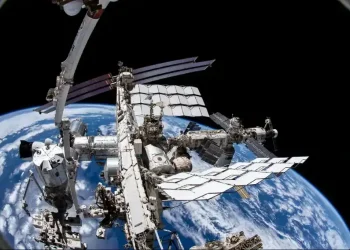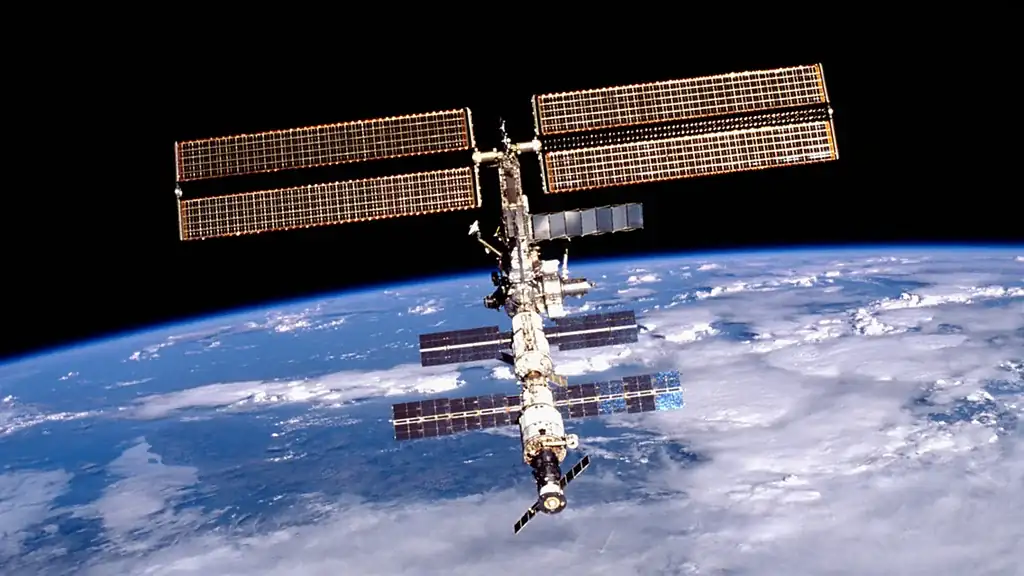
When four astronauts splashed down in the Pacific Ocean in mid-January after cutting short their mission aboard the International Space Station, the return looked routine. In reality, it was a reminder that even after more than two decades of continuous occupation, human spaceflight remains unforgiving.
The Crew-11 evacuation, triggered by a medical emergency that could not be treated on orbit, showed how quickly a carefully planned mission can change. It also exposed the hard limits of safety systems designed for low-Earth orbit, just as space agencies prepare to send humans farther from home than ever before.
Behind the scenes, astronauts spend years training for scenarios they hope will never occur: fires, toxic leaks, rapid depressurisation and the possibility of abandoning their spacecraft altogether. The discipline drilled into them reflects a simple truth that mission planners have known since the dawn of the space age — there is no such thing as a routine mission.
An orderly evacuation, born of necessity
On January 15, the four members of ISS Crew-11 — NASA astronauts Mike Fincke and Zena Cardman, Japan’s Kimiya Yui and Russian cosmonaut Oleg Platonov — returned to Earth aboard the SpaceX capsule that had carried them to orbit in August 2025.
Their six-and-a-half-month stay was meant to be standard. Instead, a medical emergency affecting one crew member forced mission managers to bring everyone home together. The ISS has limited medical capabilities, and long-standing safety rules require that the entire crew assigned to a return vehicle depart as a unit.
The incident underlined a reality often obscured by years of successful operations: space is inherently hostile. Even in low orbit, hundreds of kilometres above Earth, astronauts rely on thin margins of engineering and human judgment to survive.
Training for the worst day imaginable
For astronauts, emergency scenarios are not theoretical. They are rehearsed repeatedly on the ground, often without warning, in full-scale simulators that replicate the cramped conditions of the ISS.
Meganne Christian, senior exploration manager at the UK Space Agency and a reserve astronaut with the European Space Agency, says trainees are deliberately overwhelmed. “They won’t tell you what’s going to happen,” she explains. “It could be a fire, an ammonia leak, or multiple failures at once. You have to deal with it.”
The goal is not speed, but composure. Psychological resilience and adaptability are core selection criteria, tested through interviews and team exercises. “They are looking for people who can remain calm under pressure,” Christian says, “and make decisions when things are going wrong.”
This emphasis on human factors has deep roots. In the mid-1960s, as the United States prepared for lunar missions, NASA commissioned the RAND Corporation to study contingency planning for spaceflight emergencies. The nine-month review examined everything from medical crises to radiation exposure and recommended layered backup systems and dedicated crew-return vehicles — principles that still shape space station design today.
The rule of always having a way home
One of the most basic safety rules in human spaceflight is that astronauts must always have a spacecraft ready to take them back to Earth.
“You never call for a taxi in space,” says Jonathan McDowell, an astrophysicist at the Harvard-Smithsonian Center for Astrophysics and author of Jonathan’s Space Report. “You always have one docked, ready to go, if the station gets damaged.”
On the ISS, that role is filled by capsules such as SpaceX’s Crew Dragon or Russia’s Soyuz. The system works — until the return vehicle itself is compromised. That risk was highlighted in November 2025, when China’s Tiangong space station discovered window damage on one of its docked spacecraft caused by orbital debris, forcing mission control to launch a replacement.
There is another limitation. If one astronaut becomes seriously ill, everyone assigned to that capsule must leave. “You can’t split the crew,” McDowell says. “Otherwise, you leave people behind without a ride home.”
Moving fast by going slow
Emergency response on the ISS follows a counter-intuitive principle often repeated in astronaut training: go slow to go fast.
Former NASA astronaut Nicole Stott, in her book Back to Earth, describes how crews are taught to resist panic. In practice, that means responding to alarms methodically — locating all crew members, donning respirators, sealing off modules and following checklists step by step.
“You’re trained so much that you just know what to do,” Stott said in an interview with the Space Boffins podcast. “The priority is making the situation safe and making sure no one is left behind.”
Within minutes, astronauts can retreat into their docked capsule, seal the hatch and assess whether it is safer to stay or to undock. The spacecraft is not only an escape vehicle but a temporary refuge. In the worst case, the crew can deorbit and land within hours.
Beyond Earth orbit, the rules change
That safety net disappears once missions move beyond low-Earth orbit.
A return from the Moon takes several days. A mission to Mars could leave astronauts waiting years for the next launch window. “You’re going to have to accept a higher level of risk,” McDowell says, “and carry far more extensive medical capabilities than we do today.”
Christian has experienced a terrestrial analogue of that isolation during winter-over missions at Antarctica’s Concordia research station, where evacuation is impossible for months at a time. Crews there rely on on-site doctors, limited hospital facilities and extensive emergency simulations.
Space safety researchers argue that similar thinking is needed as commercial and government missions expand. In a 2021 paper, Grant Cates of The Aerospace Corporation’s Space Safety Institute warned of a “capability gap” in space rescue.
“If a spacecraft gets into trouble, do we have a way to help it?” Cates asked. His concern is that, despite growing traffic in orbit, no universal rescue framework exists.
Rethinking rescue in orbit
Proposals under discussion include keeping standby spacecraft on the ground, standardising docking adapters so different vehicles can assist each other, and even developing commercial “towing” services for space.
The ideas are not new. They trace back to the Apollo era and were symbolically demonstrated in 1975, when US and Soviet spacecraft docked during the Apollo-Soyuz mission. Today, with the ISS expected to be retired within the next five years, the question has regained urgency.
For deep-space missions, Cates argues that safety may depend on sending multiple spacecraft together. “That’s how exploration worked at sea,” he says. “If one ship had a problem, the others could help.”
High stakes ahead
The debate comes as NASA prepares for Artemis II, a crewed mission that will carry astronauts beyond the Moon for the first time since 1972. The mission will fly a single capsule, with no backup and no possibility of evacuation once it leaves Earth orbit.
If something goes wrong, there will be no quick return — only the crew, mission control, and the vast distances of space.
For now, the safe return of Crew-11 stands as proof that careful planning and relentless training still work. It is also a reminder that as humanity pushes farther from Earth, the margin for error only narrows.
This article was rewritten by JournosNews.com based on verified reporting from trusted sources. The content has been independently reviewed, fact-checked, and edited for accuracy, neutrality, tone, and global readability in accordance with Google News and AdSense standards.
All opinions, quotes, or statements from contributors, experts, or sourced organizations do not necessarily reflect the views of JournosNews.com. JournosNews.com maintains full editorial independence from any external funders, sponsors, or organizations.
Stay informed with JournosNews.com — your trusted source for verified global reporting and in-depth analysis. Follow us on Google News, BlueSky, and X for real-time updates.