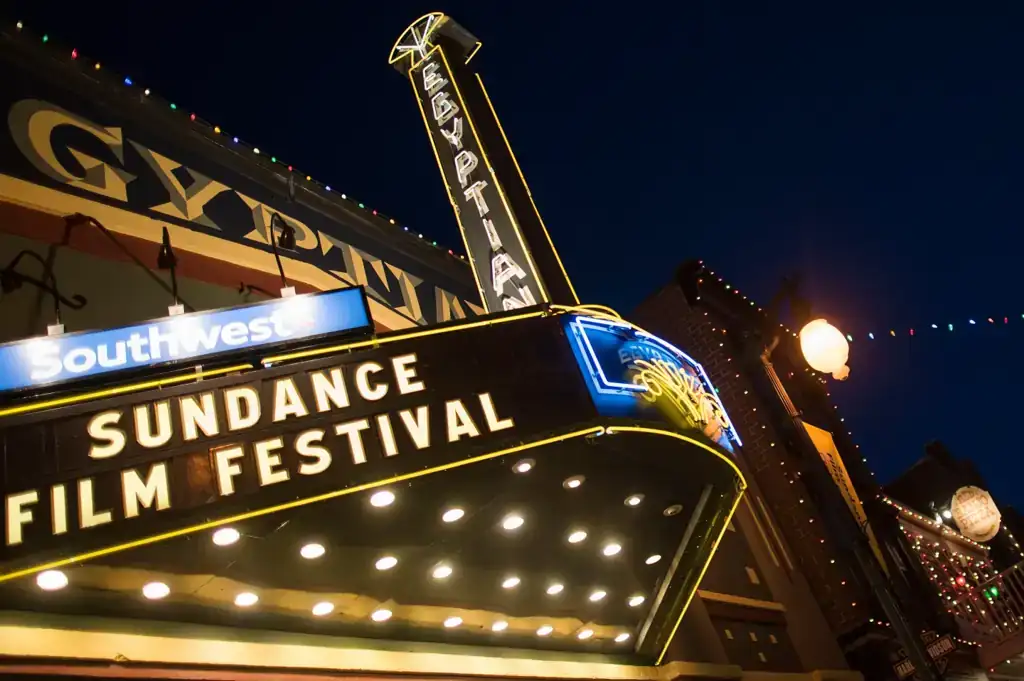
The Sundance Film Festival opens this week in Park City, Utah, carrying a familiar rhythm of premieres, celebrity arrivals, and long lines in winter cold. Yet beneath the surface, the 10-day showcase of independent cinema is unfolding at a pivotal moment, marking the end of an era for an institution that has shaped global filmmaking for more than four decades.
This year’s festival is the last to be held in Park City and the first since the death of founder Robert Redford, who died in September. Beginning next year, Sundance will relocate to Boulder, Colorado, closing a long chapter in the mountain town where the festival grew from a modest gathering into the most influential platform for independent film in the United States.
The transition gives this edition a reflective tone. Alongside new films and emerging voices, organizers and filmmakers are using the moment to look back at Sundance’s origins, its cultural reach, and the legacy of Redford, whose vision helped redefine the relationship between independent artists and the wider film industry.

A festival shaped by Robert Redford’s vision
Redford founded what became the Sundance Film Institute in the early 1980s, with the aim of nurturing filmmakers outside the Hollywood studio system. Over time, the festival in Park City became the Institute’s most visible expression, launching careers and films that might otherwise have struggled to find audiences.
That legacy is woven throughout this year’s program. Restored screenings of past Sundance titles such as Little Miss Sunshine, Mysterious Skin, House Party, and Humpday sit alongside Downhill Racer, the 1969 sports drama widely regarded as Redford’s first true independent film. Tributes to Redford are also planned during Institute events, including a major fundraising gala honoring Chloé Zhao, Ed Harris, and Nia DaCosta.
For filmmakers who built their careers through Sundance, the moment carries personal weight. Director Gregg Araki, whose Mysterious Skin premiered at the festival, said Sundance’s role in fostering independent voices remains unmatched. Araki first attended in the early 1990s and later taught at the Institute’s labs, where Zhao was among his students.
“Sundance has always been about showcasing and fostering independent movies in America,” Araki said. “Without that, so many filmmakers wouldn’t have had the careers they have.”
Careers launched and sustained
Over the past four decades, the Sundance Film Festival and Institute have supported thousands of filmmakers, many of whom later shaped mainstream cinema. Paul Thomas Anderson, Ryan Coogler, and Zhao—each widely cited as likely Oscar contenders this year—are among those who received early backing from the Institute.
Jay Duplass, who first arrived at Sundance in 2003 with his brother Mark and what he described as a “$3 film,” credits the festival with setting his career in motion. Since then, he has returned numerous times, yet says the sense of validation has never faded.
When Duplass learned that his latest film, See You When I See You, had been selected for this year’s lineup, he said he was overwhelmed. The film, based on a memoir, follows a young comedy writer grappling with the death of his sister, blending grief with humor—an approach that mirrors the tonal risk-taking Sundance has long encouraged.
Stars, bold narratives, and genre-crossing films
Despite its reflective mood, the festival remains a major draw for Hollywood talent. This year’s lineup includes Natalie Portman, Jenna Ortega, Sterling K. Brown, Zach Galifianakis, and Da’Vine Joy Randolph in Cathy Yan’s art-world satire The Gallerist. Chris Pine and Jenny Slate star in Carousel, a romantic drama about former high school partners reconnecting later in life.
Araki returns with I Want Your Sex, starring Olivia Wilde as a provocative artist who forms a complex relationship with her younger muse, played by Cooper Hoffman. Wilde also directs and stars in The Invite, opposite Seth Rogen, a marriage drama unfolding over a single evening.
Other notable titles include Wicker, with Olivia Colman and Alexander Skarsgård; the screwball comedy Gail Daughtry and the Celebrity Sex Pass, starring Zoey Deutch and Jon Hamm; and The Weight, a Depression-era crime drama led by Ethan Hawke and Russell Crowe.
Pop artist Charli XCX, a longtime festival presence, appears in several projects, including the mockumentary The Moment, as well as supporting roles in The Gallerist and I Want Your Sex.
Documentaries with cultural and political focus
Documentary films remain a cornerstone of Sundance, often gaining momentum toward major awards. The 2026 program includes profiles of figures such as Brittney Griner, Courtney Love, Salman Rushdie, Billie Jean King, Nelson Mandela, and comedian Maria Bamford.
Other documentaries address historical and contemporary issues. When a Witness Recants revisits a 1983 murder case in Baltimore through the lens of author Ta-Nehisi Coates. American Doctor follows medical professionals working in Gaza, while Who Killed Alex Odeh examines the 1985 assassination of a Palestinian American activist in California.
Films such as Everybody to Kenmure Street, chronicling resistance to deportations in Glasgow, and Silenced, which tracks human rights lawyer Jennifer Robinson’s work against the misuse of defamation laws, reflect the festival’s ongoing engagement with global justice issues.
Not all documentaries fit conventional categories. The History of Concrete blends meta-humor and experimentation, applying lessons from a commercial screenwriting seminar to an unlikely subject, highlighting Sundance’s continued openness to unconventional storytelling.
A farewell to Park City
As screenings unfold along Main Street and in venues like the Egyptian Theatre, many attendees are aware they are witnessing a final chapter. Park City’s compact layout and chance encounters have long defined the Sundance experience, bringing first-time filmmakers and established stars into the same spaces.
“It feels very special to be part of the last one in Park City,” Duplass said, noting the mix of large studio-backed films and microbudget projects that has always set the festival apart.
While some express nostalgia, others see the move to Boulder as a practical evolution. Araki, echoing Redford’s own past comments, said the festival outgrew Park City years ago.
“The legacy and the tradition of Sundance will continue no matter where it is,” he said.
As Sundance prepares to leave its longtime home, this year’s festival stands as both a celebration and a handover—honoring the past while testing how an institution built on independence adapts to change.
This article was rewritten by JournosNews.com based on verified reporting from trusted sources. The content has been independently reviewed, fact-checked, and edited for accuracy, neutrality, tone, and global readability in accordance with Google News and AdSense standards.
All opinions, quotes, or statements from contributors, experts, or sourced organizations do not necessarily reflect the views of JournosNews.com. JournosNews.com maintains full editorial independence from any external funders, sponsors, or organizations.
Stay informed with JournosNews.com — your trusted source for verified global reporting and in-depth analysis. Follow us on Google News, BlueSky, and X for real-time updates.